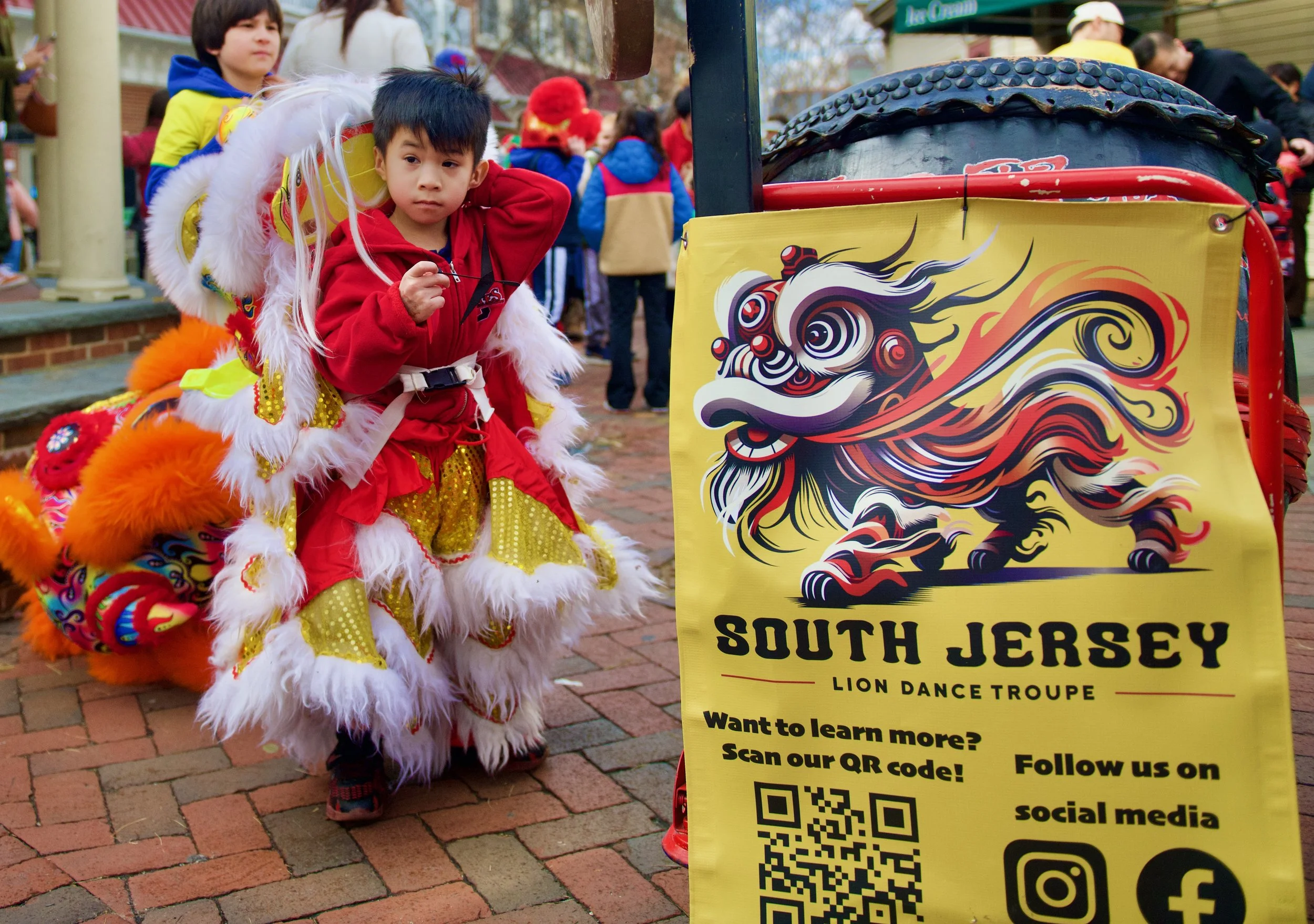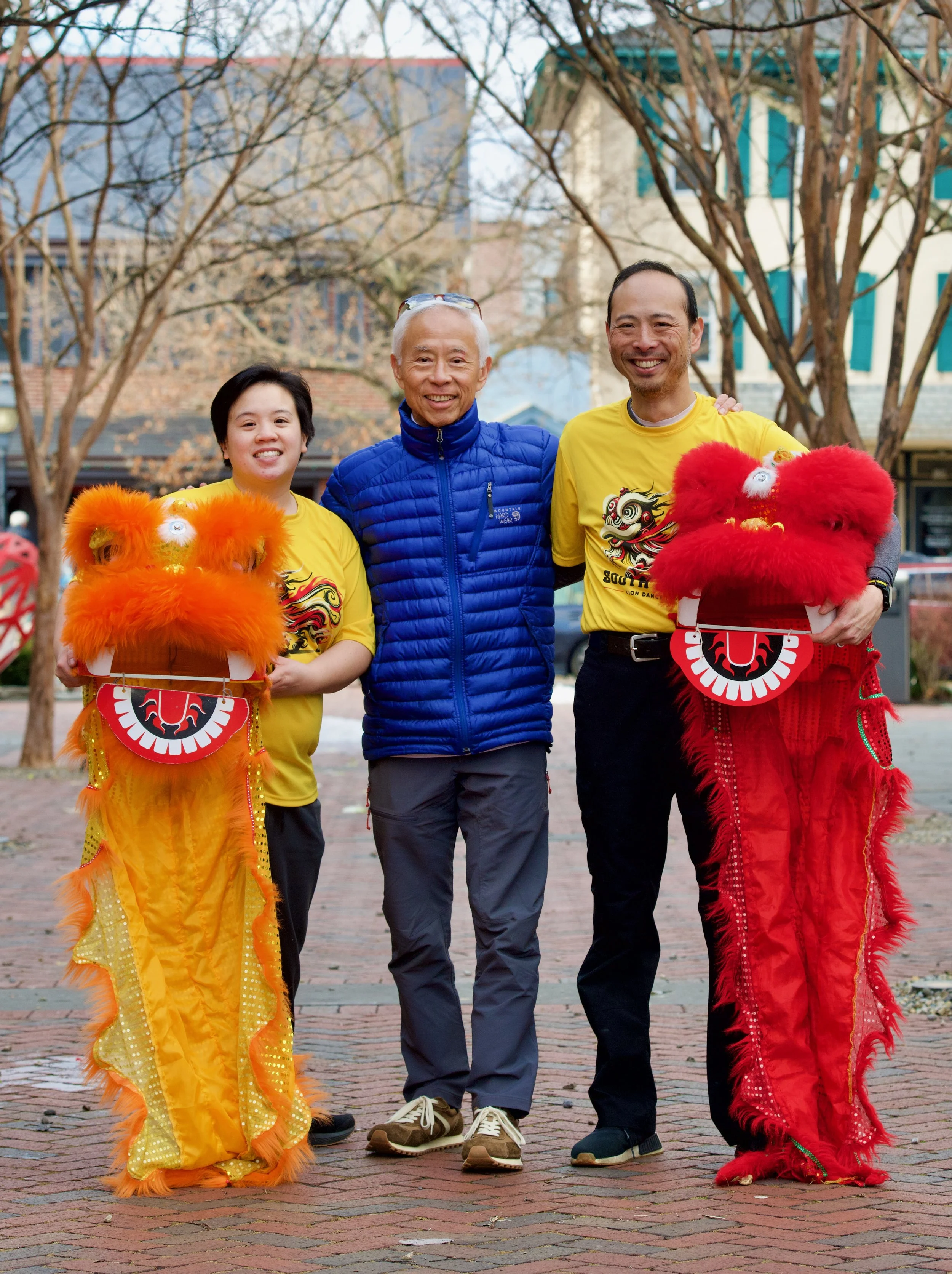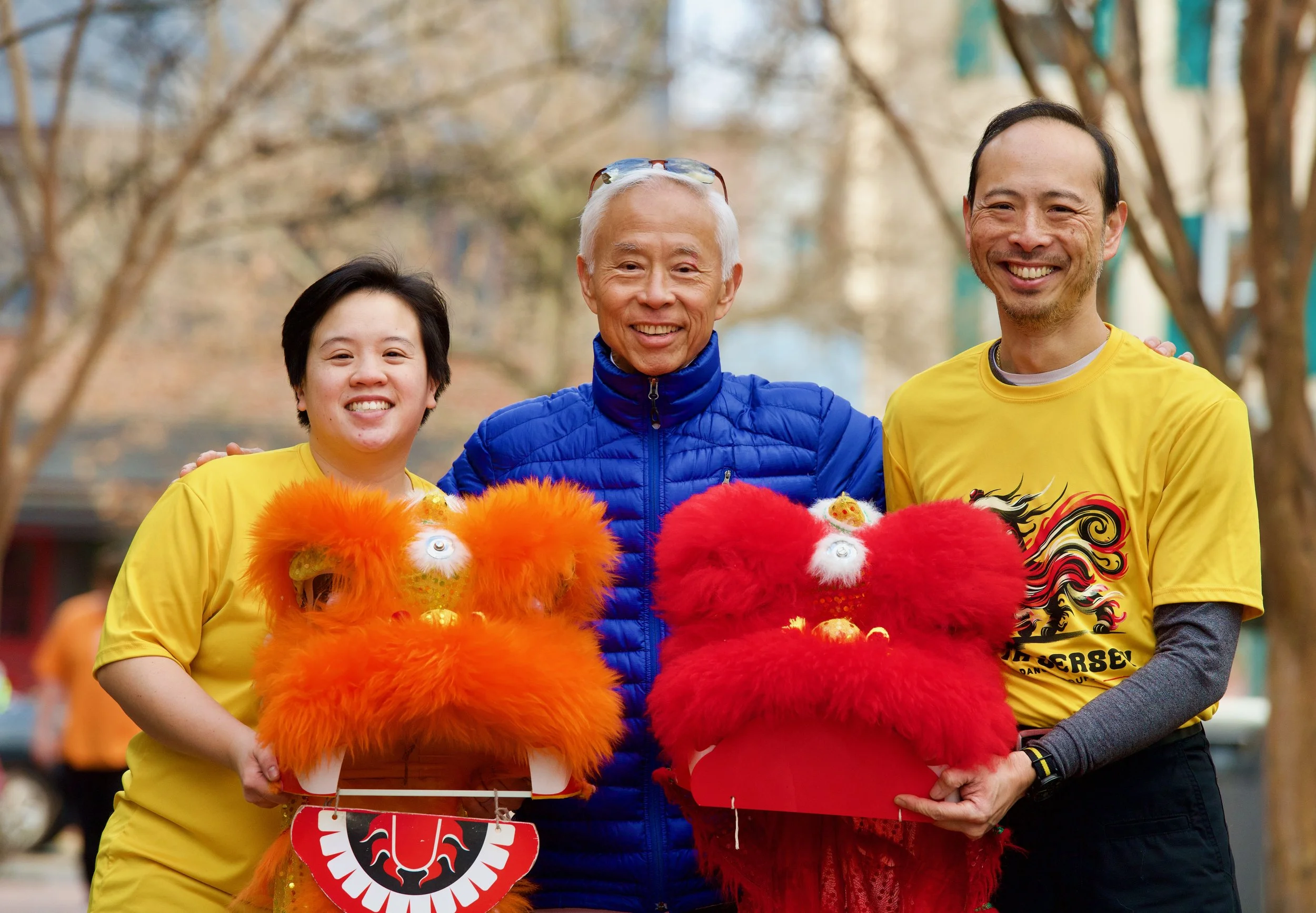
Long ago, as Chinese legend would have it, an evil spirit named Nian was terrorizing a small village every year, eating crops and villagers alike. One day, a monk discovered that this mythical monster could be scared off by loud noises, fire, and the color red. So, upon Nian’s next return to the village, everyone began hitting drums, cymbals, and gongs, setting off fireworks, and wearing red lion outfits they constructed to frighten it away. It is a tradition they continued every year afterward. “In fact,” says Joe Young, one of the leaders of South Jersey Lion Dance Troupe, “the word ‘nian’ means ‘year’. Every Lunar New Year, we say ‘Guo Nian,’ which literally means a wish for you to overcome your year.” It is intended to be a greeting of good luck, a hope that you remain free from your own monsters in the coming year. This is one of the legends behind the lion dance, a traditional Chinese performance intended to ward off evil spirits and bring good luck.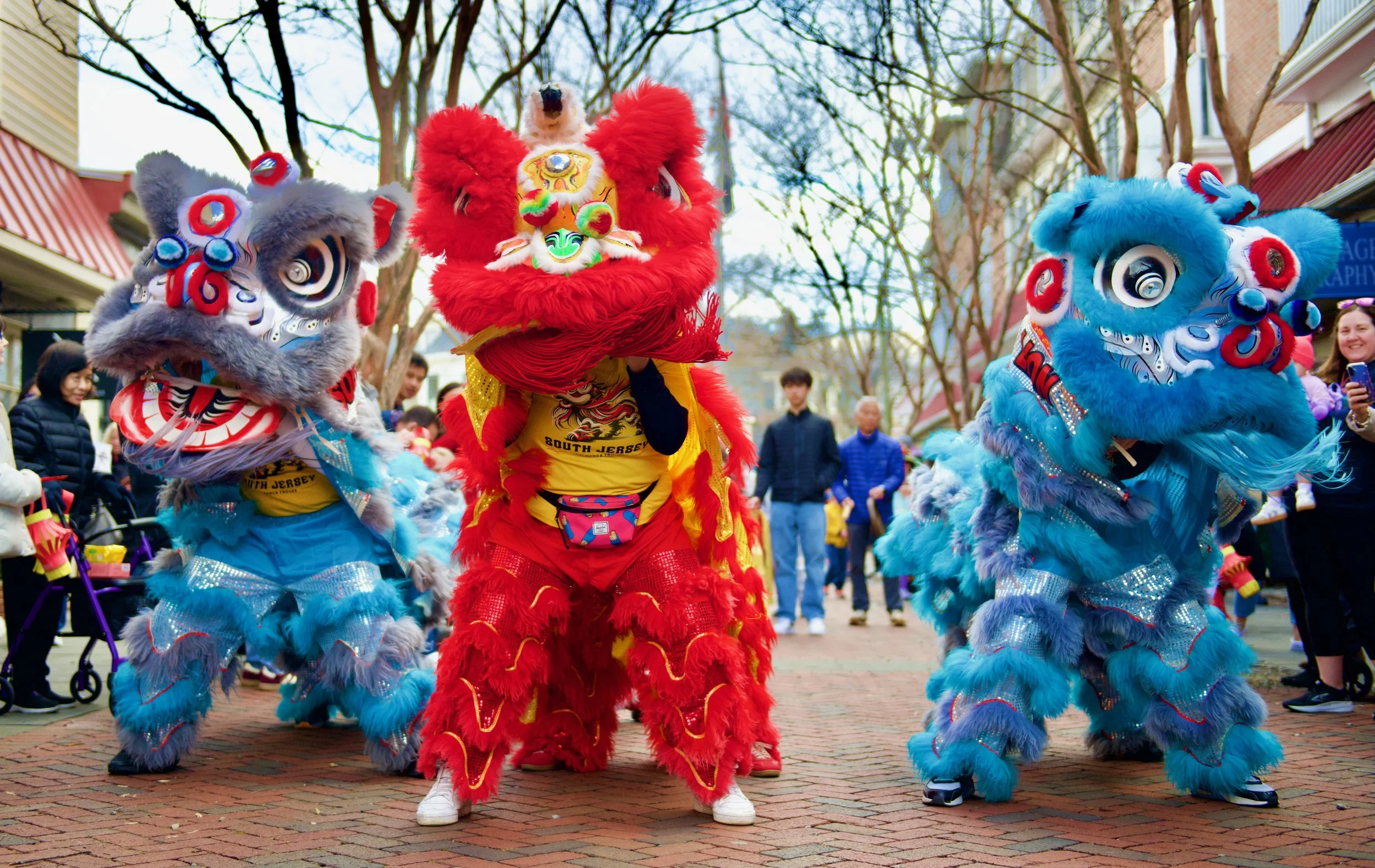
Linh Huynh, the second leader of South Jersey Lion Dance Troupe, and Joe are used to telling this story, as they are frequently called on to share the history of lion dancing at school assemblies, libraries, and in classrooms. But, Linh clarifies, when they teach this legend to children, they “make it sound a lot nicer,” and leave out the part about the monster eating people. “Instead of evil spirits, we say ‘bad luck…’ So we will say, ‘We want to scare away the bad luck. We want good luck for everybody.’ It makes it more kid-friendly.”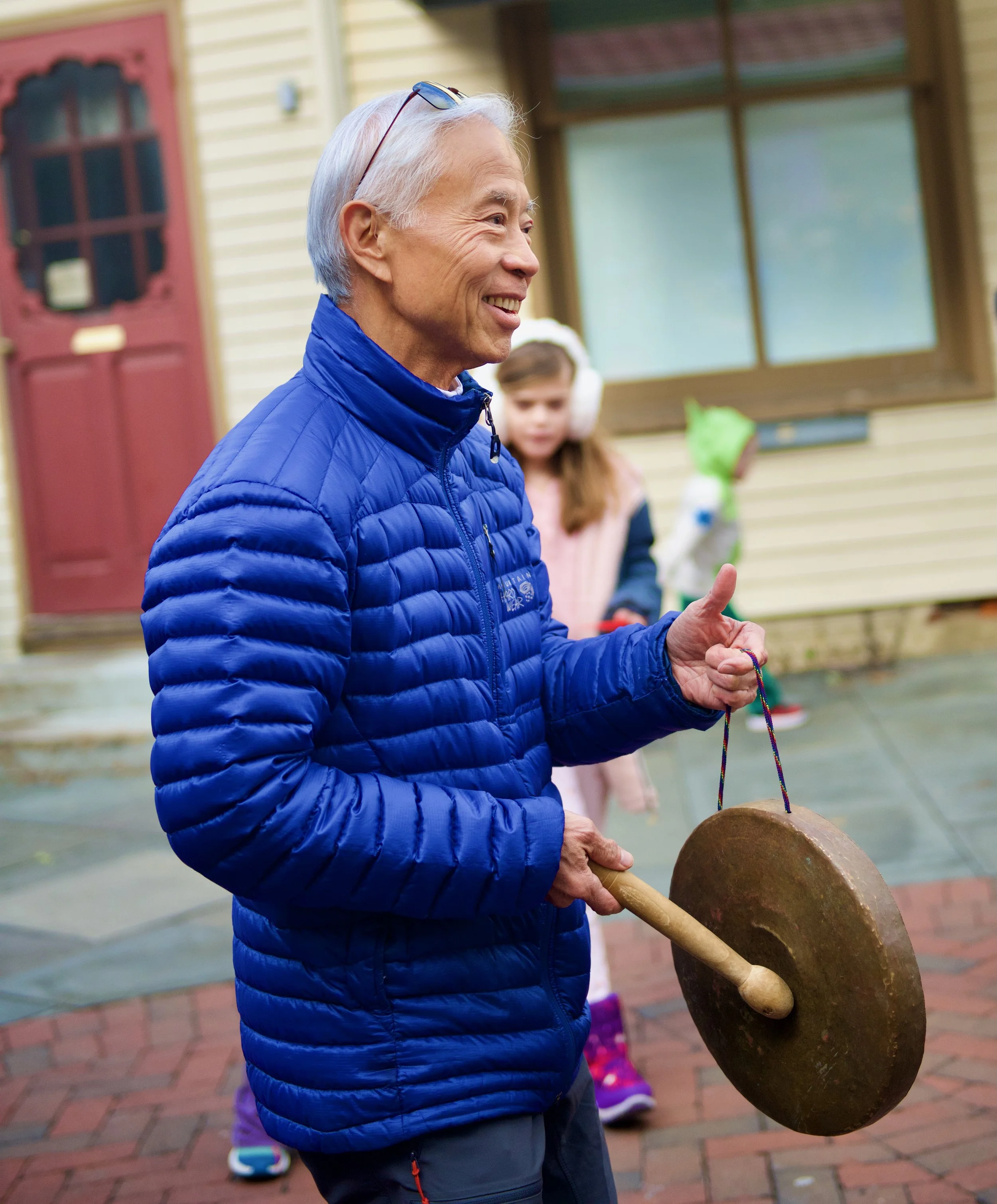
The South Jersey Lion Dance Troupe was originally formed by Joe’s father, Michael Young, in 1996. “He was always interested in lion dancing.” Growing up, Joe and his father attended the Chinese School of South Jersey along with Joe’s two younger brothers. The school had a martial arts instructor who would teach the students kung fu. Lion dancing is an art based in kung fu, using kung fu stances and movements. “The stances are part of the expressive nature of the lion.” When Joe was in high school, his father found a lion dance instructor, Peter Louie, who was willing to come to the school to teach students once a week. Eventually, the group became its own entity so they could perform outside of the school as well.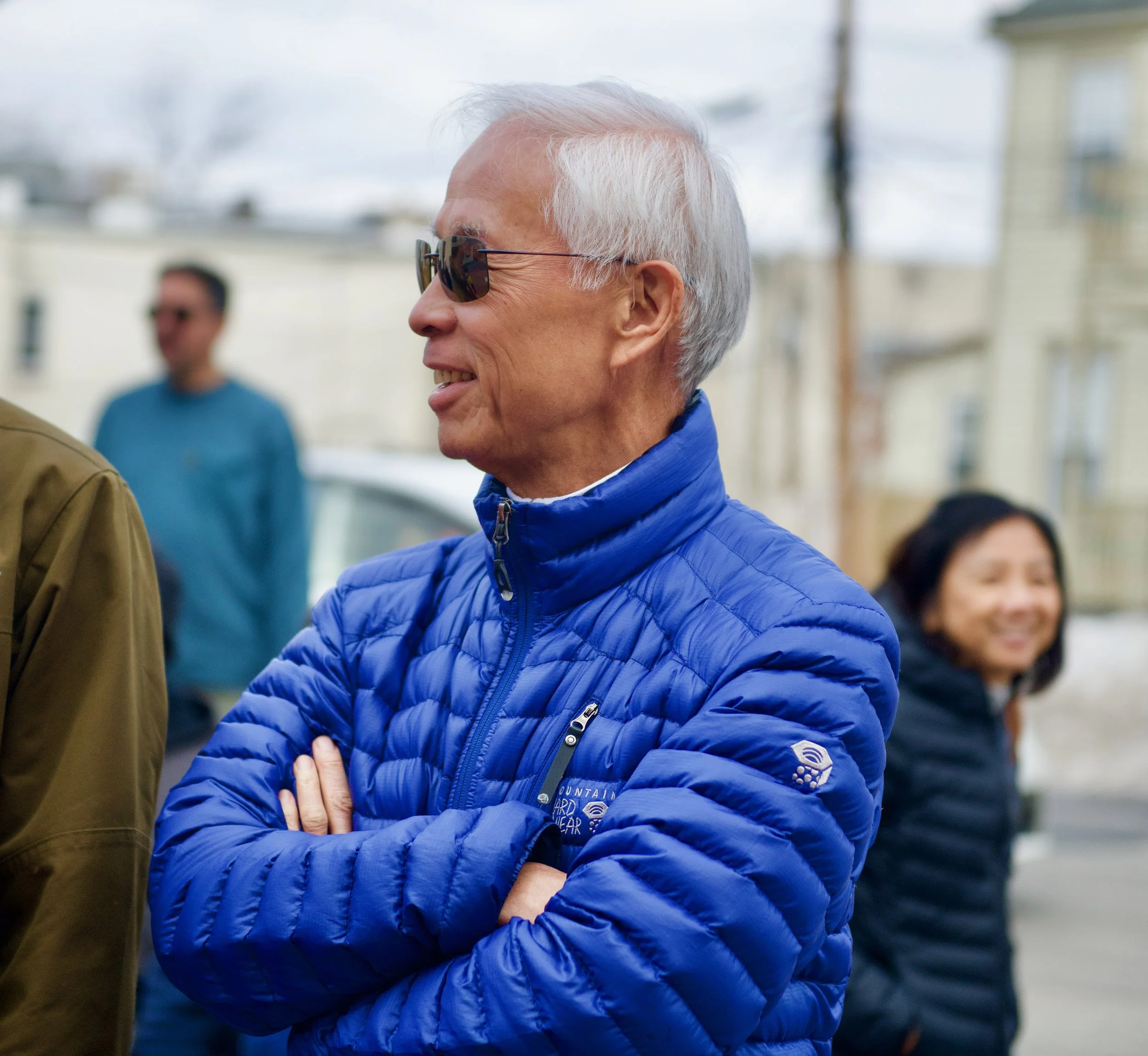
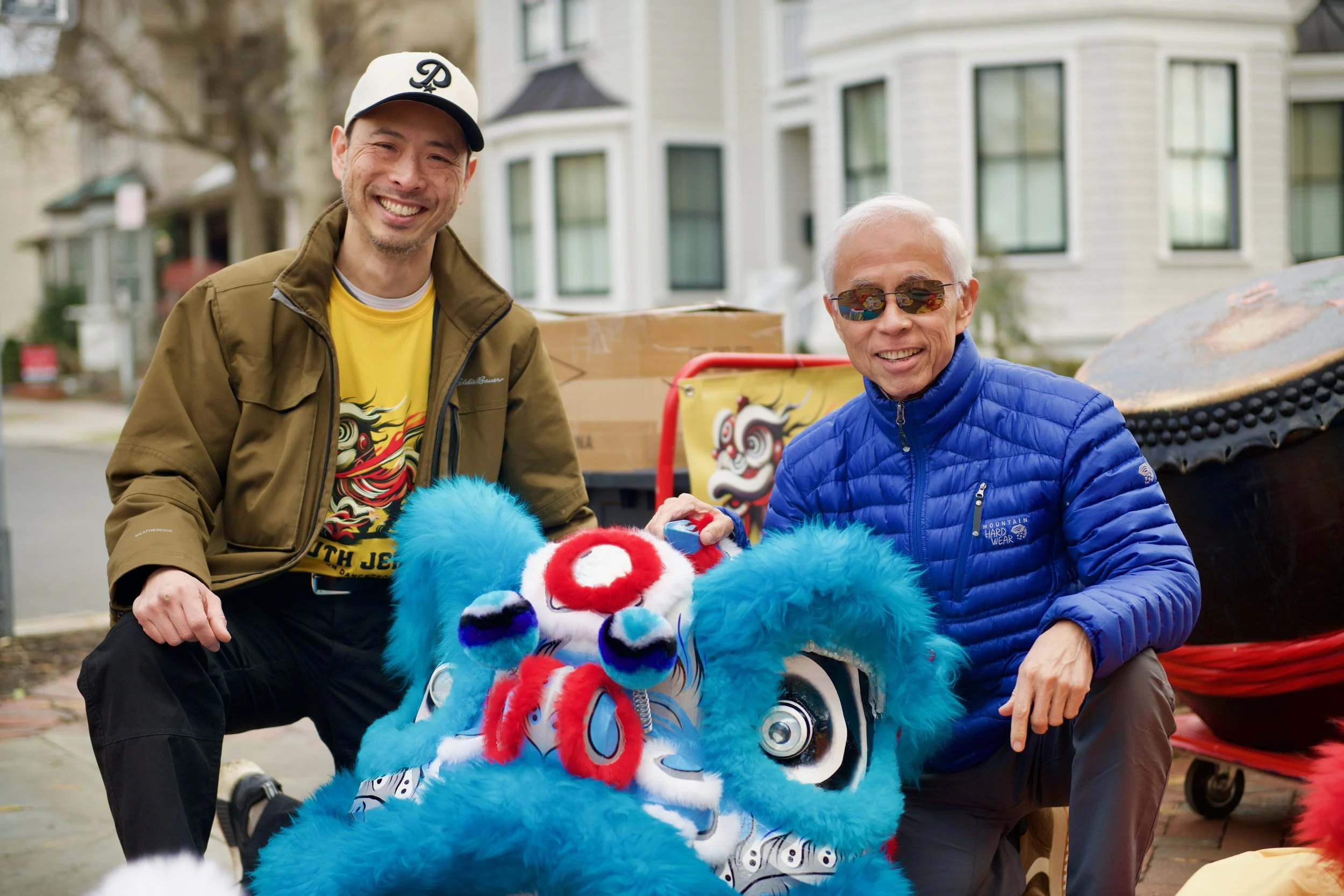
Over time, everyone in the troupe got older and moved on, and “the attrition rate was too high to continue. So, the class became dormant.”That is, until about 3 years ago, when the school reached out to Joe to see if he would be interested in reviving it. “I did. I was by myself. There were only a handful of students, and I had an hour to spare on Sunday afternoons. So I agreed to it.” The class began to grow and grow “to the point where I couldn’t handle it myself. I told the administration that I needed help, or I wouldn’t be able to continue. One of the administrators found out that Linh had a lion dancing group at the Vietnamese church. So she reached out to her, and that's how we connected.”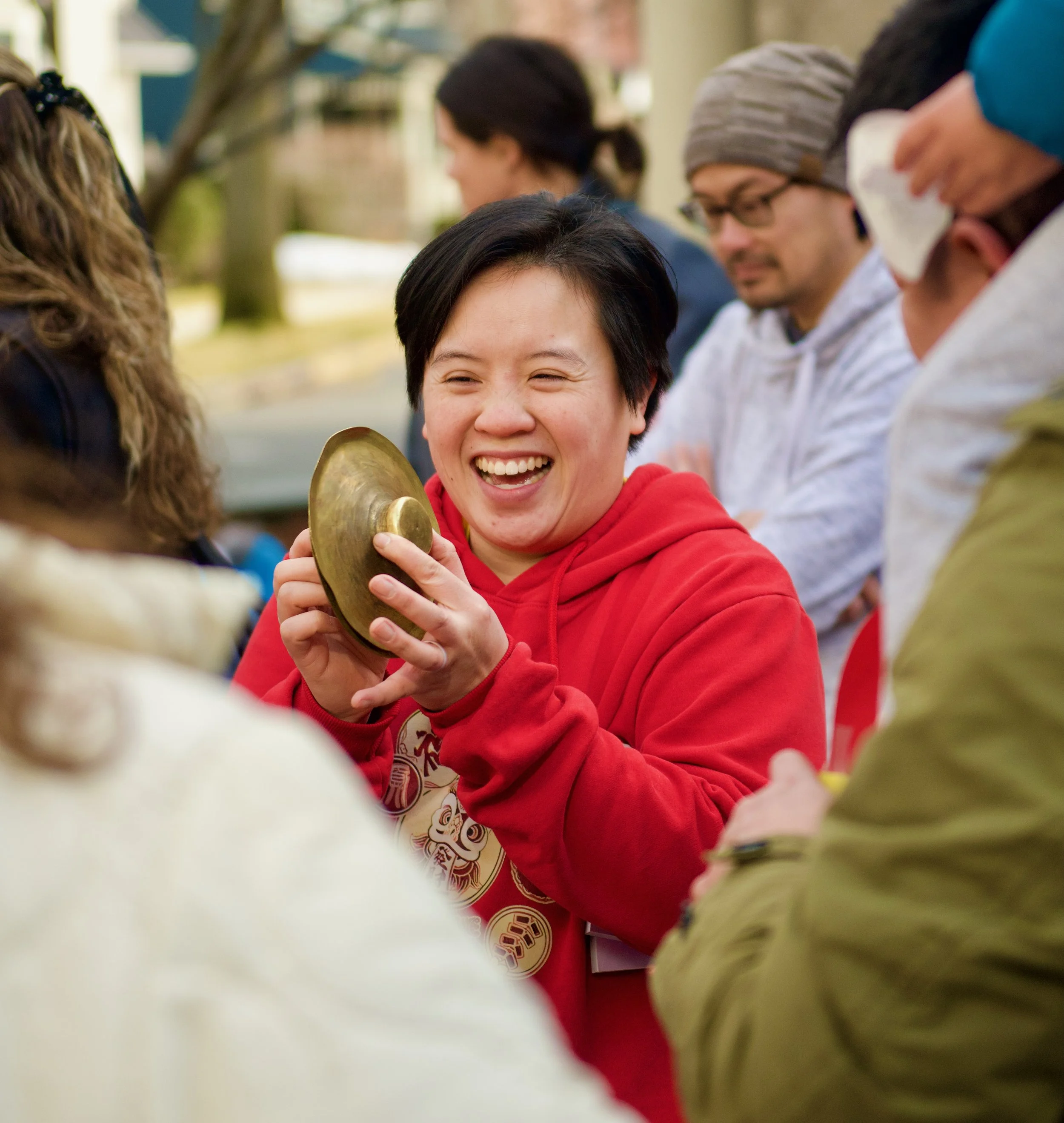
Linh’s love of lion dancing started when she was a child. “It started out as a hobby when I was in elementary school going into middle school. I loved how it had such a strong basis in martial arts. I didn’t take kung fu when I was young, but I always wanted to. Whenever I could, I would learn on my own. I would try to learn as much as I could.” Linh also liked the musical element of lion dancing. “It takes aspects of martial arts and applies them to a rhythm. I thought, ‘I know music. I play music, and I like martial arts. I am not good at dancing, but lion dancing makes sense to me.’” Finally, it was a style of performance that Linh felt comfortable with. “I had really bad stage fright. But when you’re in the lion head, no one knows who you are because you’re hidden.”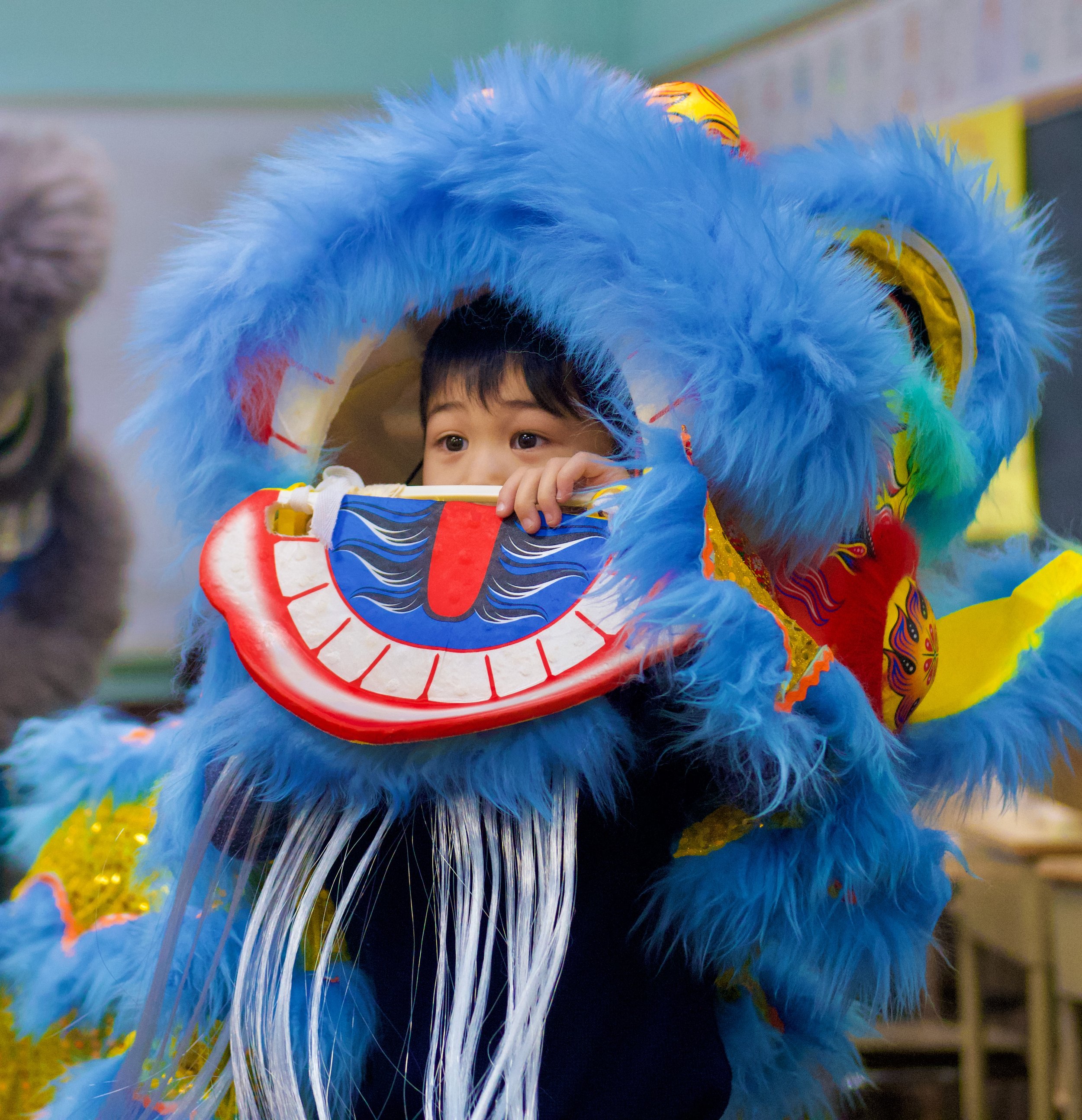
At first, Linh learned all she knew about lion dancing from YouTube. “We learned by watching videos. We loved it.” Then, about 8 years ago, she connected with Sifu Cheung, a renowned Hung Gar instructor in Philadelphia. (Hung Gar is a Southern Chinese kung fu style.) She eventually received formal training from a variety of Hung Gar schools. Traditionally, lion dancers would belong to a specific kung fu school, but that is no longer necessarily the case. “Now in the states, it is not uncommon to have lion dance troupes that are not affiliated with kung fu schools.”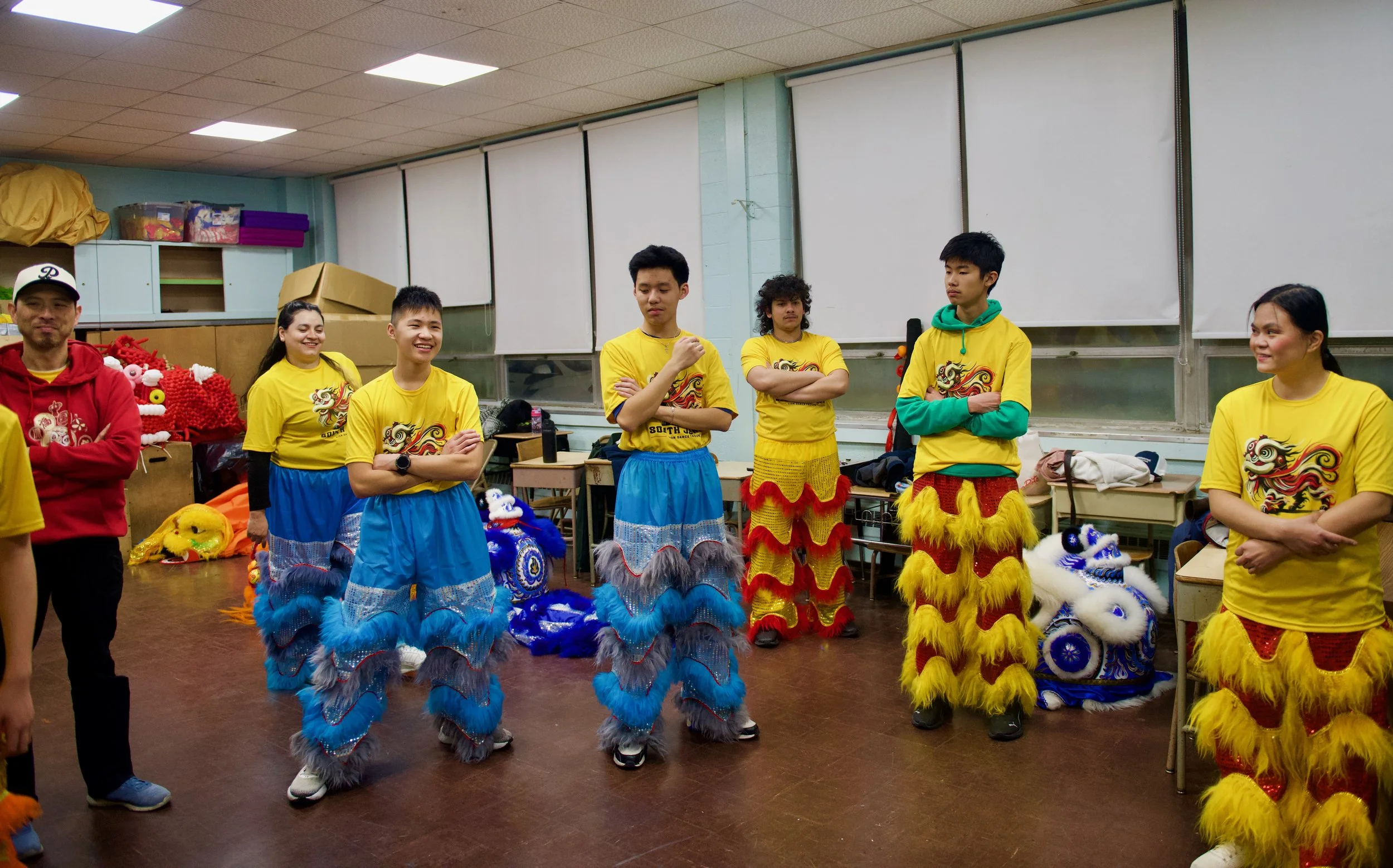
“Growing up, we only performed lion dances once a year during the Lunar New Year. 4 or 5 weeks prior, we would practice. I was the first female lion dancer in my troupe. It was entirely Vietnamese, and they were like, ‘Oh my gosh, a female Vietnamese lion dancer? No way.’ The cultural aspect of it has really changed since. There are many more females in lion dancing now. I don’t know if it was ever restricted to men only, but it always attracted more men than women.”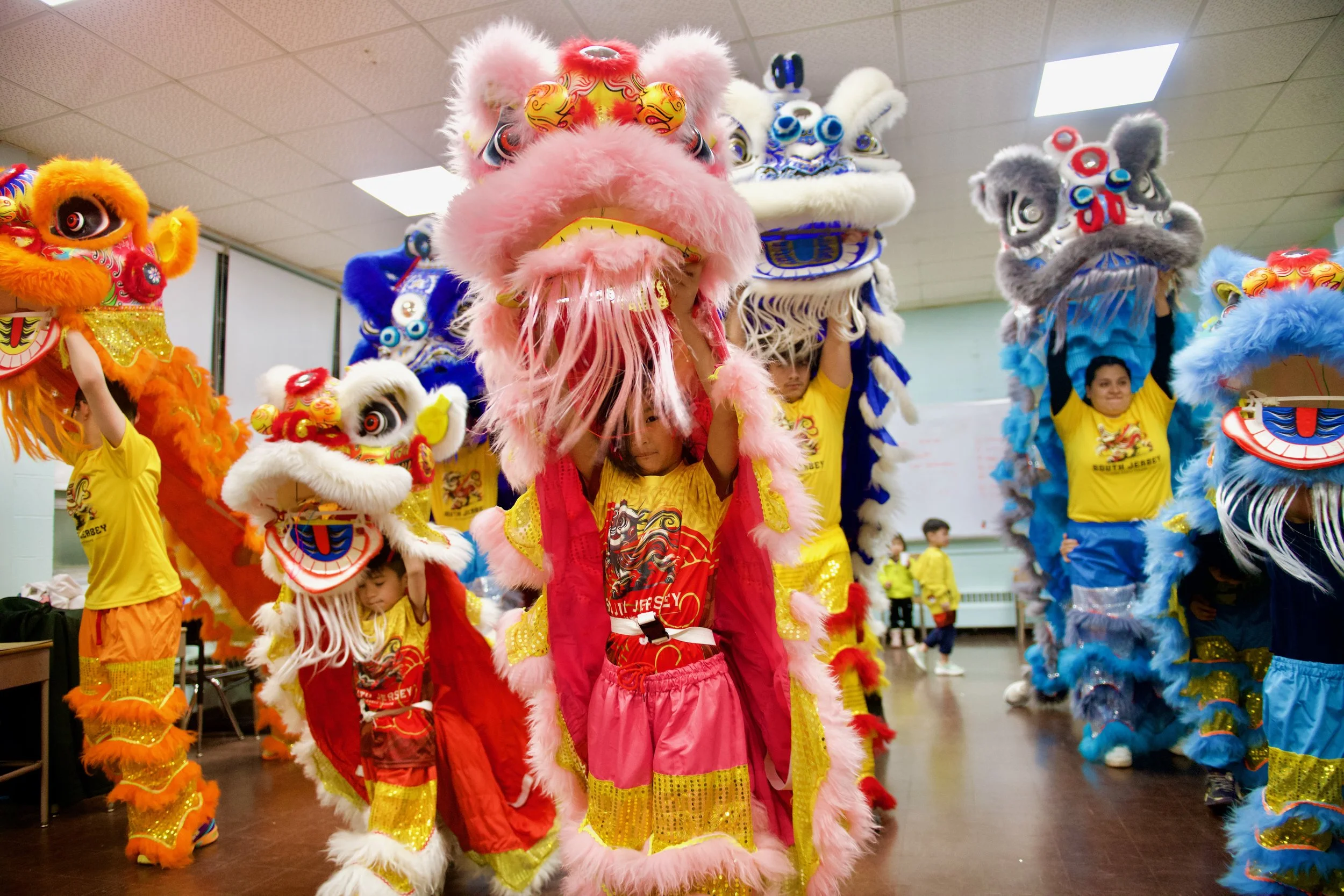
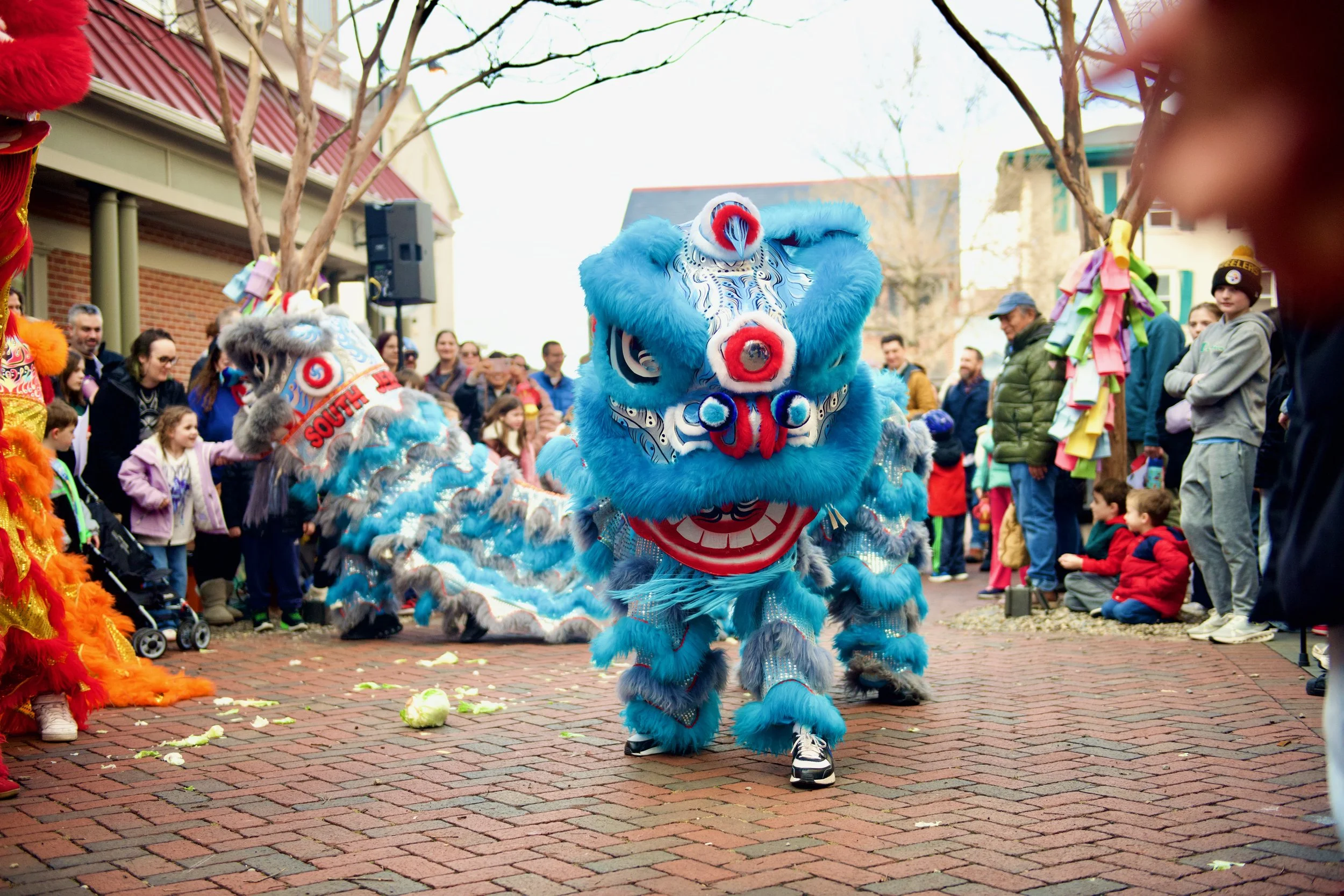
Part of the challenge of lion dancing is that the heads are very heavy. Linh explains that the lion heads are traditionally made from bamboo framing and paper mache. They then have a veneer varnish on top and are covered in fur. “The workmanship is really cool; if you look inside you can see all of the little details. There’s a mechanism to open and close the eyes, and there’s a technique to hold it. It’s a lot of wrist control.”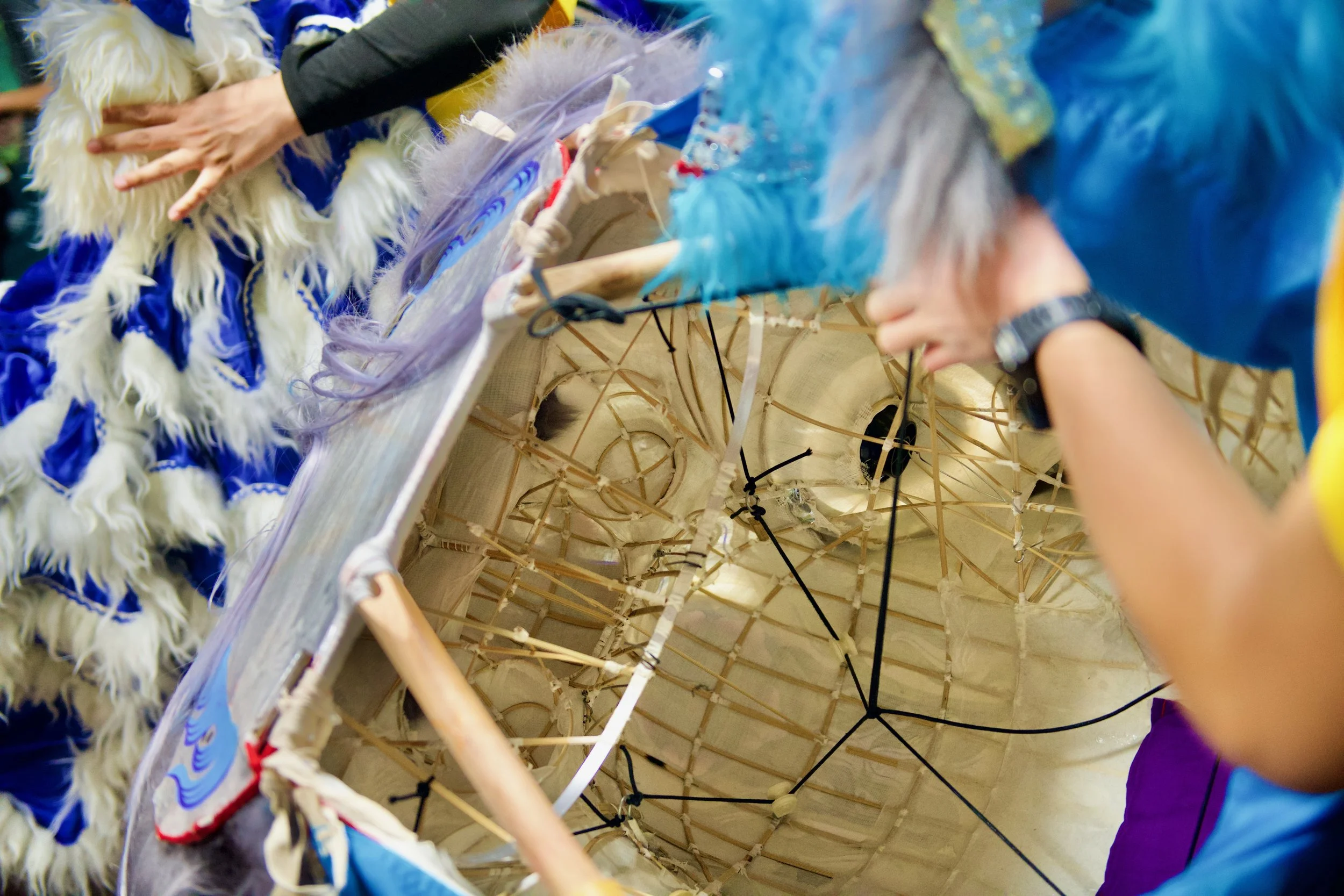
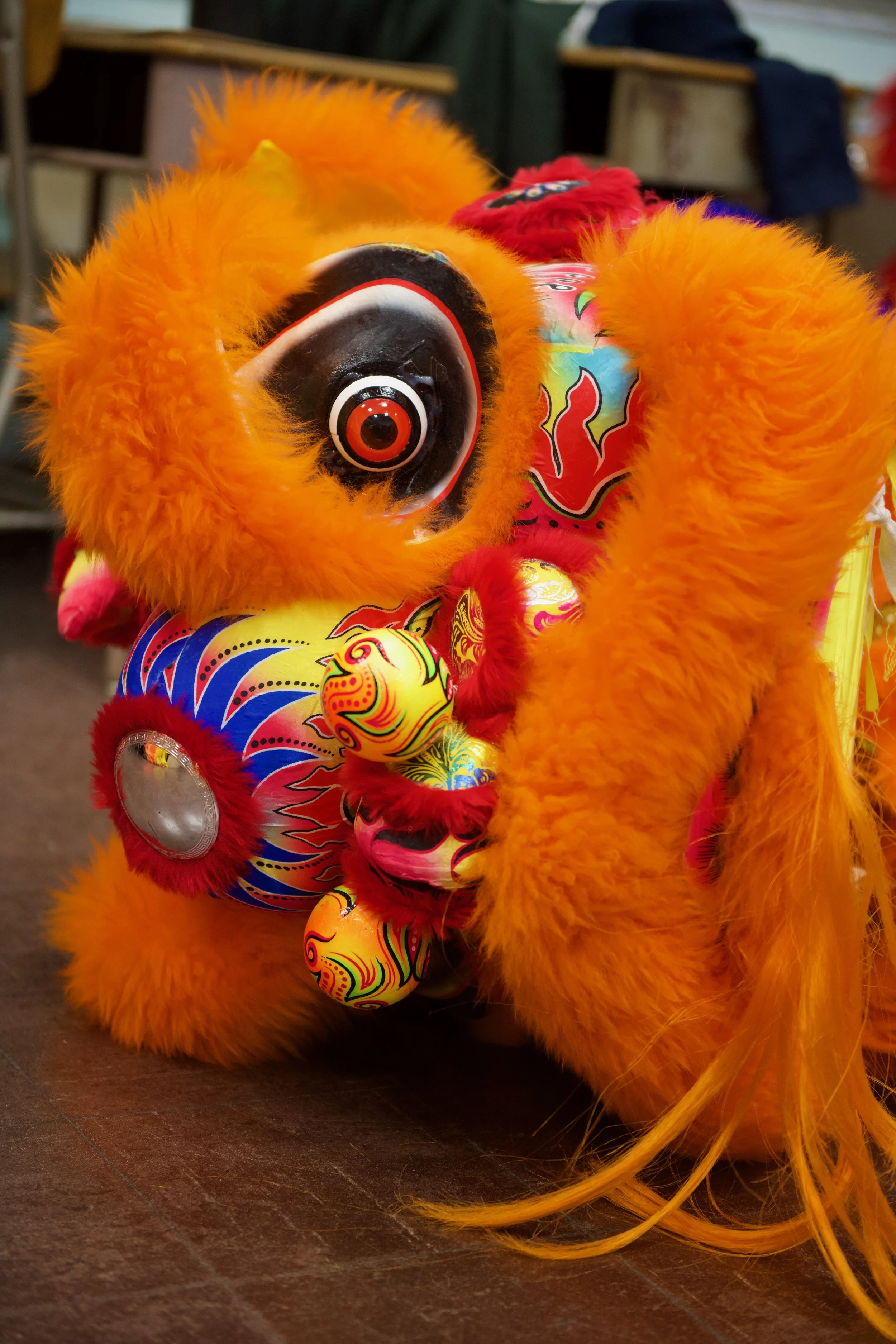
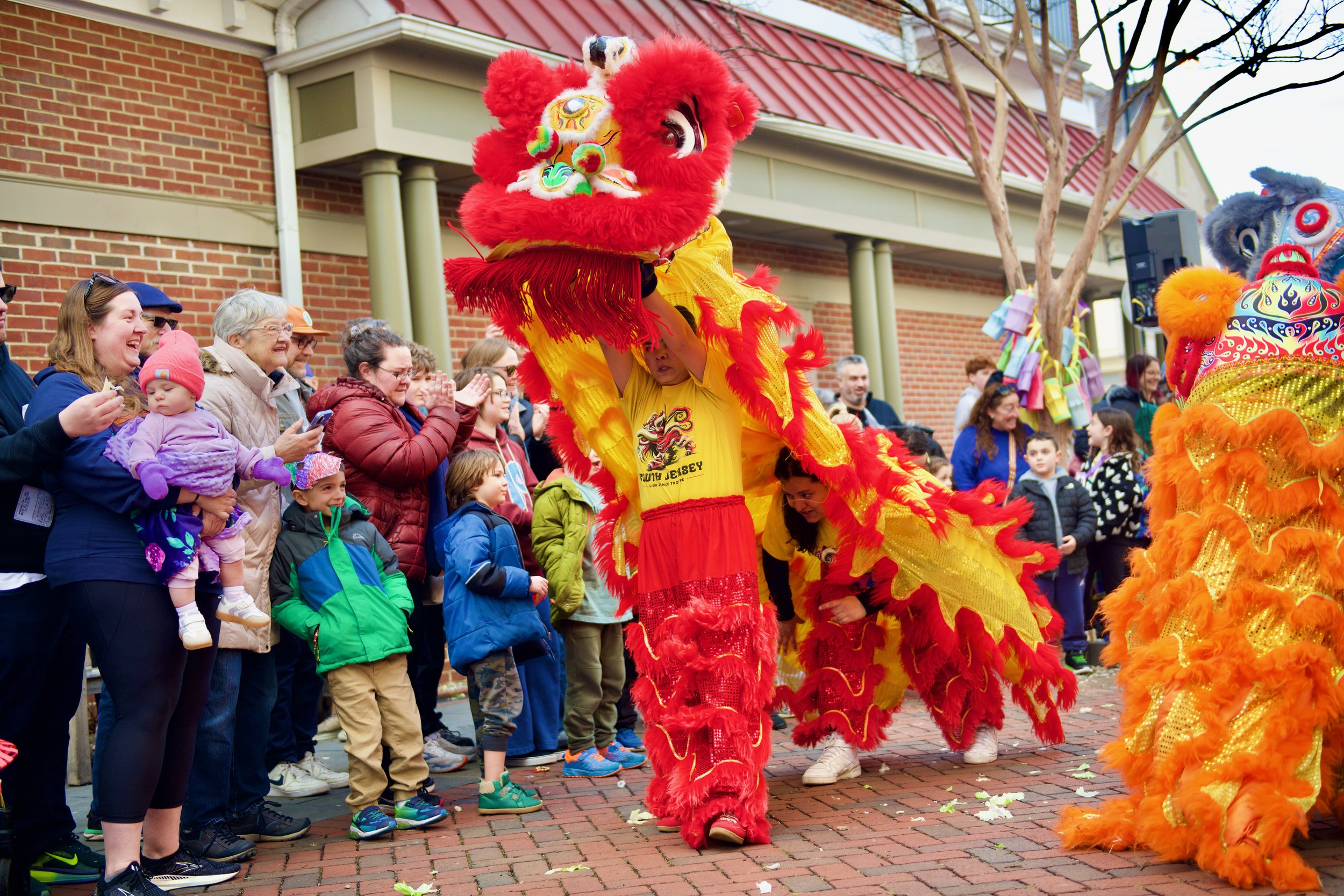
There are different forms of lion dancing and lion dance heads, but they can generally be split into two categories: Northern and Southern. “The Northern heads look very different - they’re almost monster looking. You can tell right away.” Traditionally, lion heads would be red, but these days, they come in all different colors. The South Jersey Lion Dance Troupe also has some styrofoam lion heads and plastic ones for the kids to use. When they go to assemblies, they let the children play with the heads, so it’s good to have some durable ones. “Plastic is good. They can drop the lion, and we won’t freak out. They take quite a beating.”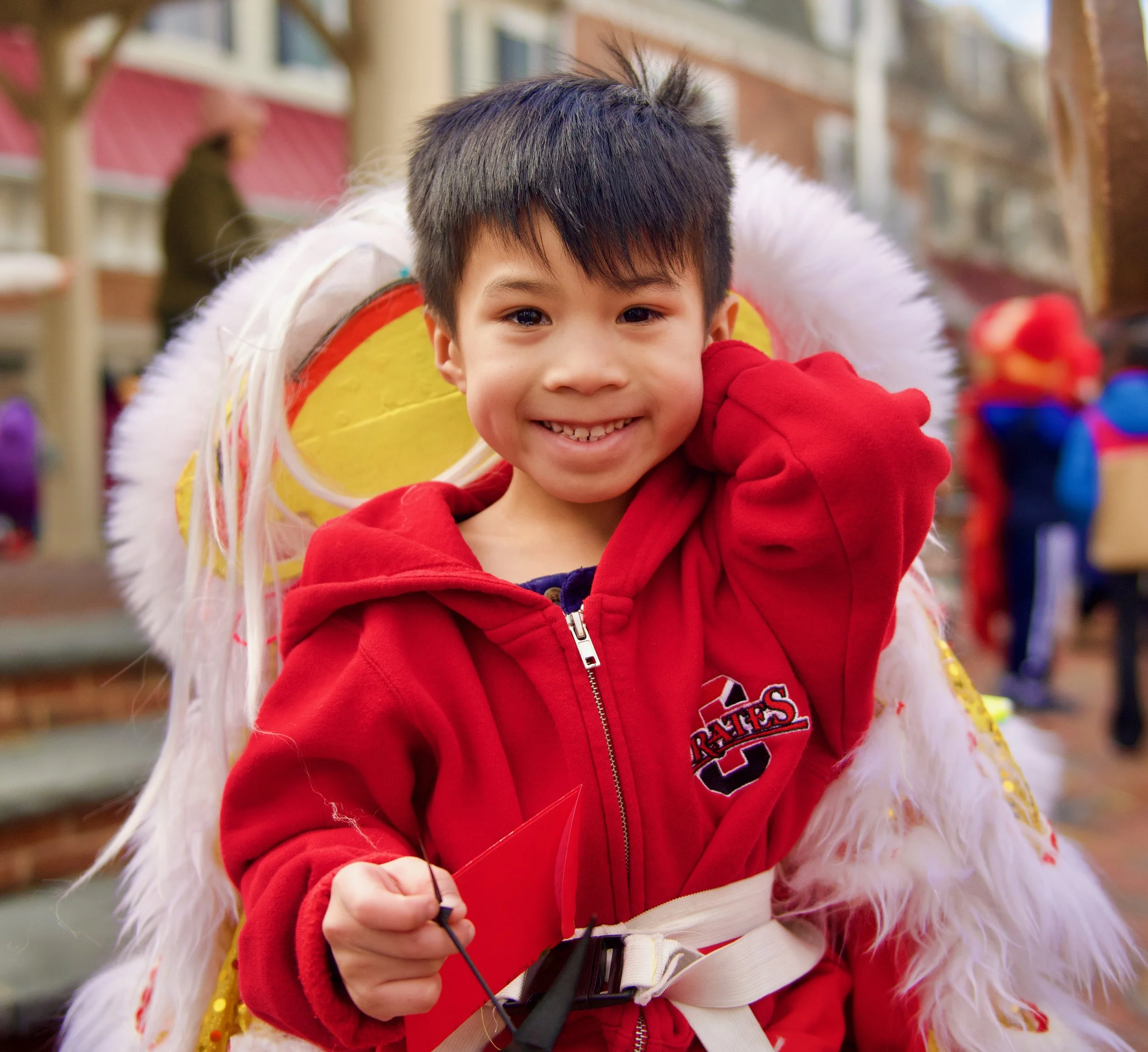
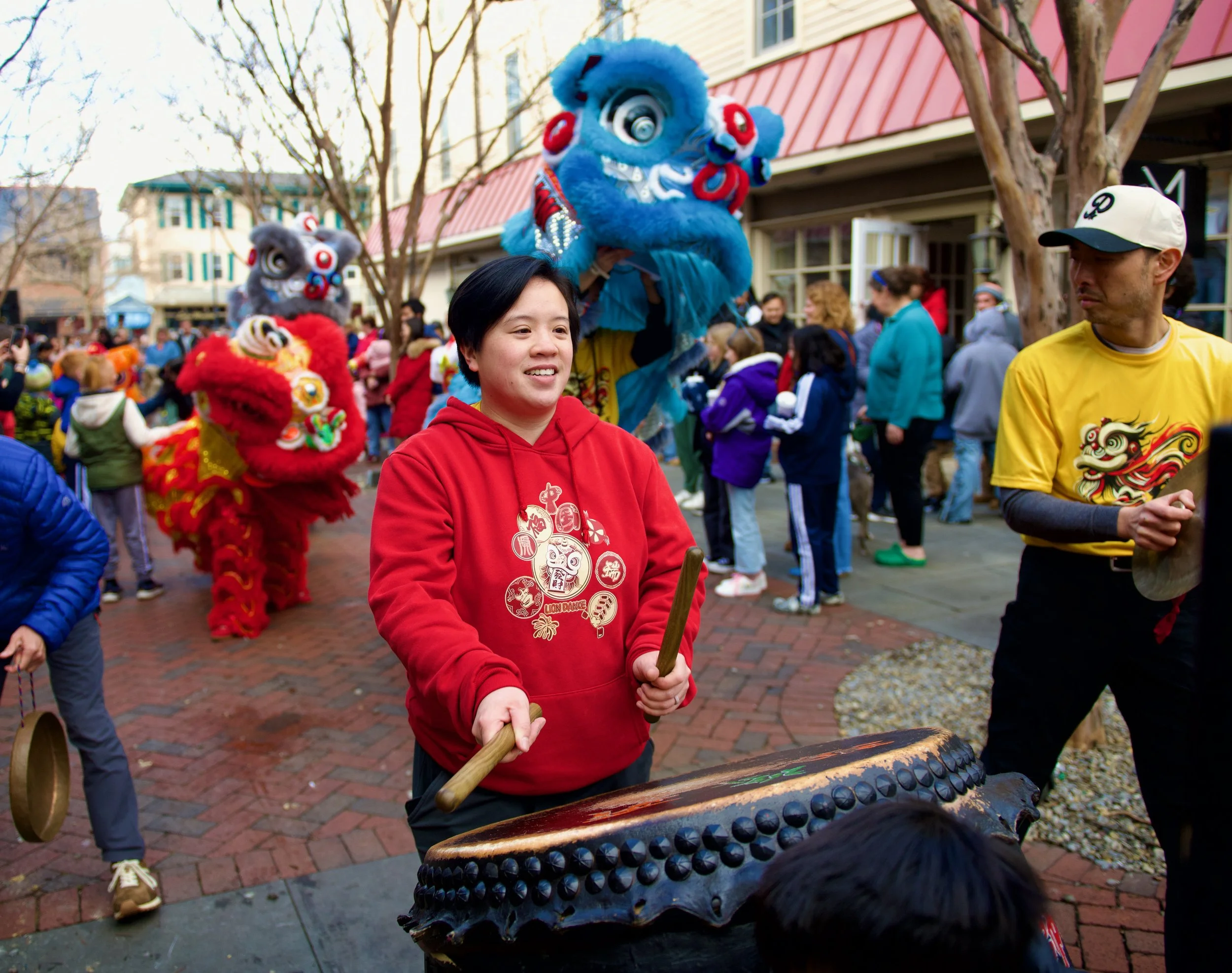
Joe explains that music is a key piece of a lion dance performance. “The music is really the heartbeat of the lion. There’s limited visibility when you’re inside the head. The lion doesn’t direct anything; everything is by the music. There are musical cues that align with what’s coming next. You learn what to do when you hear certain things. We are all trained to respond a certain way when we hear a change in the music or different types of clacking. There’s all this communication happening non-verbally and non-visably as the dance is going on.”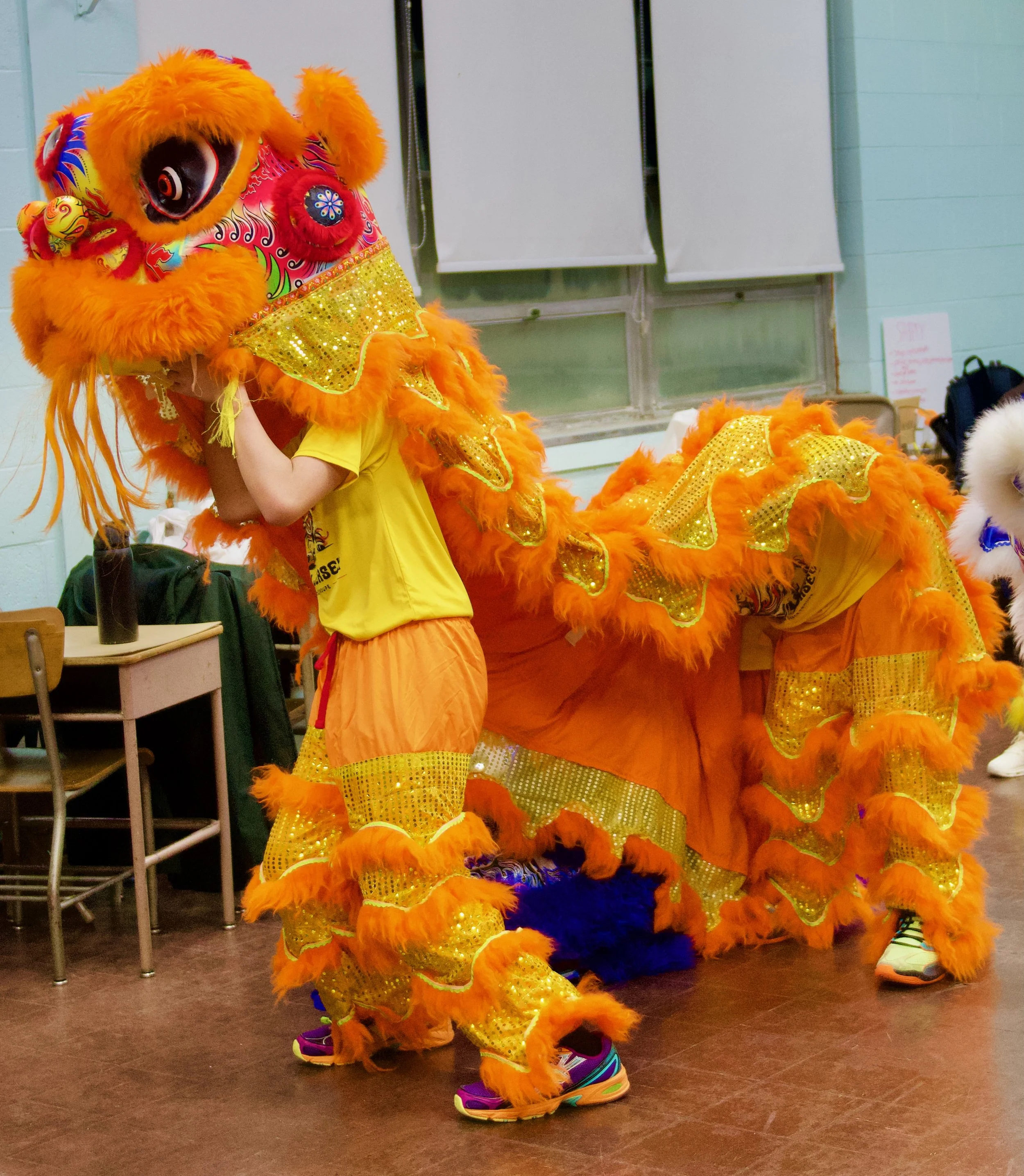
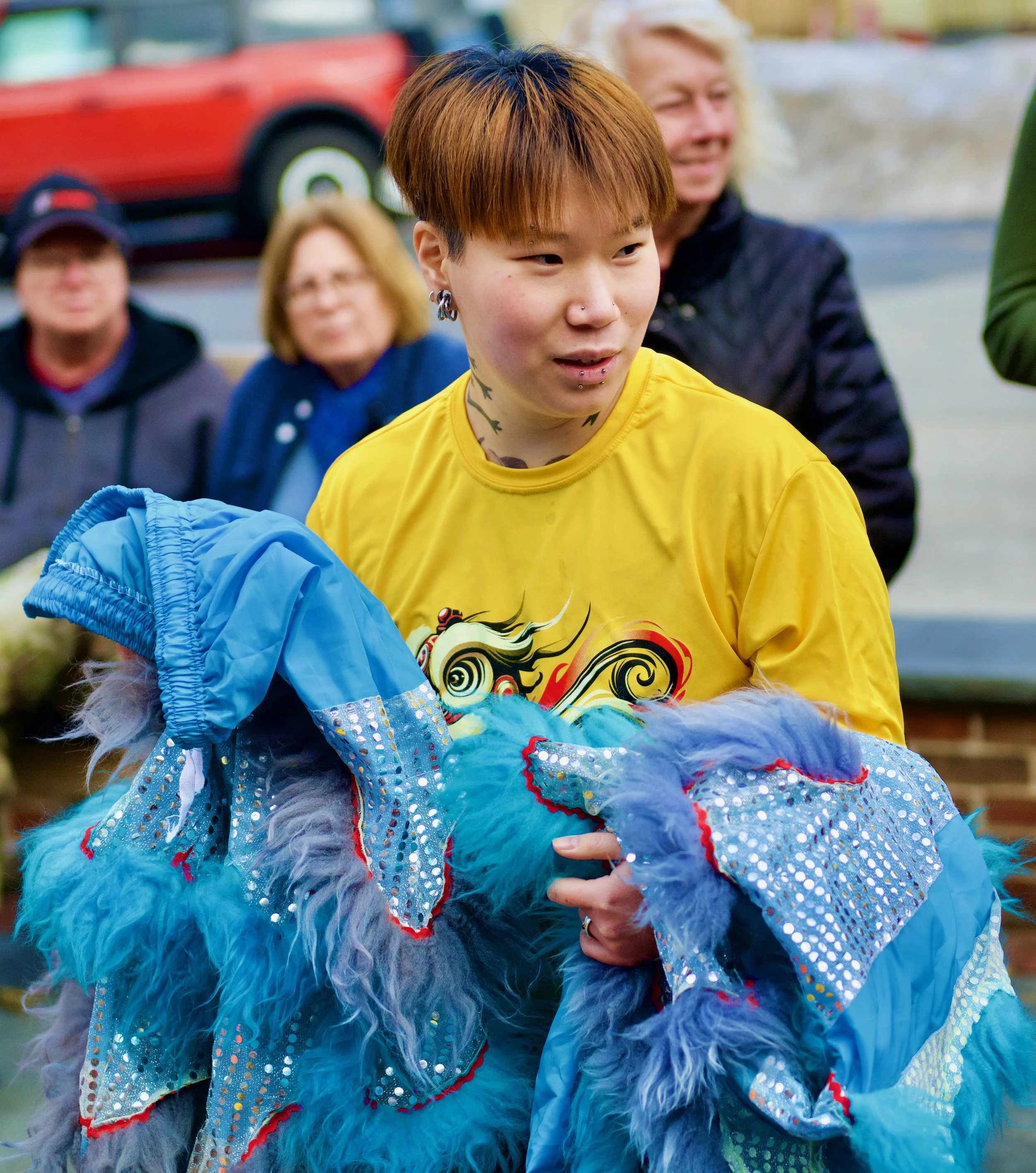
Each adult lion requires two people to operate; one person is the head, and one is the tail. When a new member joins the group, they will frequently learn the tail position first, as it’s the easiest position to learn, and it is the best way for them to start learning the nonverbal communication elements of the performance.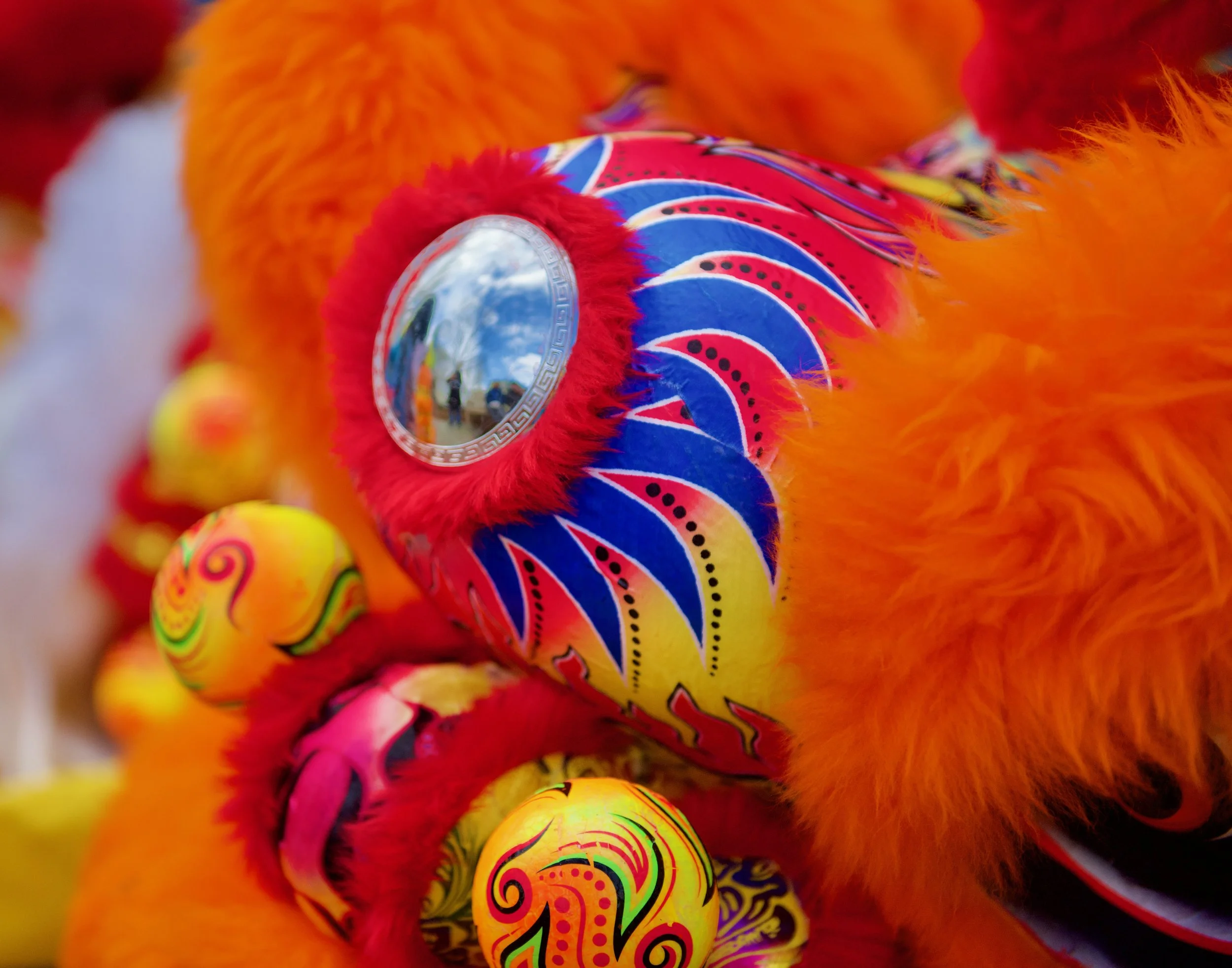
So many elements of lion dancing - from the costumes to the movements to the props - are seeped in symbolism and history. During one part of the performance, heads of lettuce are held out to the lions to eat. “The Chinese word for lettuce also sounds like the word for fortune or wealth. And lettuce is green, like money. So the routine is that the lion will munch on the lettuce, eat the spiritual essence of it, and throw it back to the audience. Some tradition says that if the lettuce lands near you, it’s even more good luck. But in general, you’re throwing it back to everybody in the audience, so that everybody can have good luck.”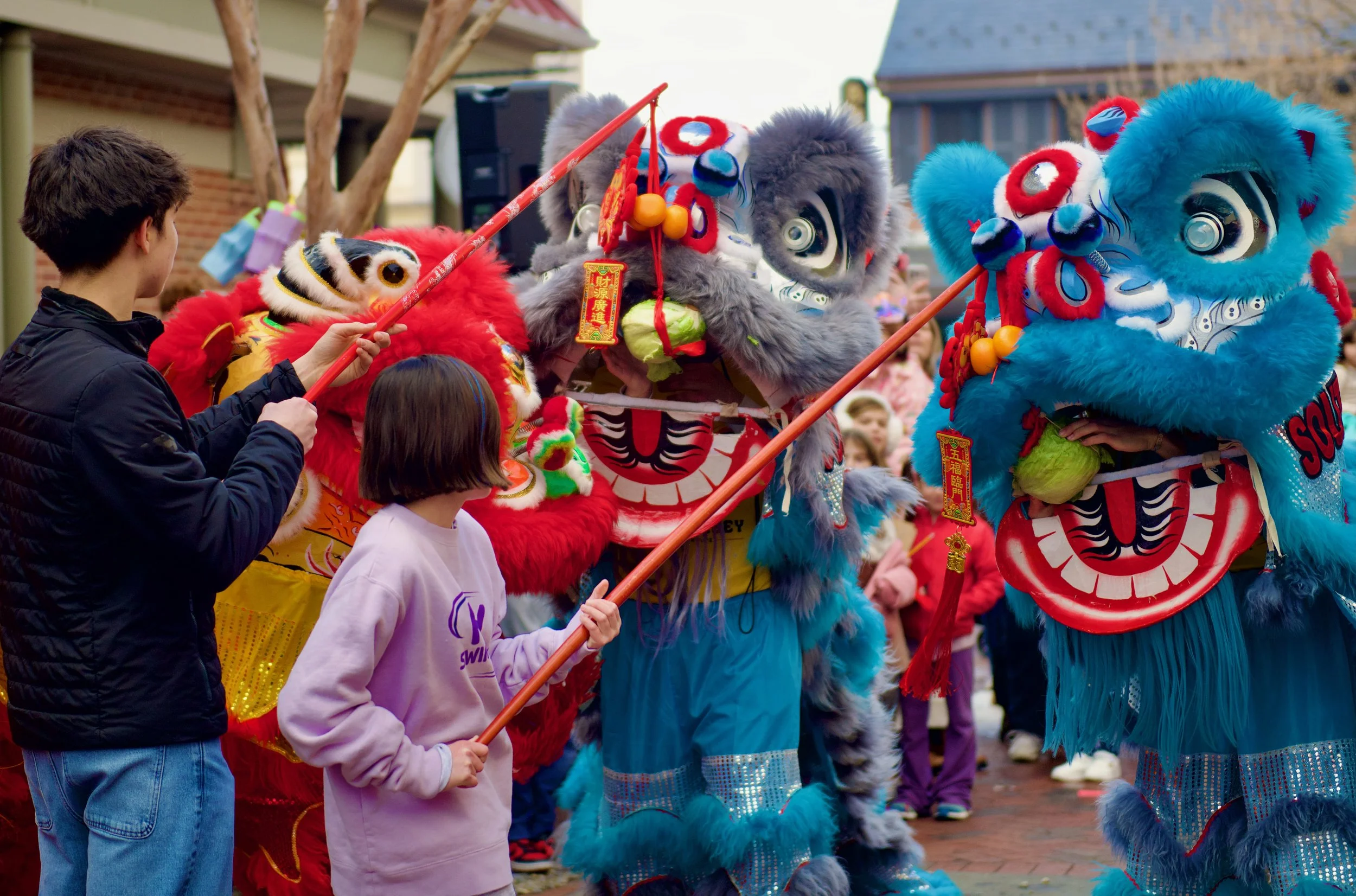
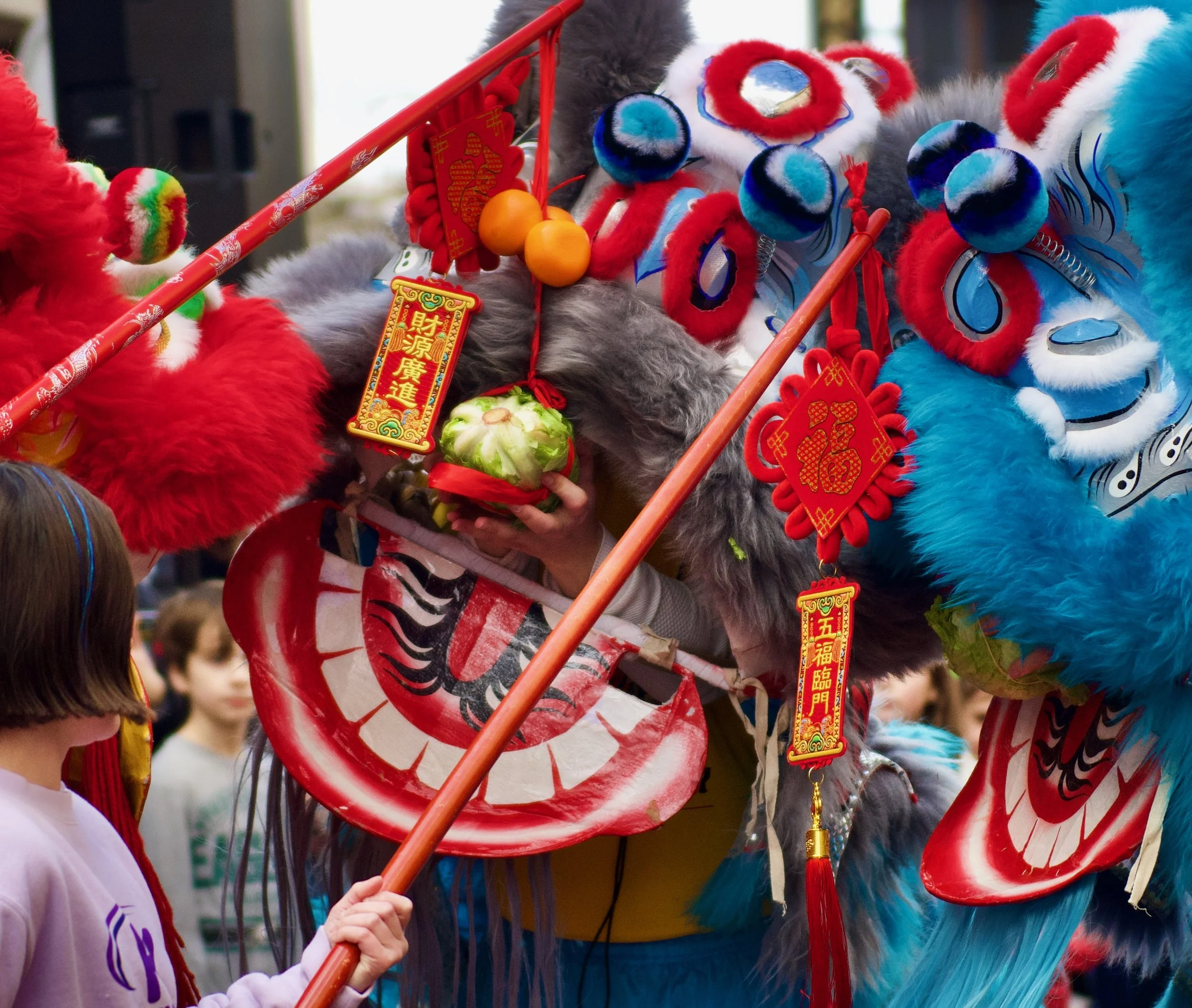
Linh mentions that some lion dance troupes also use Mandarin oranges as props. “Some lion dance troupes will take Mandarin oranges and do the same thing. They’ll peel it and then put it out in a certain number, and that number is supposed to be really lucky for lottery tickets. The Chinese word for Mandarin orange sounds like the word for gold, and the oranges kind of look like gold bars.”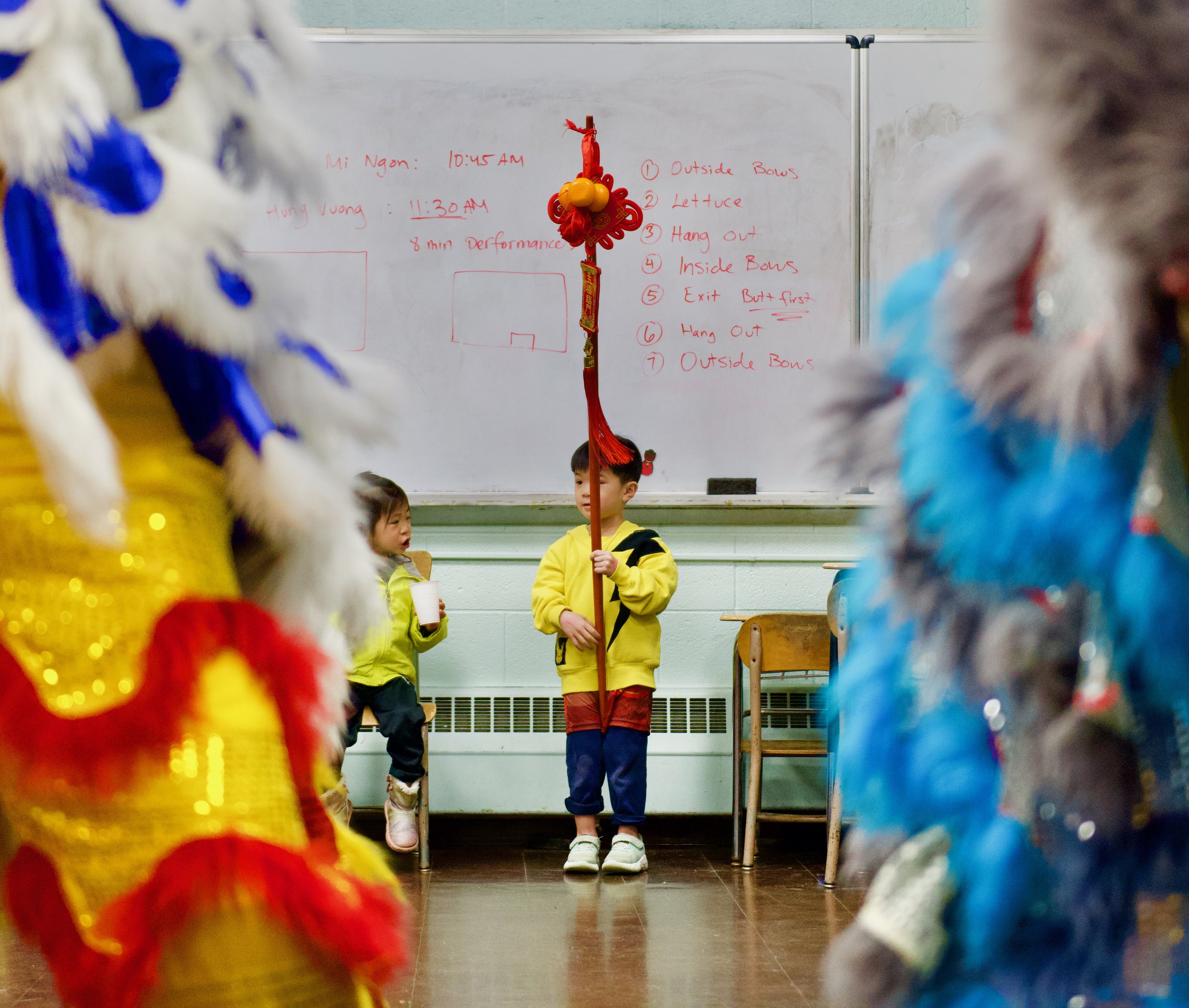
Linh is Vietnamese American. “I was born and raised in South Jersey. Everything I learned about my heritage is from my parents and from being around a robust Vietnamese community in South Jersey.” Many of the cultural practices she partakes in are “diluted, for lack of a better word.” For instance, sometimes Lunar New Year celebrations have to be scheduled around events like the Super Bowl or Valentine’s Day. However, straddling both cultures can have its perks. With the Lunar New Year always falling in January or February, “we joke that we get a second shot at our New Year’s resolutions. If we didn’t do a good job in the first month, we get to try again.”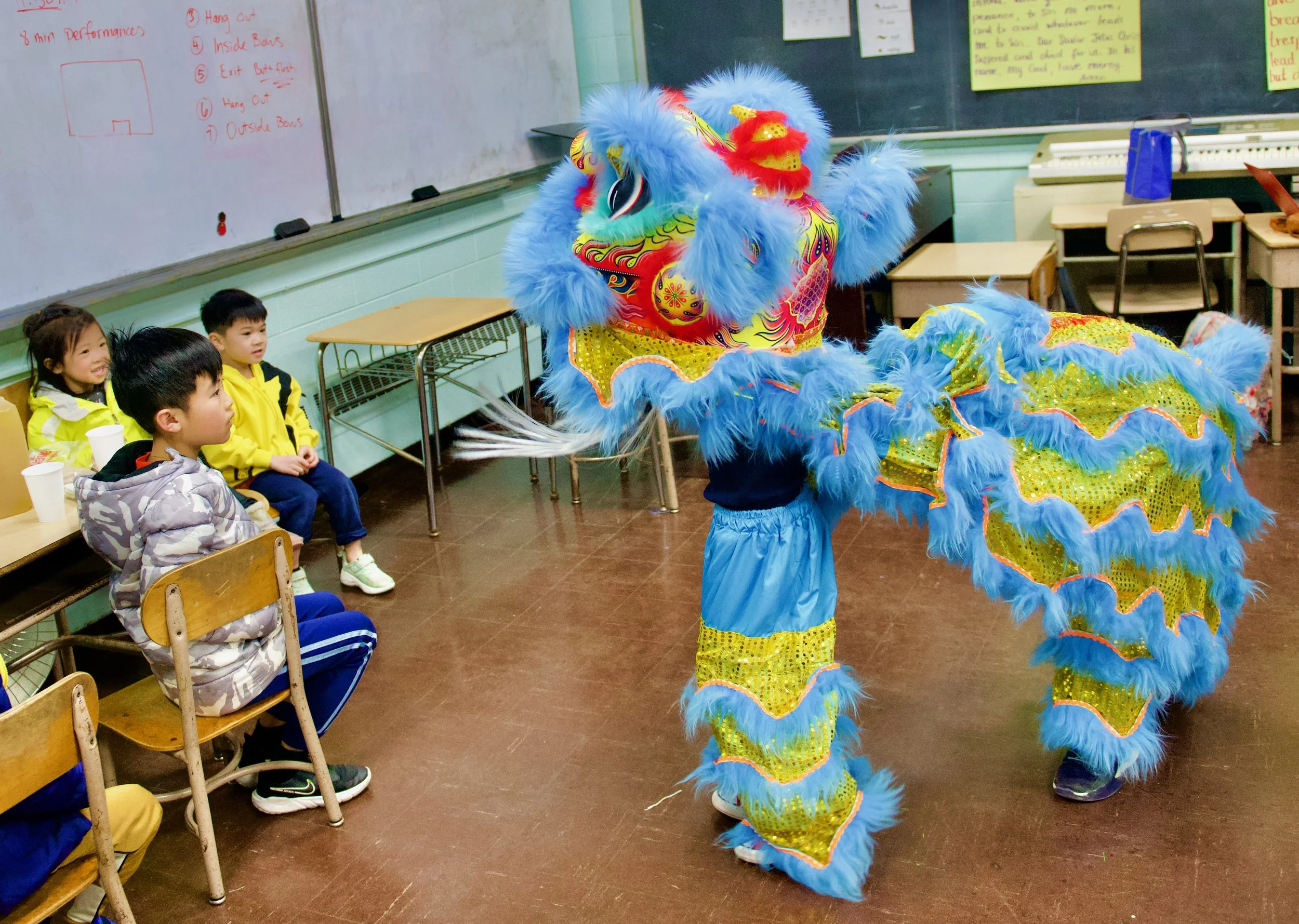
Joe was born in Hong Kong but “immigrated with my parents before I was one, and we came straight to Philadelphia. When I was in elementary school, we moved to Cherry Hill.” Both Linh and Joe, as well as many of the other adults in the troupe, work full-time outside of lion dancing. Joe is a second generation business owner; his parents opened a dental laboratory in Philadelphia in 1980 that he now runs. Linh is a physical therapist and started her own mobile outpatient business. Their roles as small business owners have been very helpful in allowing them to have the flexibility to attend all school assemblies and educational events for their troupe. Other members of the South Jersey Lions work in healthcare, graphic design, research, engineering, IT, and finance. But they all come together to practice their shared interest.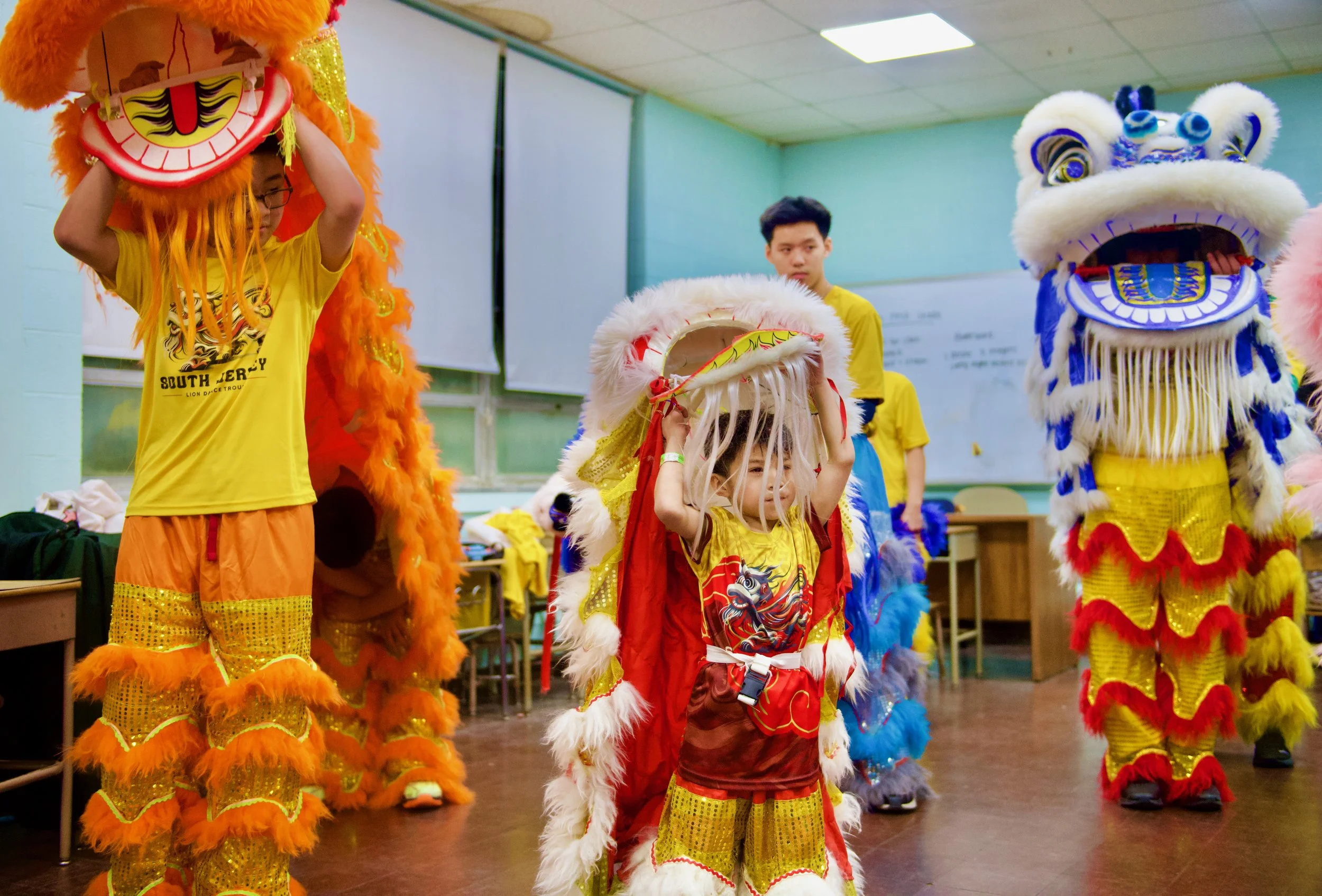
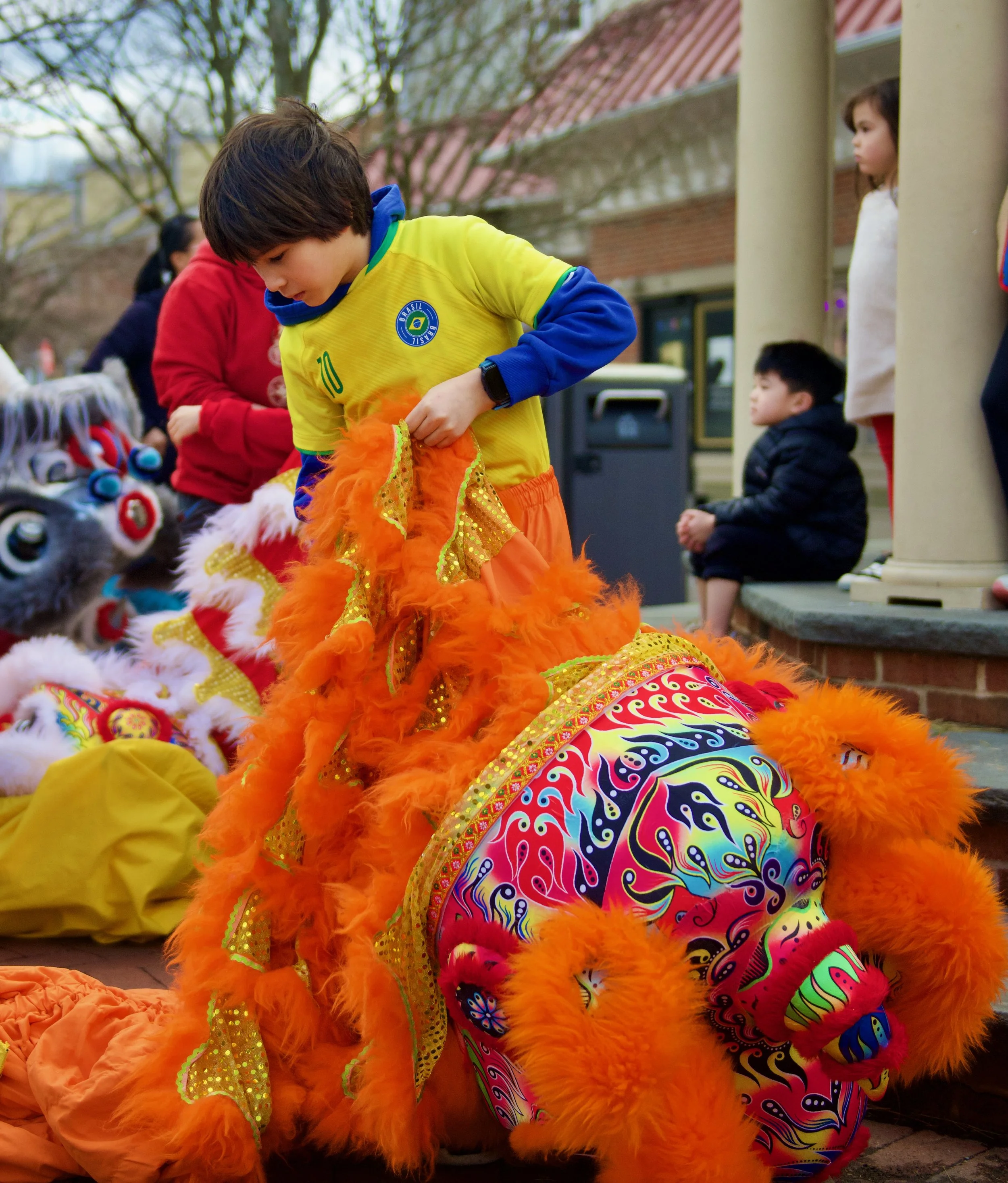
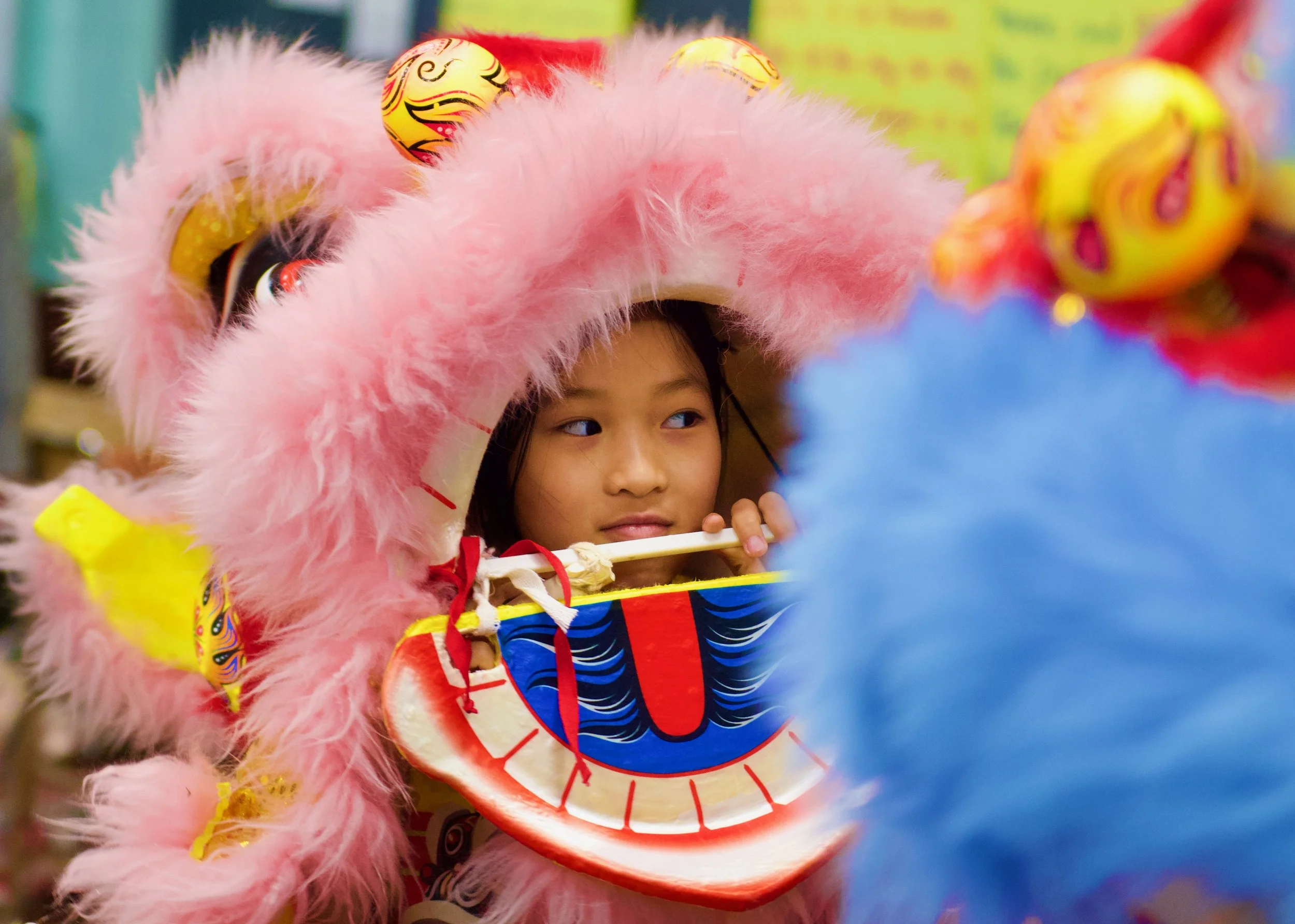
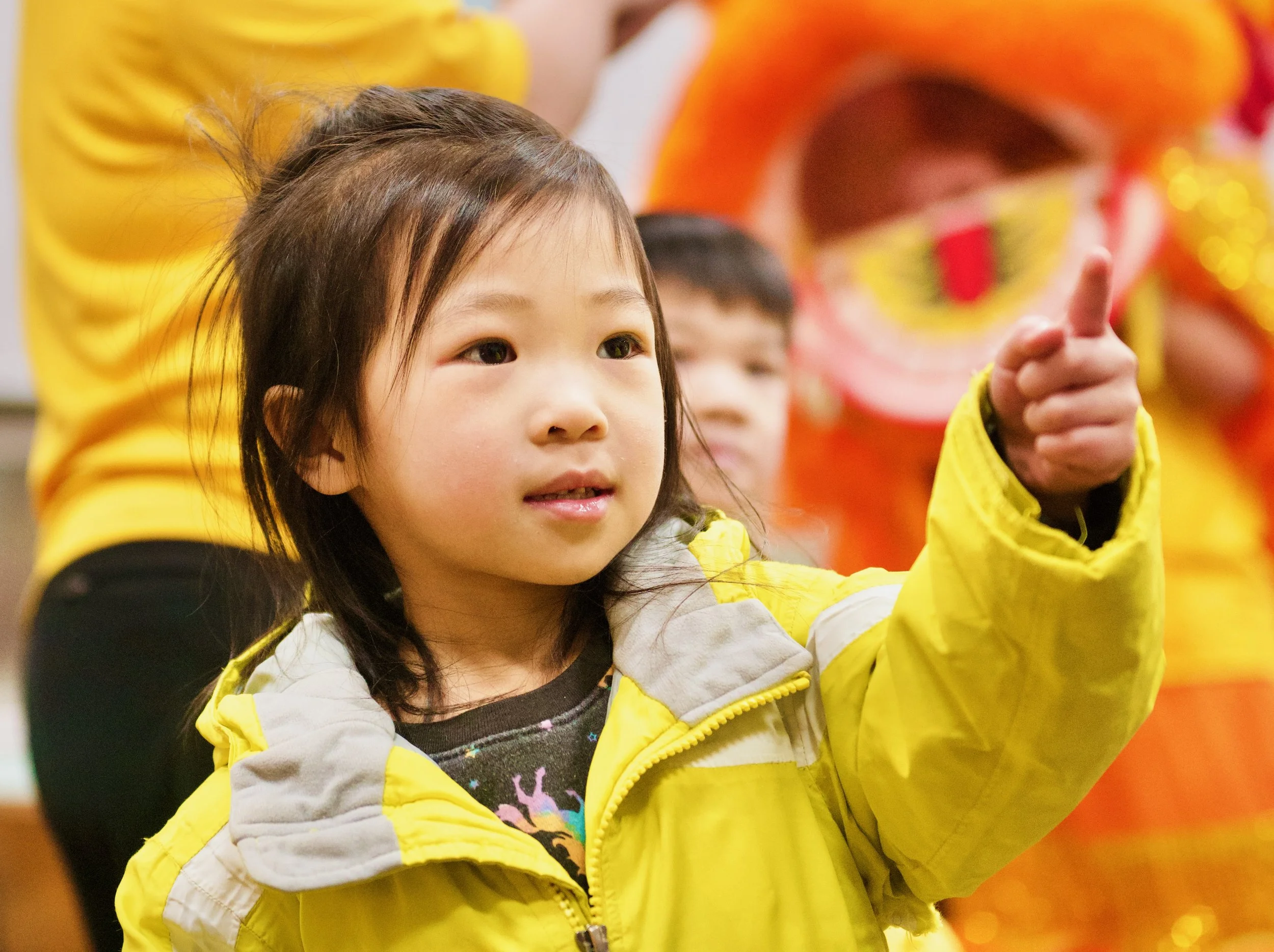
The adults in the group are very supportive of the children. (The little ones are called the “Bao Bao Lions.”) Many of the adult dancers attend the kids’ classes and volunteer their time as teaching assistants. Once the kids grasp a basic skill, the adults get a chance to practice it too. “But the majority of the time, the adults are outside the lion heads and just giving cues to the younger ones.” The youngest member of the troupe is 6 years old. “The best thing about lion dancing is that you can really do most of the techniques at any level. If we go over one technique with a person who is a beginner, great, that’s what they are going to do. But if you are a little more advanced, we will do the same thing, but I will add a little twist to it. So we are all practicing, but everyone is practicing at different levels.” Linh’s youngest child, her 4-year-old son, attends classes as well, even though he isn’t quite ready to start dancing yet. “I don’t get babysitters for this; I want him around it. He picks up a lot just from sitting and playing. Everyone gets to have their own experience.”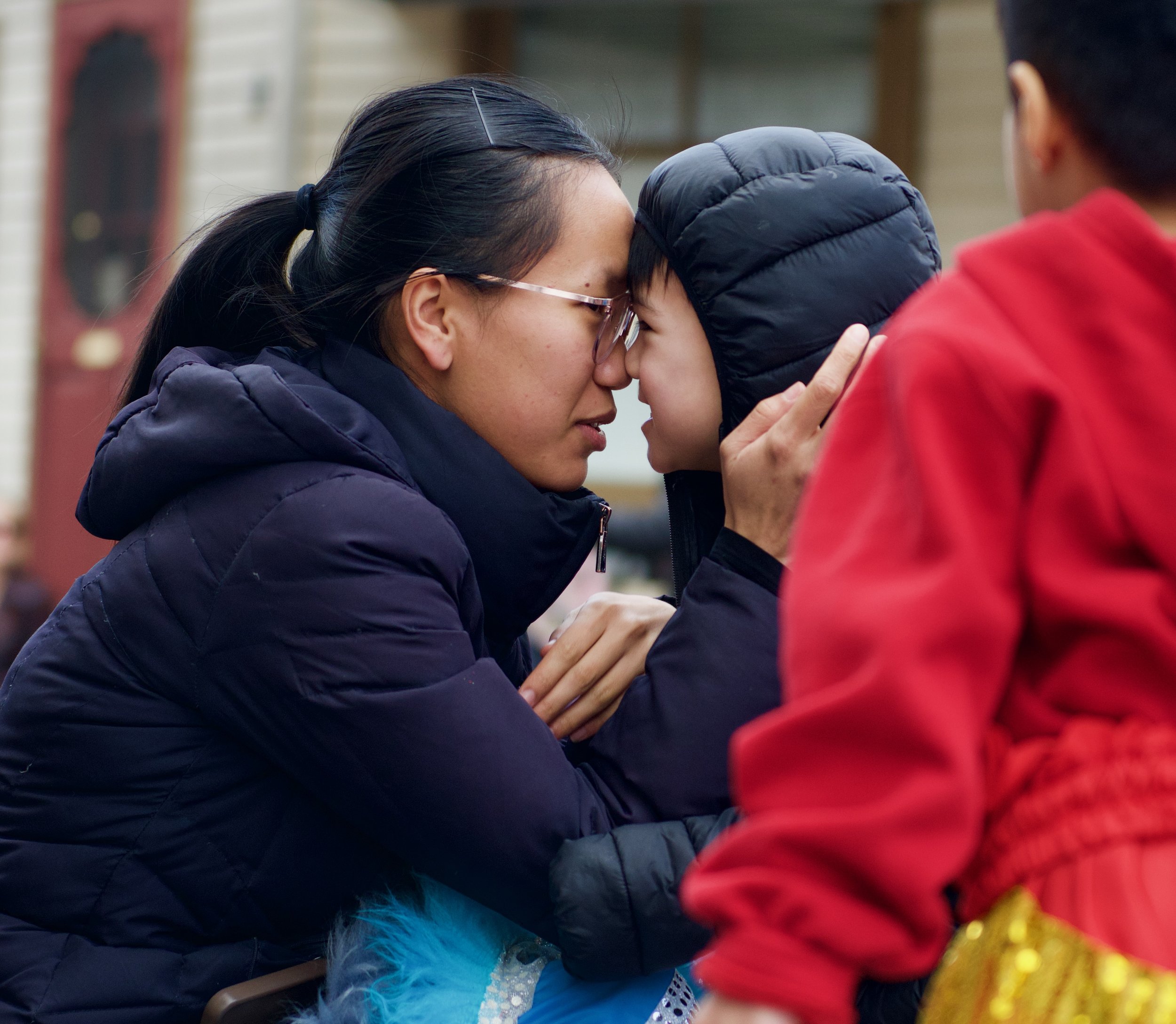
For Linh, the most rewarding part of leading the South Jersey Lion Dance Troupe is seeing her kids enjoy it just as much as she does. Her older son performs as a Bao Bao Lion and “he is so funny. When he does lion dancing, he’s the star. He’s so amazing, and he loves it.” The Bao Bao Lions are notorious for stealing the show.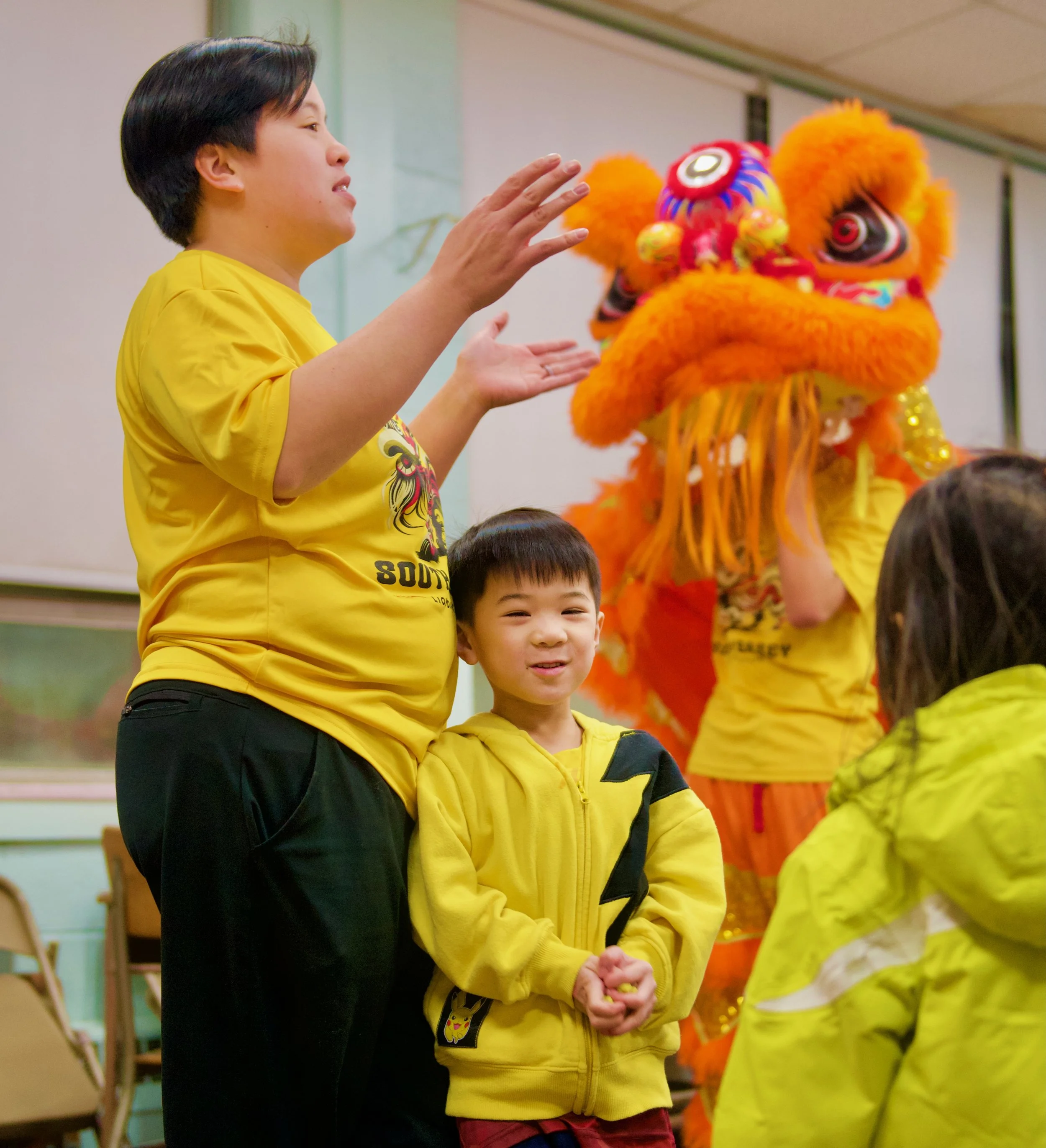
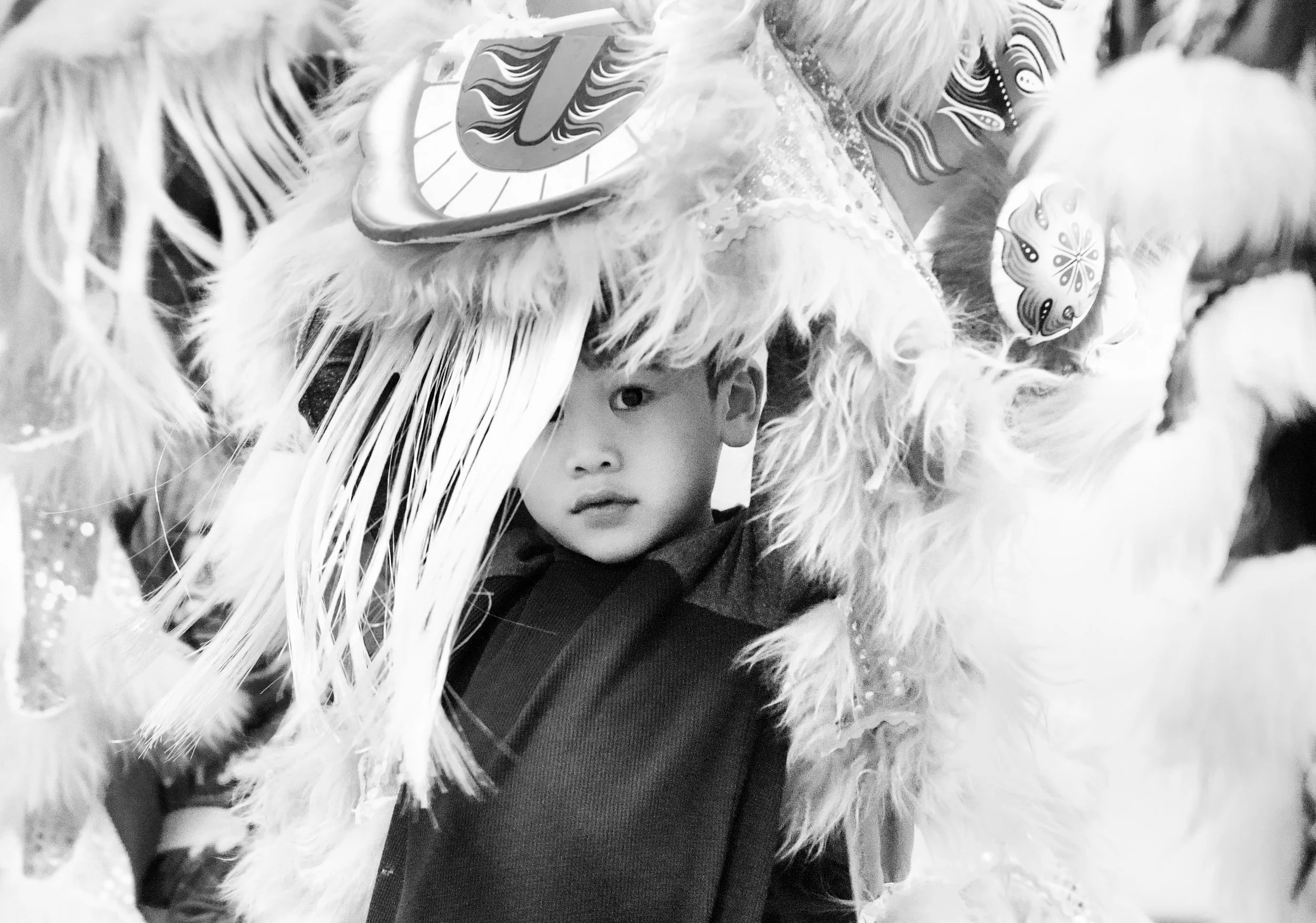
Everyone is welcome to have a part in the group, even if they don’t want to dance. There are musical roles, such as playing the gongs, the cymbals, and the drums. “There’s always something to do. For people who don’t want to be lion dancers but still want to help out, we can always use help at our big events for things like crowd control, pushing carts, and unloading. We need a lot of people around to help with all the kids.” During their summer parade, they have members walk around with a little spray bottle and spray the kids’ faces and hair to keep them cool. They sneak them little gummy bears. “We tell them, ‘Hang in there! You’re doing great!’ They love it.”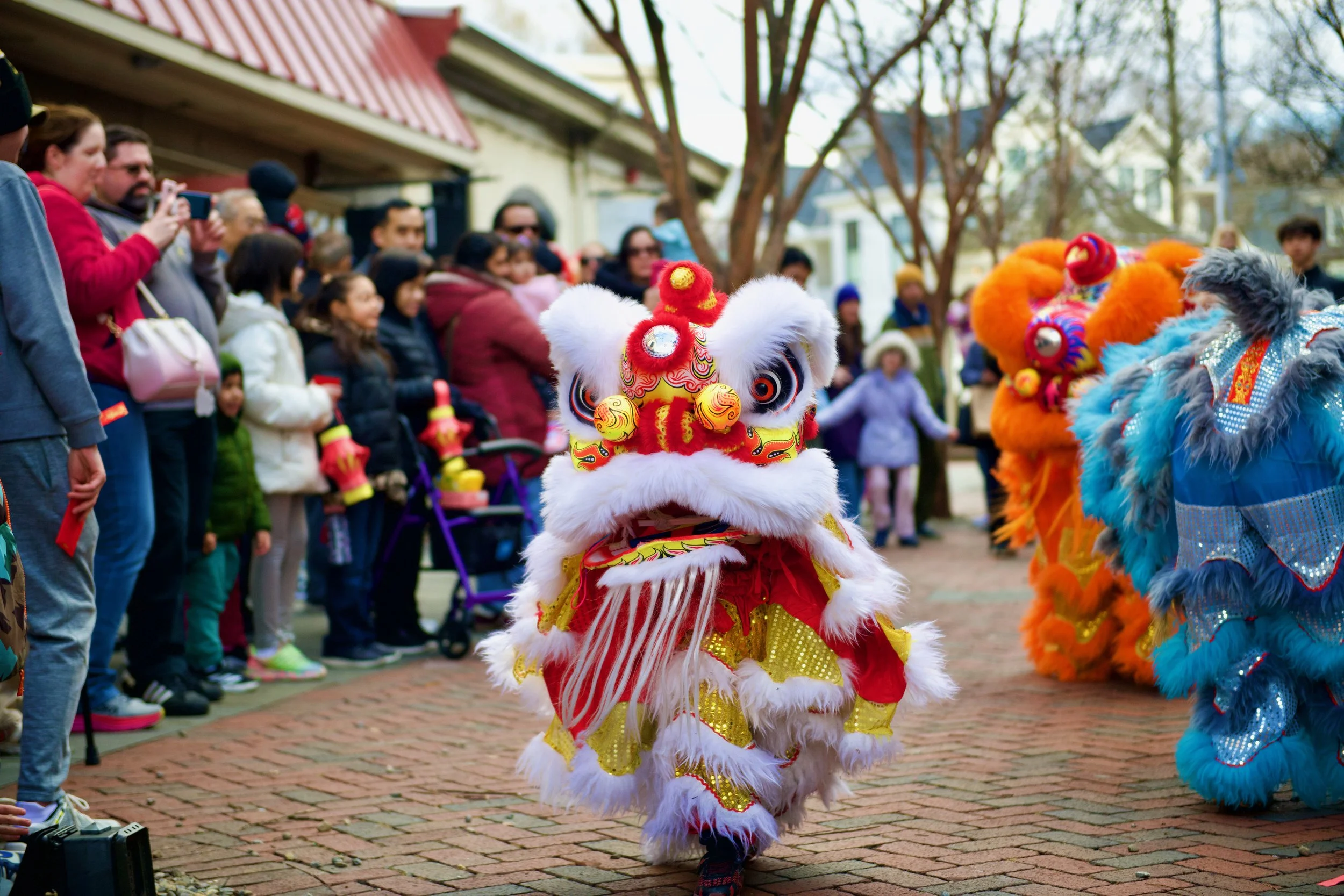
In addition to parades, assemblies, and Lunar New Year events, the troupe performs for celebratory occasions, such as weddings, grand openings, and milestone birthdays. Having lion dancers at the event is meant to “bring good fortune and good luck, warding off anything bad. That’s really the significance of doing it.”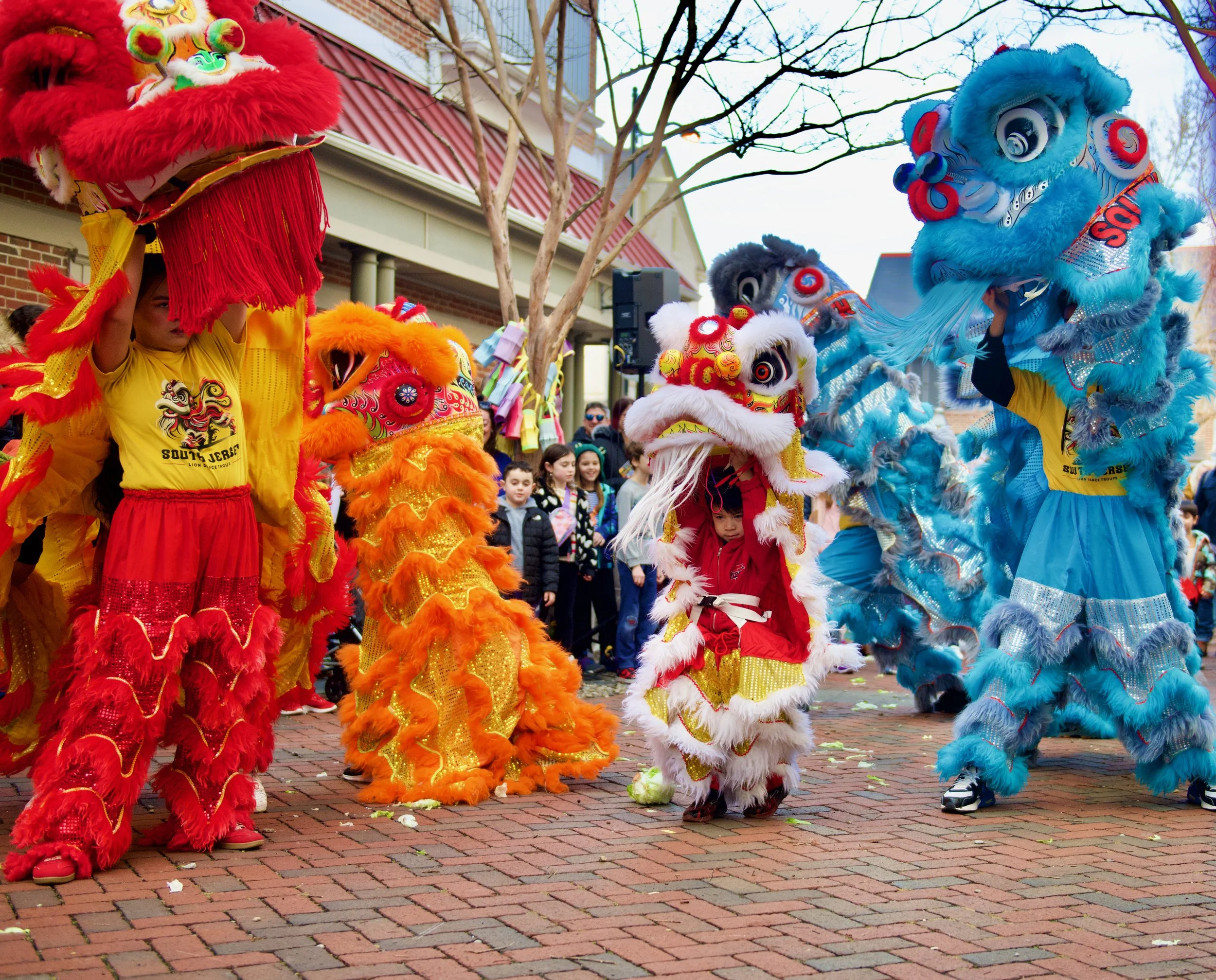
None of the members of the South Jersey Lion Dance Troupe are paid for their participation; everything is on a volunteer basis. “We are really fortunate to have a strong team of volunteer performers and their families who are willing to support them.” The group is under a non-profit organization called VACEC (The Vietnamese American Cultural and Educational Center). Linh’s father founded VACEC in 1997, and Linh’s sister is the current chairperson. While VACEC was originally created for Vietnamese Americans, they have broadened to serve all Asian Americans. The goal of the VACEC is “just to spread cultural awareness of Asian Americans.” Any money the troupe makes from their performances and presentations goes back to VACEC or the group for equipment renewal and basic performing expenses.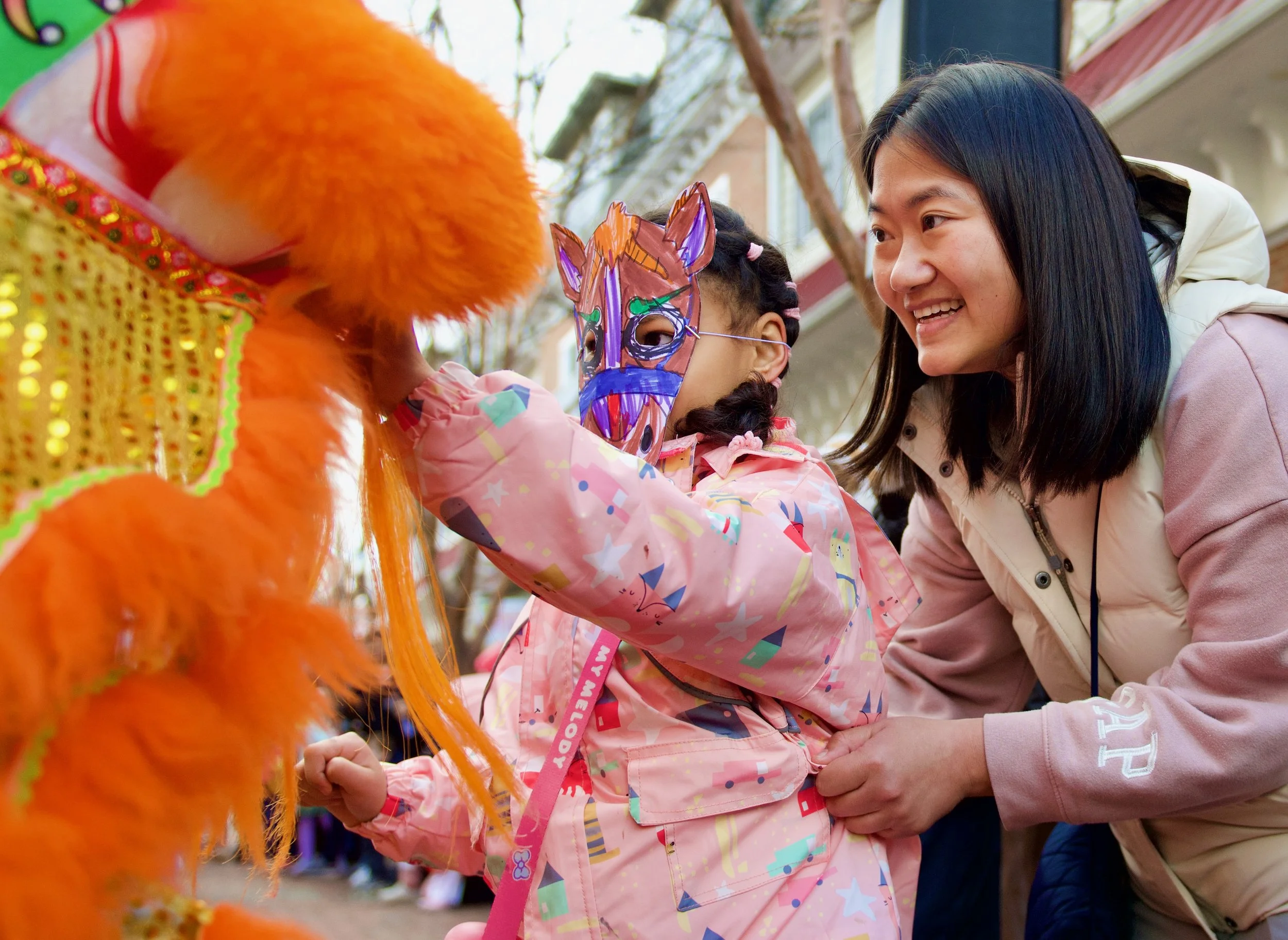
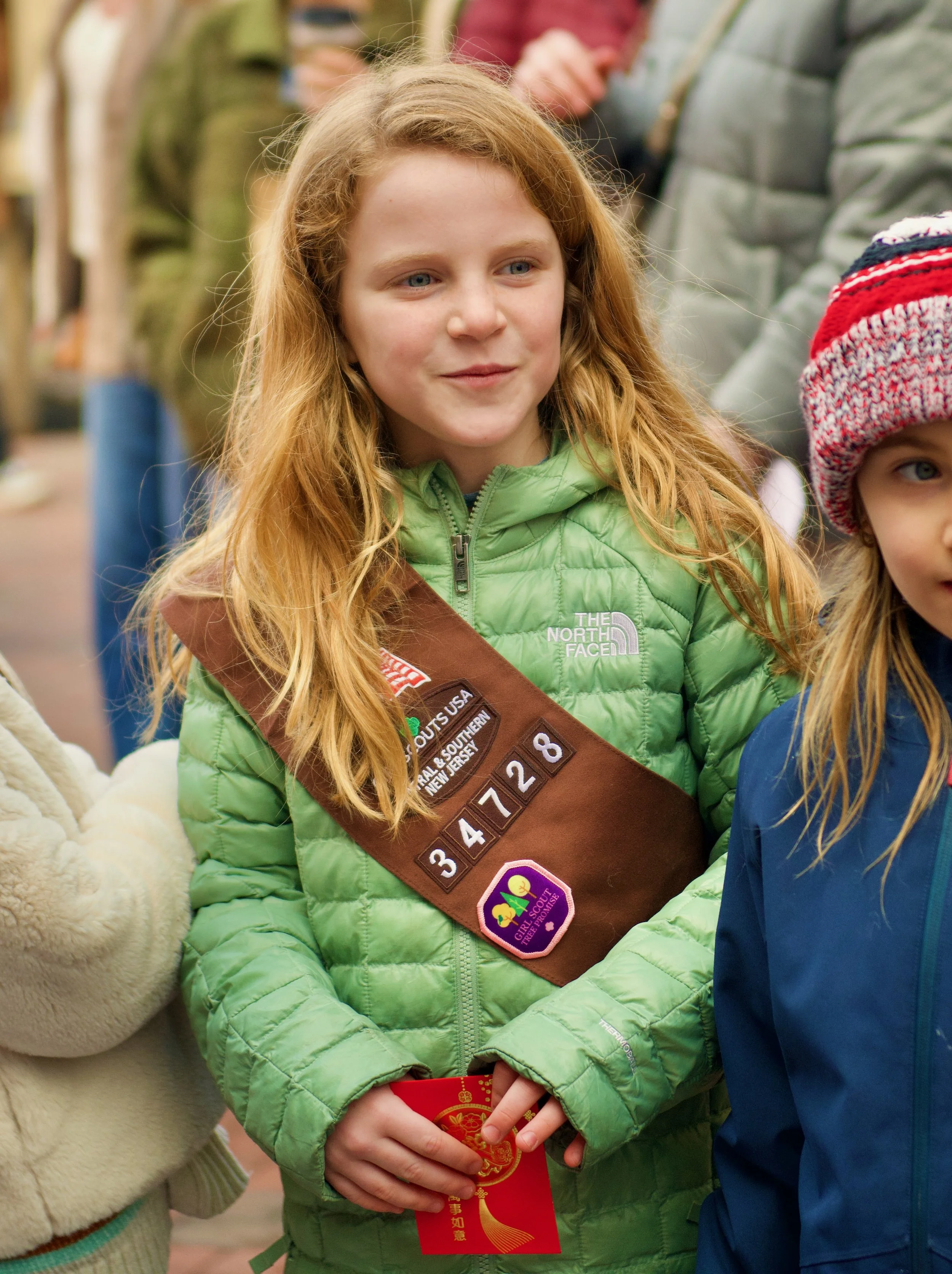
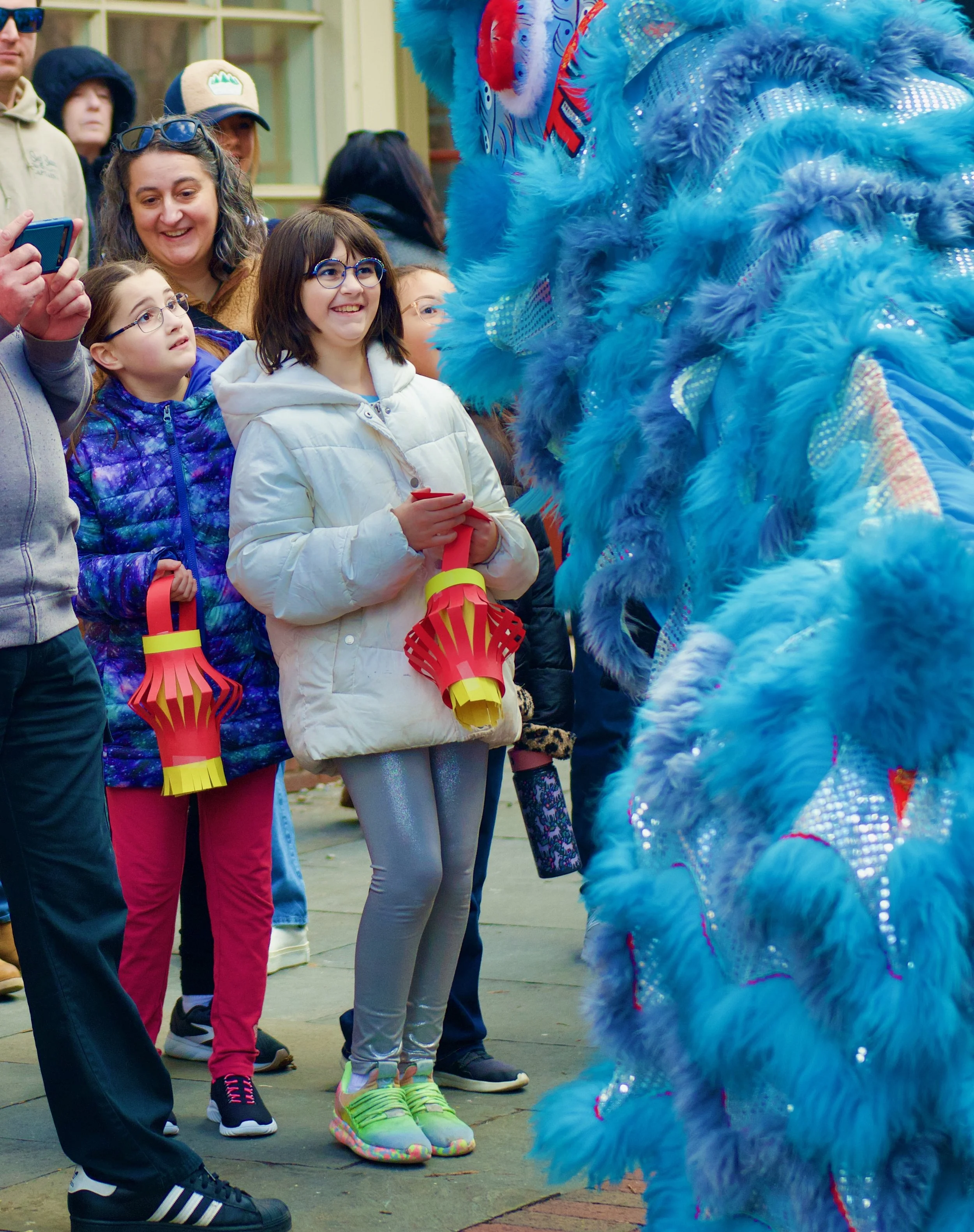
The South Jersey Lions have grown significantly over the past few years. “We have so many people reaching out for the Lunar New Year; we are booked solid. People are wanting to learn about it. They want more. It’s so great.” The troupe was recently featured on PHL17 and 6abc news as well as Lunar New Year celebrations throughout the South Jersey area. Joe says that everywhere they have performed, they have felt welcomed and supported. “It has been so much fun. The reception has been so great.”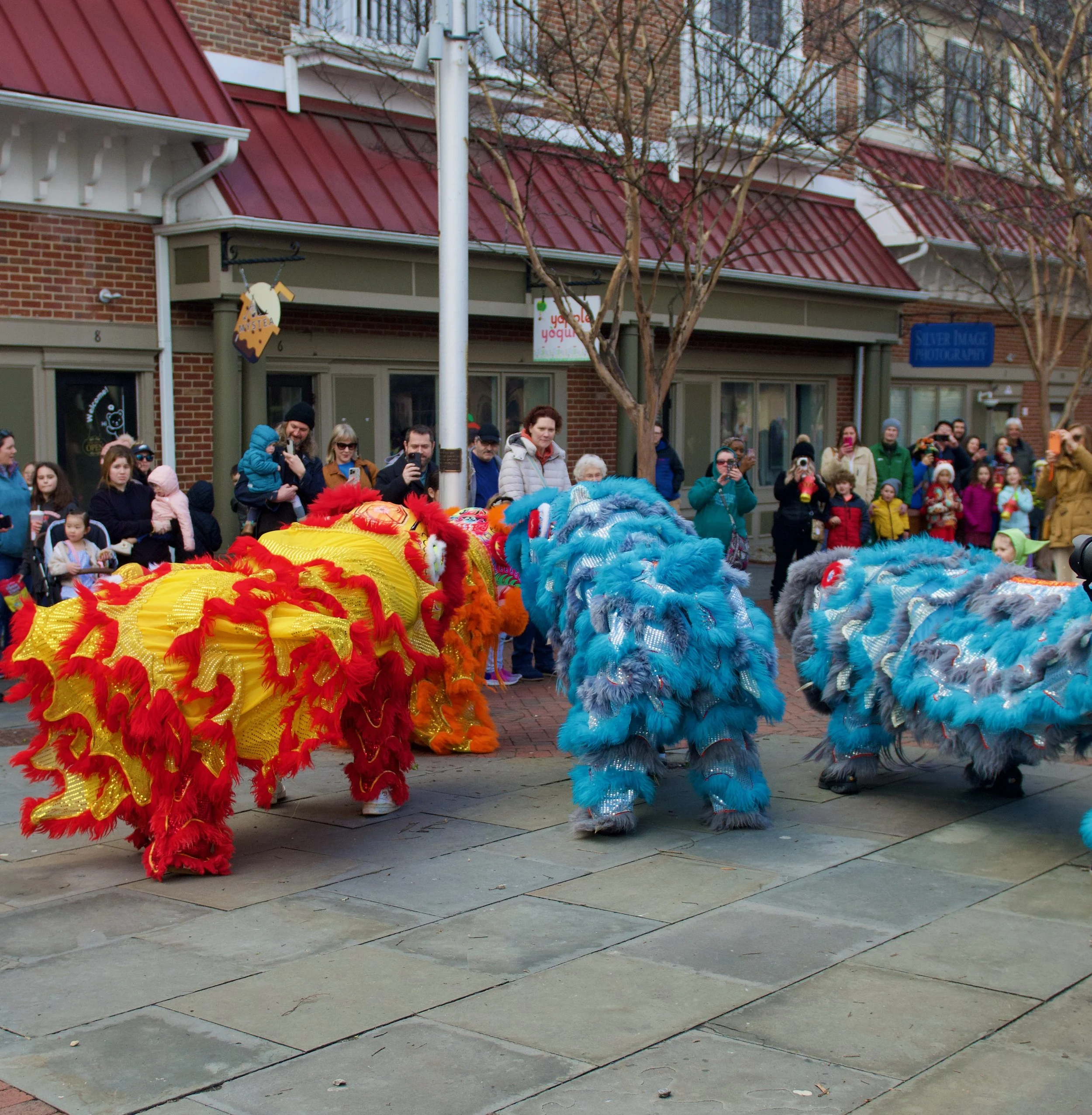
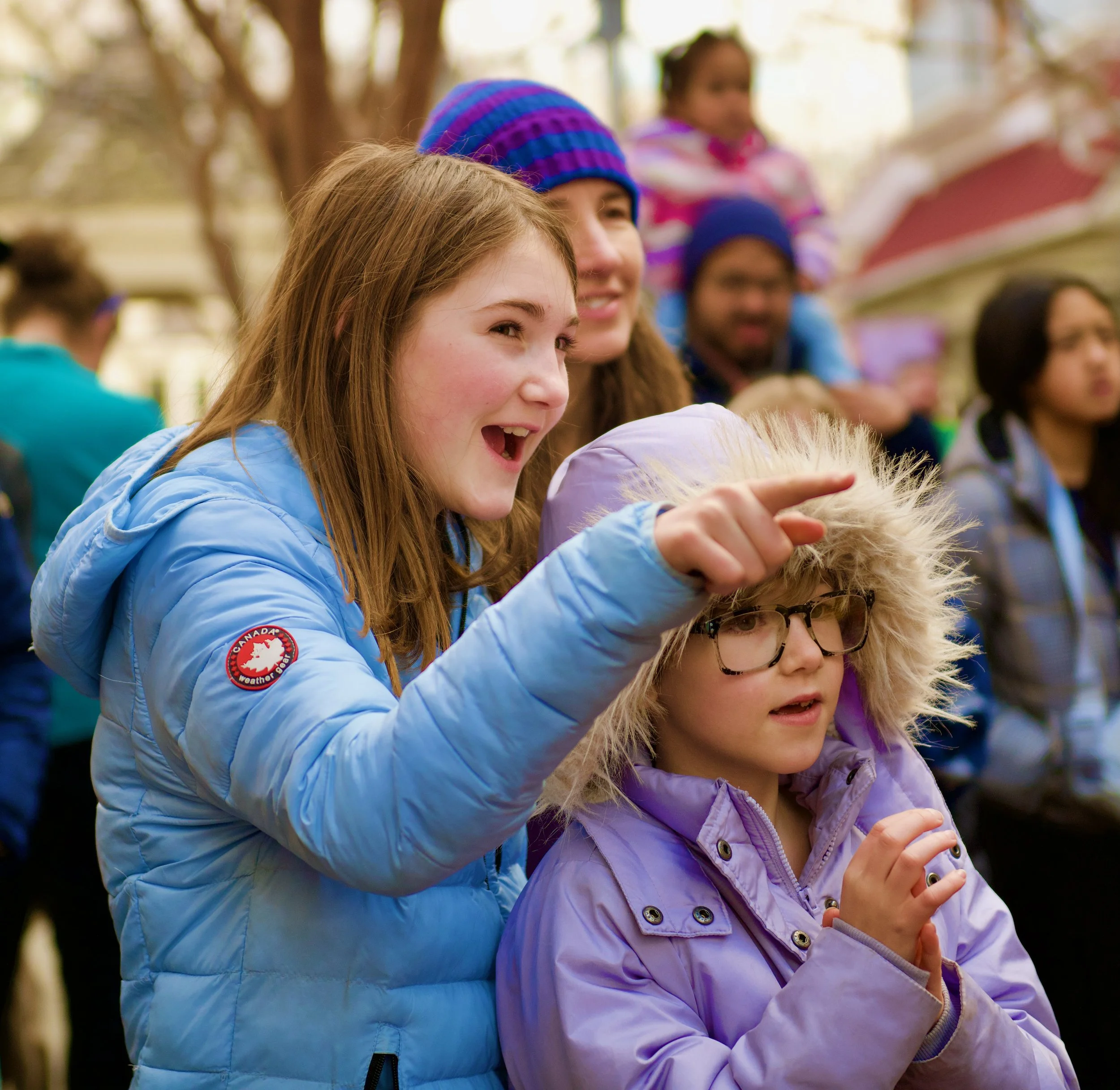
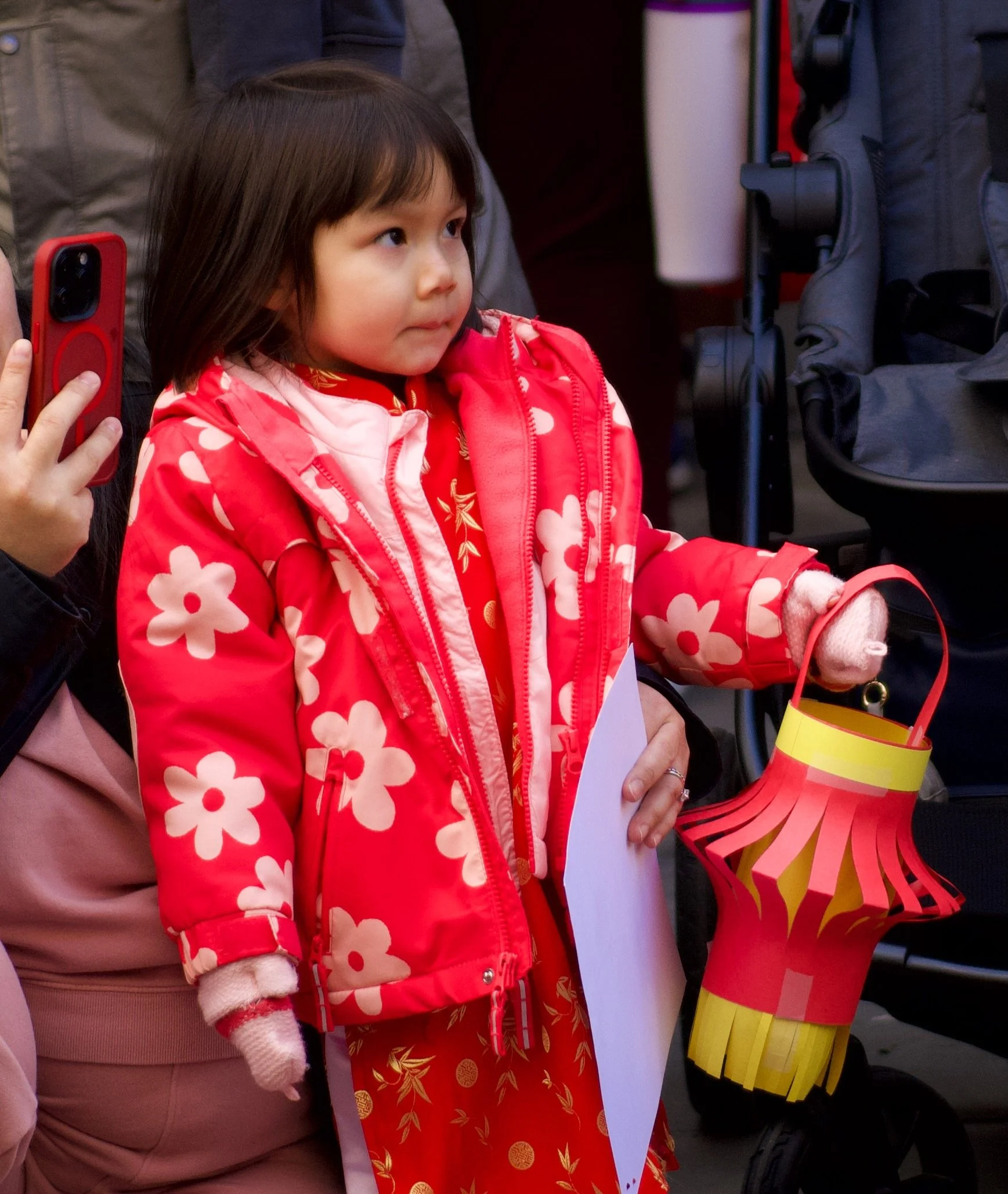
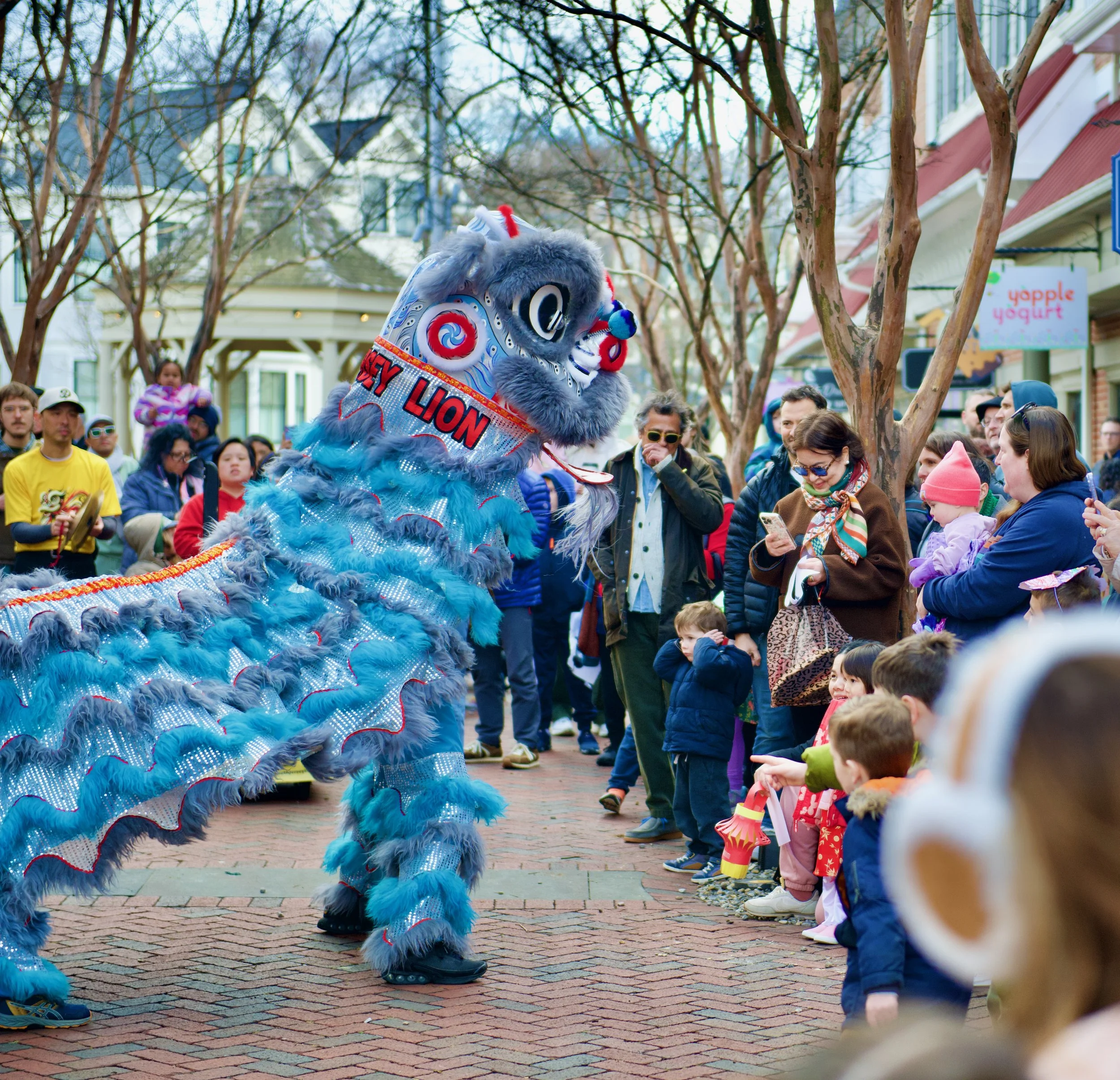
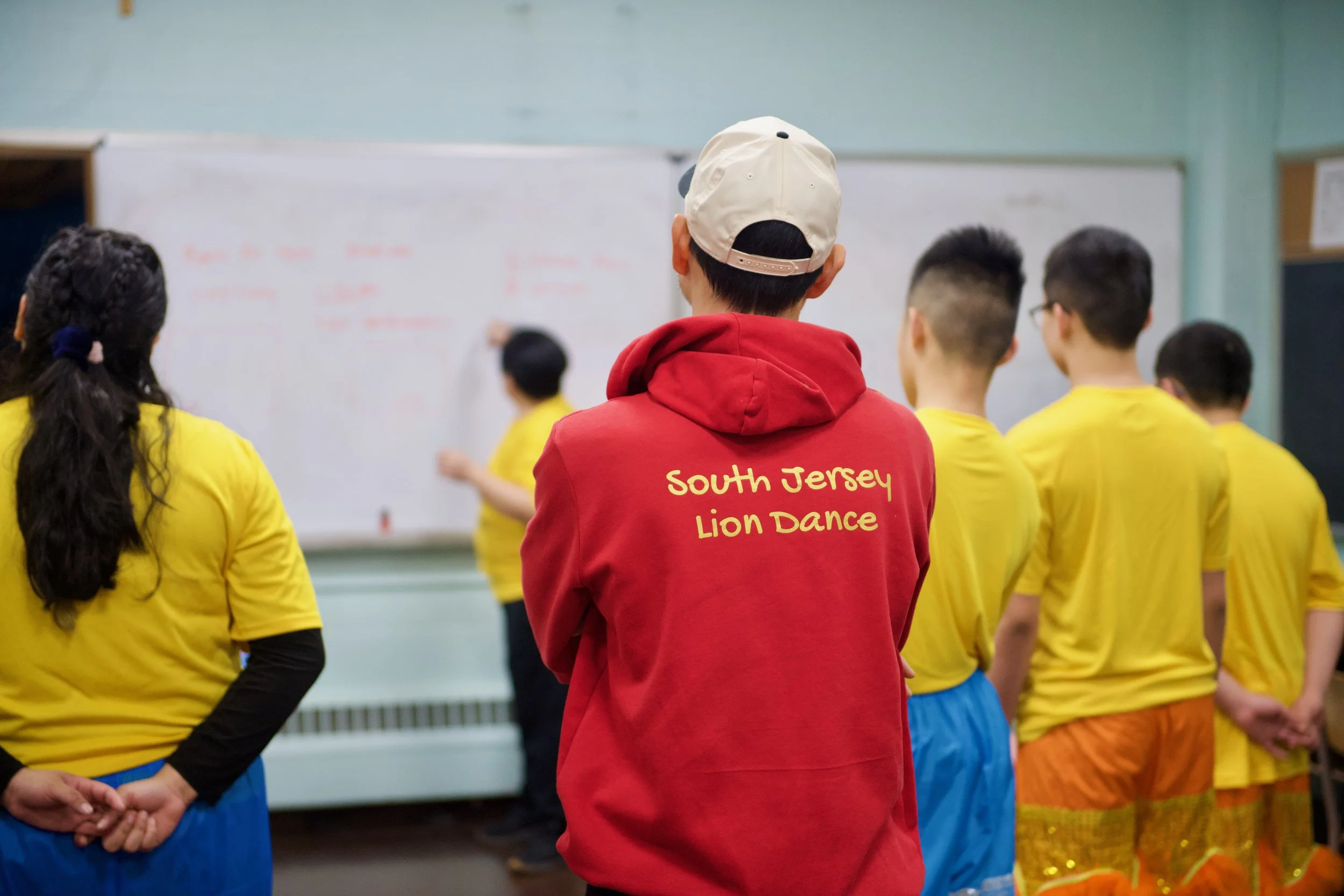
Linh and Joe invited me to join one of their Friday evening rehearsals at the Vietnamese church, followed by a downtown performance for the Lunar New Year. All of the group members were incredibly friendly, and they were eager to introduce me to the powerful art form they love. Many of the performers I met had just started lion dancing within the past year or two, with the revitalization of this group. Regardless of how long each had been performing, it was clear that the tradition of lion dancing has been a cherished piece of their background. One of the members told me, “This is my first year dancing, but I grew up watching it in my church all the time. The beat of the drum feels like it is ingrained in my heart.”