A1 Basketball
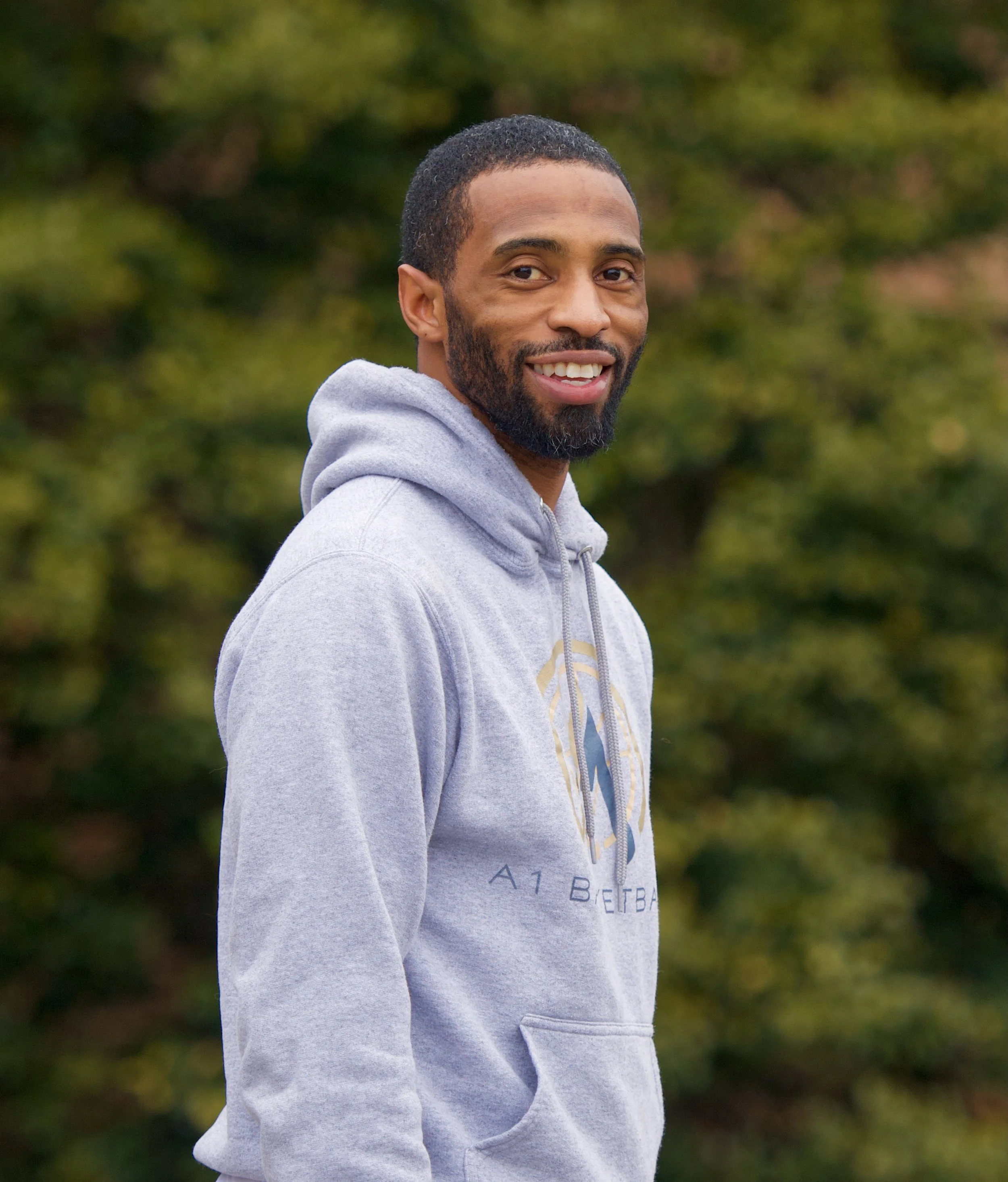
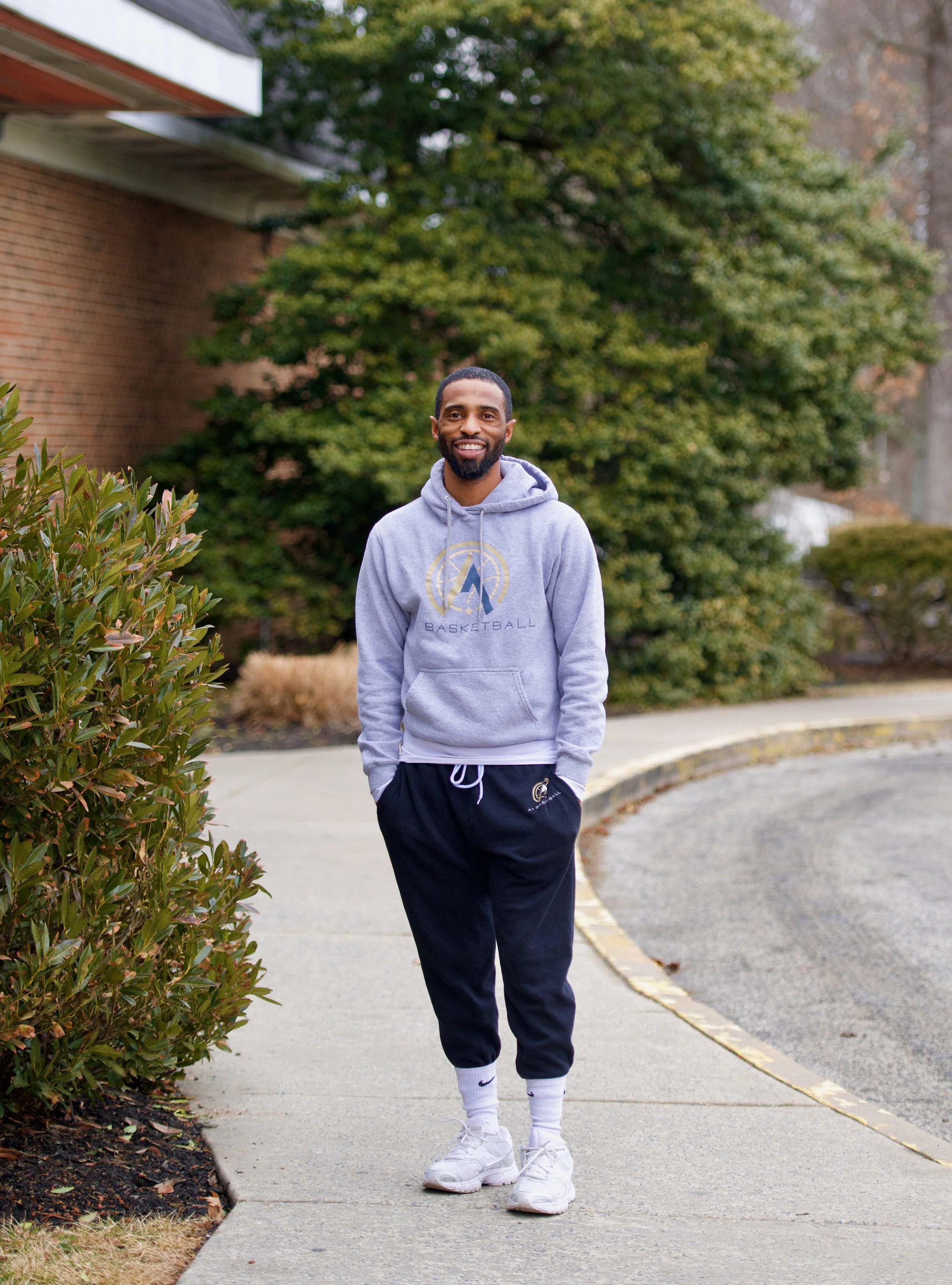
For Allen Pritchett, A1 Basketball is not just the business he created - it’s the purpose-filled calling he couldn’t ignore.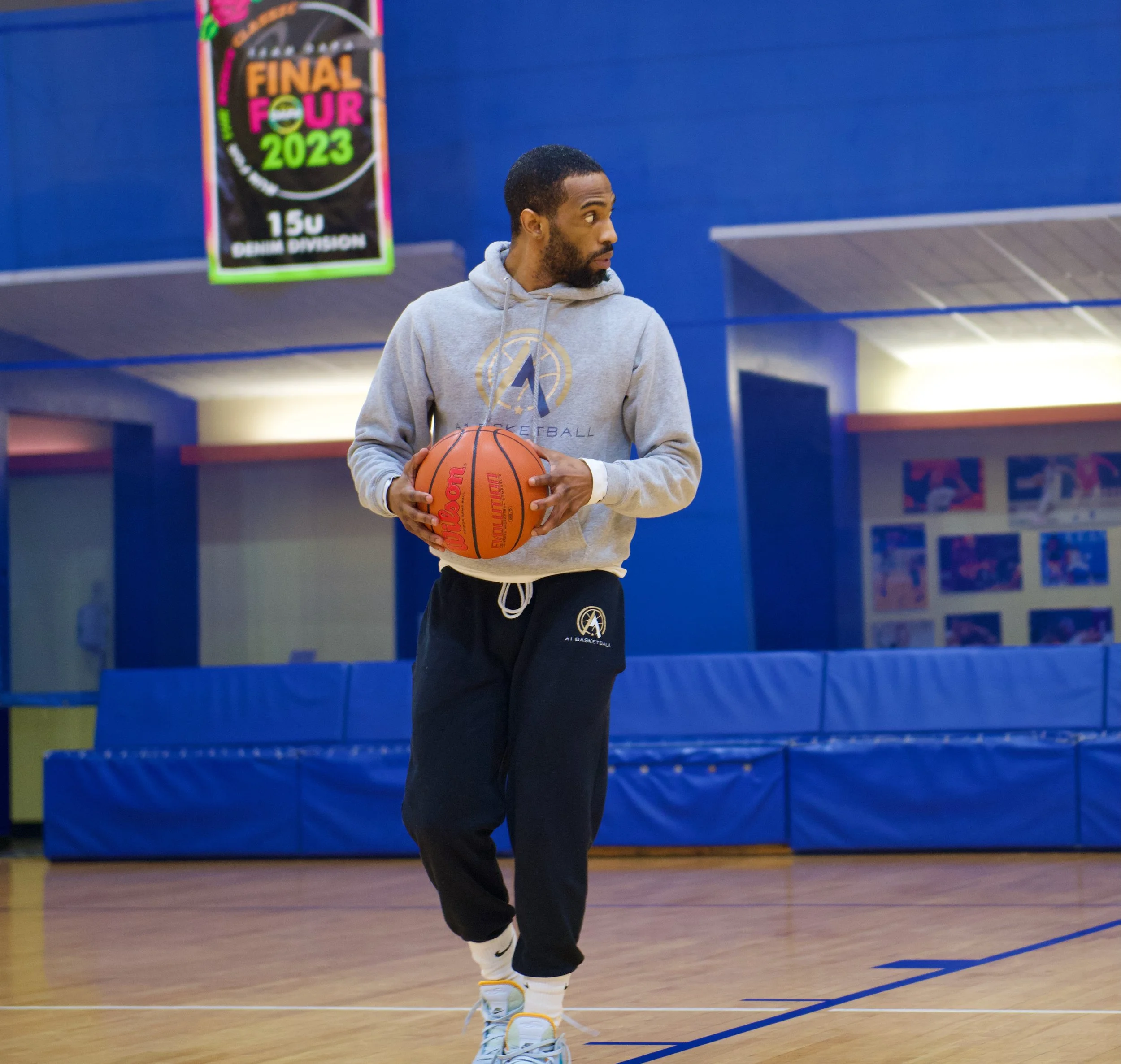
Sports played a major role in Allen's childhood. “Camden is not an easy area to grow up in. You can see that from the outside looking in. But the youth sports programs when I was growing up were tremendous.” The structure of the programs helped distract children from the challenges going on around them. “There were so many activities for us to do, it helped alleviate certain things that were happening in our surrounding communities.” You were always safe when you were playing sports.
After living in Camden for many years, Allen moved to Haddonfield to live with his grandparents, and then he eventually transferred to Woodbury High School. Through all of these changes, he always used basketball as a tool to keep him focused. “Sports teach you how to be a better person more than anything. You learn teamwork, you learn adversity, you learn mental toughness, you learn resilience, you learn so many things, and then you pour all of that into yourself as a person. Sports help you deal with everyday life problems. That’s how they played a role in my life.”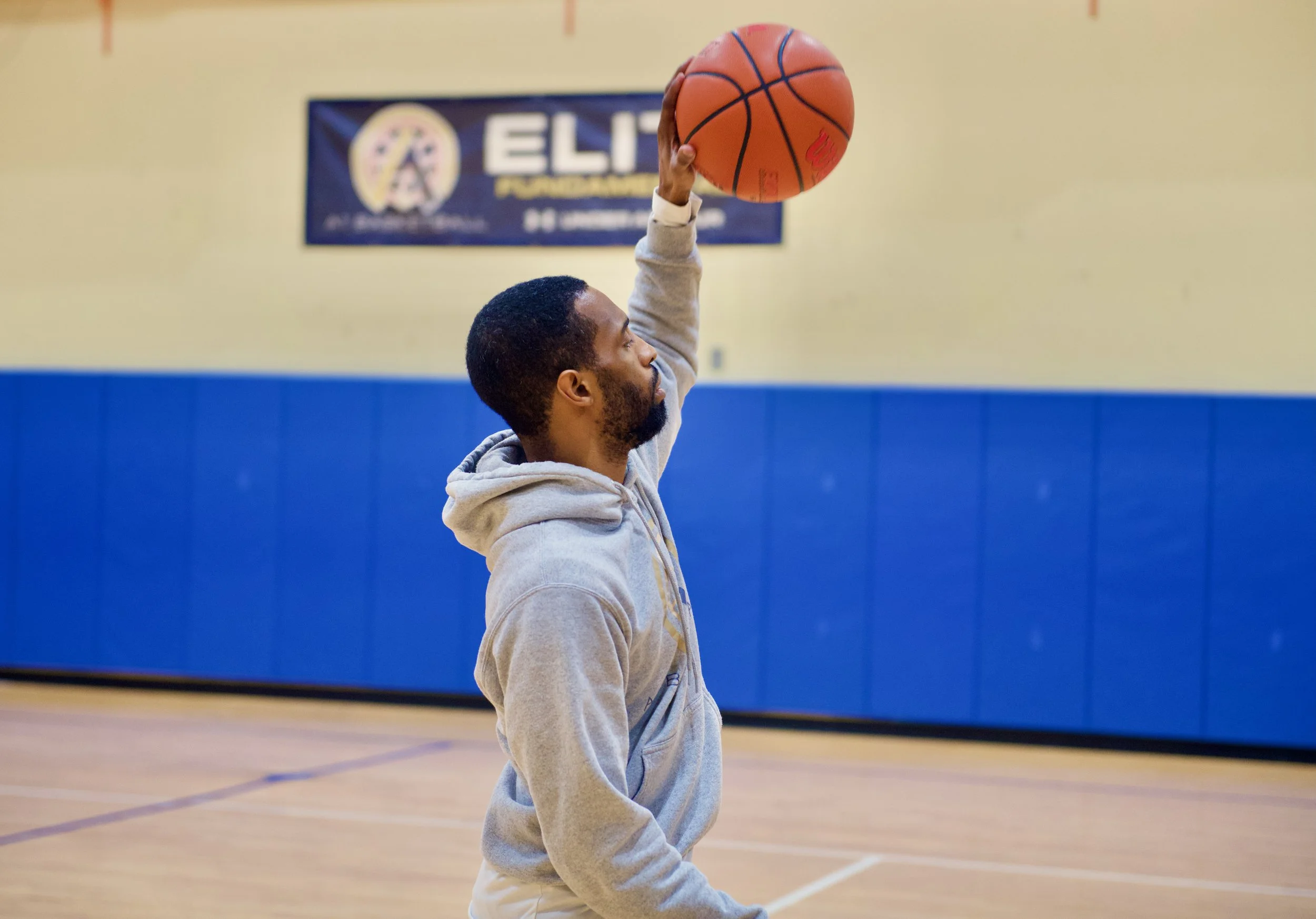
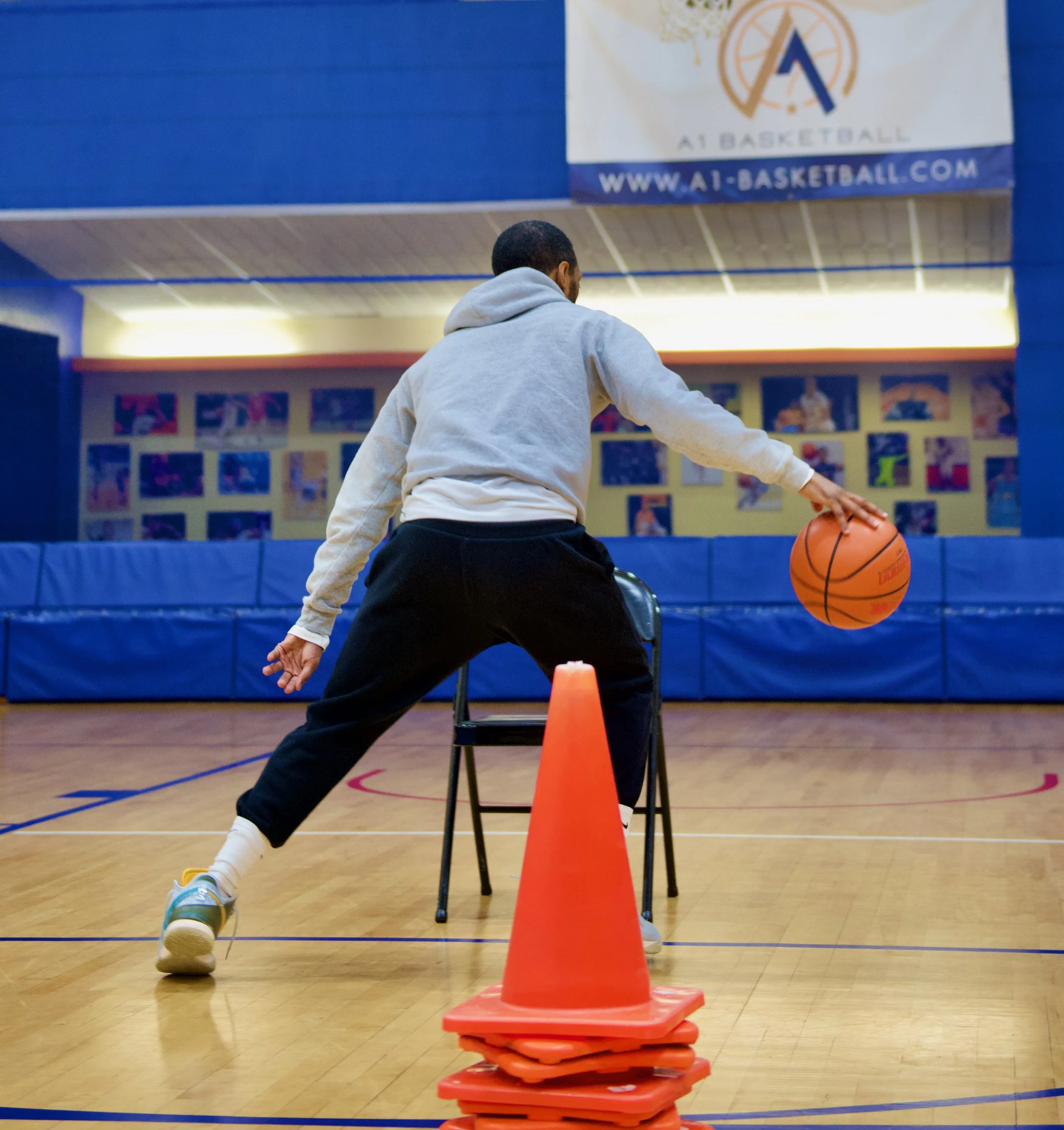
Allen didn’t just play basketball. Among other sports, he played baseball and has a first degree black belt in martial arts. But basketball was his favorite. “I’ve been playing since I was 5. I always just used to play at the park. I didn’t play organized basketball until I turned 11, but I always had a basketball with me.”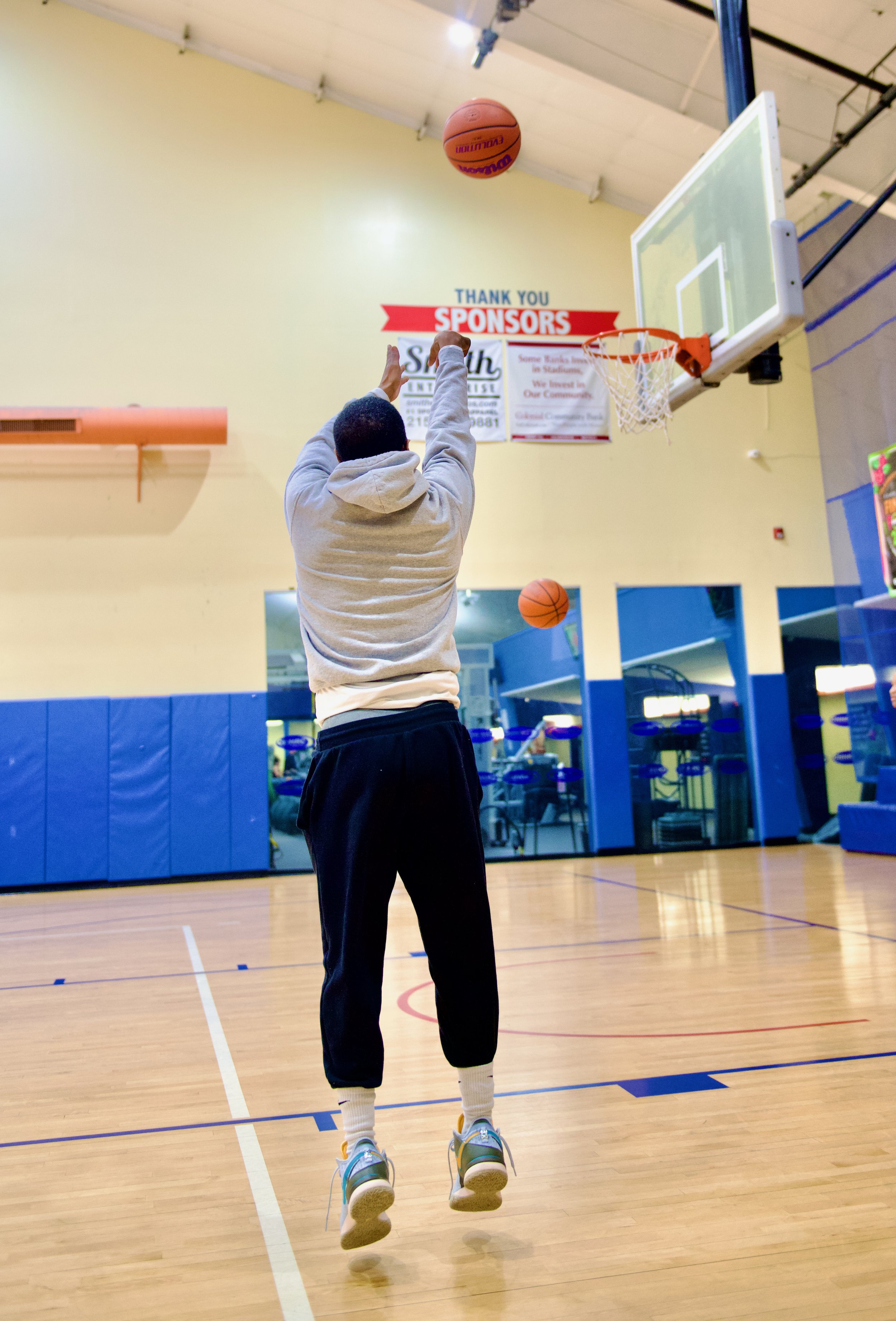
Allen moved on from high school to play collegiate basketball. Once he finished his basketball run, he decided to pursue a career in the fashion industry. He began learning many entrepreneurial skills, such as branding, marketing, and how to build up a business. His natural love, however, was still sports. It was during this time, around 2014, that the uncle of a high school basketball player in Woodbury reached out to him. “He asked if I could start helping his nephew. At the time, I was still in the fashion industry, but I agreed.” Allen started by ensuring that this player “was developmentally sound across the board. I made sure that he did the work with every part of the game that was fundamental. He then replicated these skills during the actual game. You could see in real time how much better he was getting.” Allen could appreciate how much his coaching helped one person, but he wasn’t sure if it was just good luck or due to his personal training style. “Once you see that happen with one kid, you think, ‘Ok, let me try it again with another kid to see if it goes the same way.’” Over time, he repeatedly began to appreciate the benefits of his method, which he says is “simply teaching the game the right way.” The results spoke for themselves.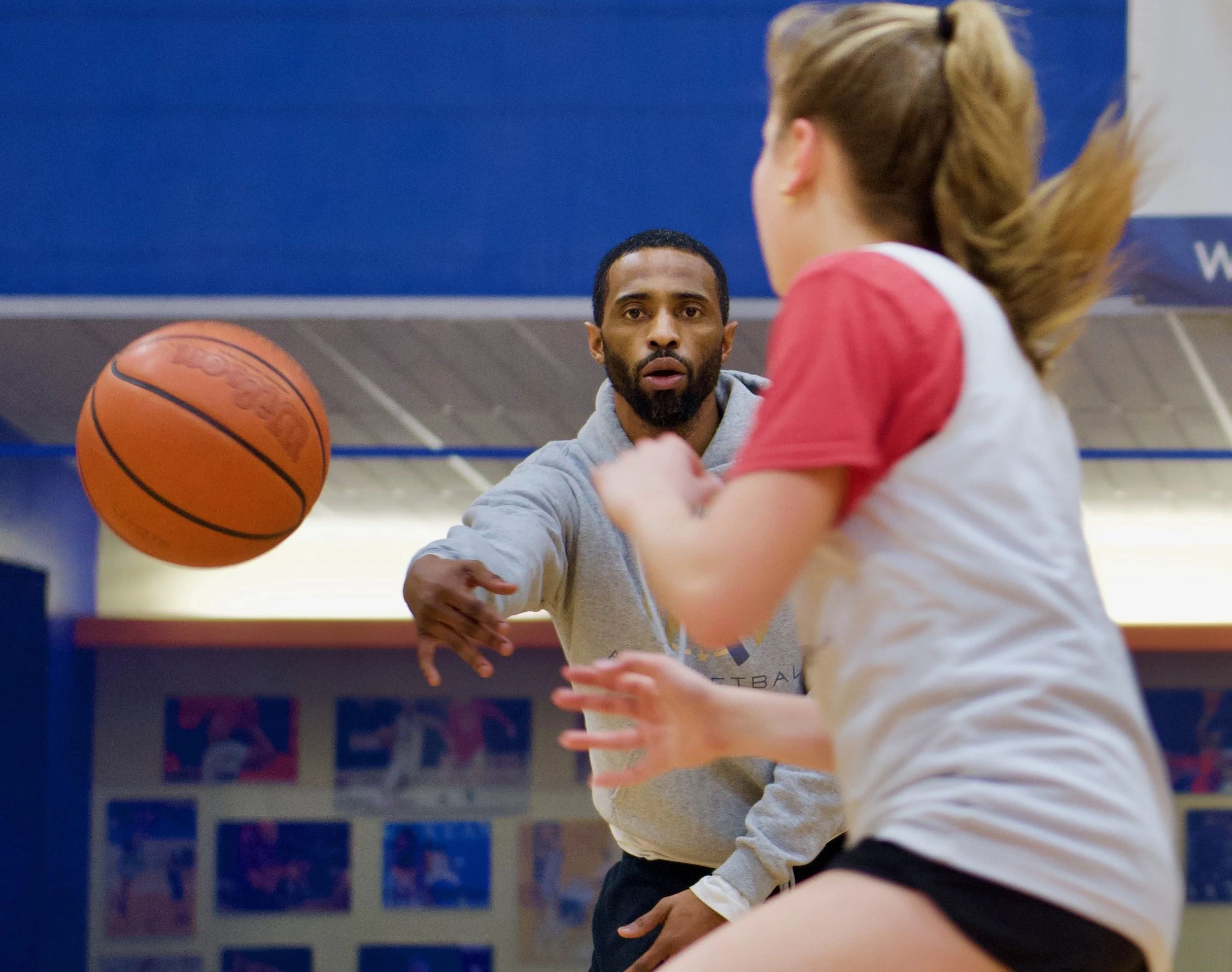
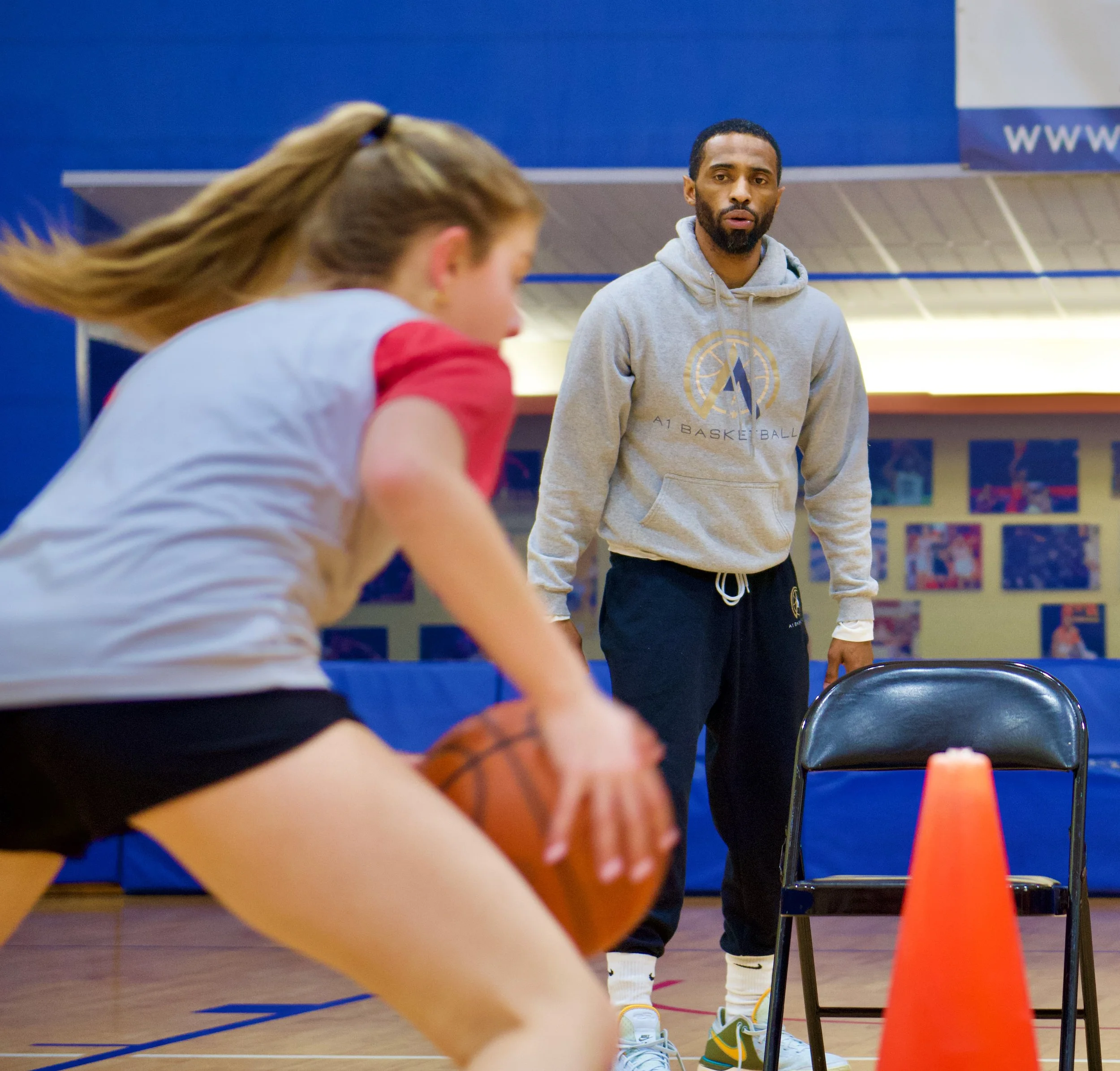
Allen coached his first student at a local park. Over time, more kids started joining in. “A lot of the local kids who lived in that area of Woodbury started coming to that park; I had about 20 kids working out there and training. Eventually, parents were like, ‘Hey, we need to pay you something, you’re out here in the sun…’ and I said, ‘All right, just give me $35 or something, it doesn’t really matter.’”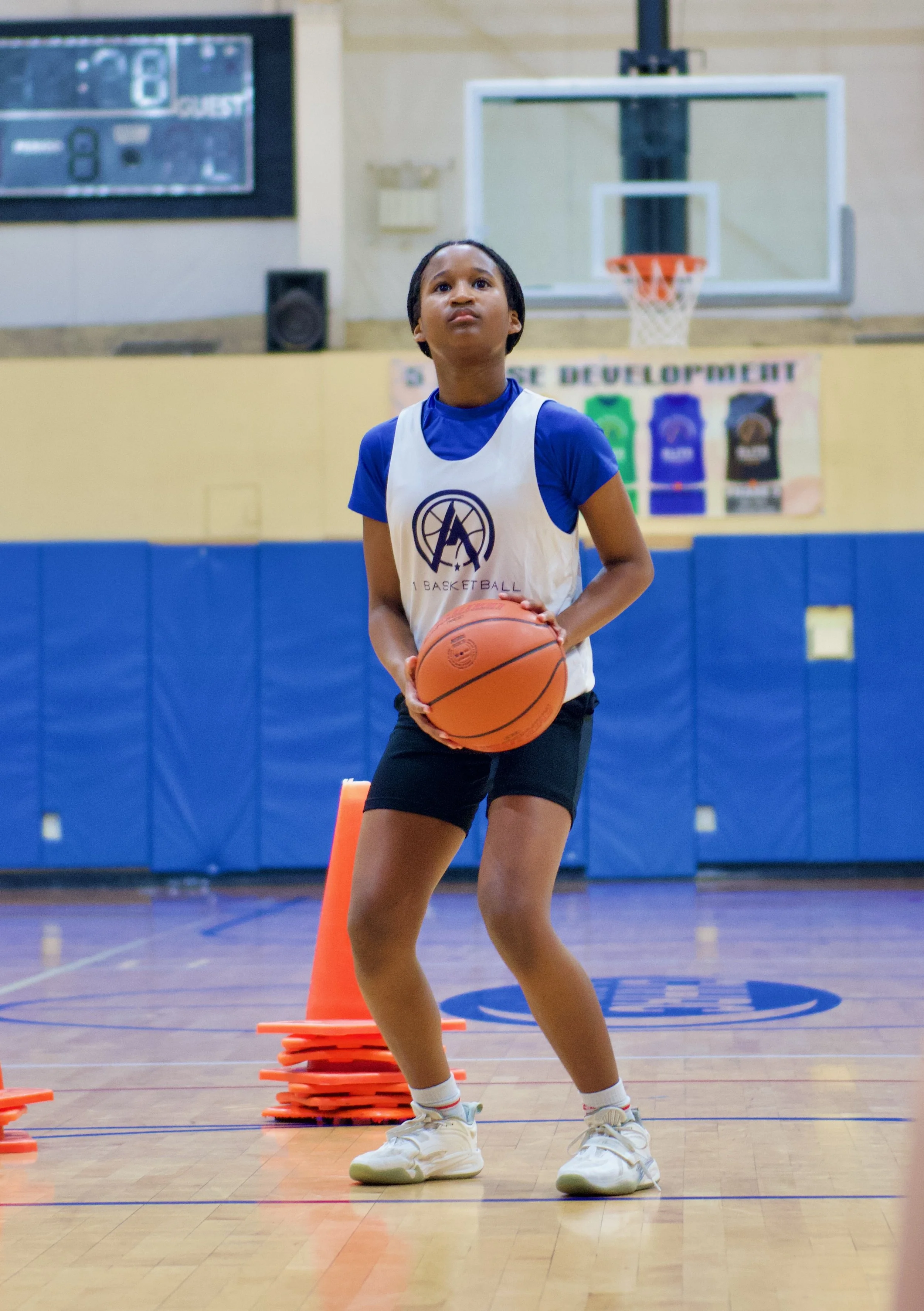
The popularity of Allen’s coaching picked up momentum. Though his initial intention was not to build a business out of it, once he started to see the results of his training formula help multiple kids, he began to feel like this was his calling. “I always tell people, this is definitely God. This is God and purpose driven for me, just because I had aspirations of doing other things. I always say, ‘The brand is bigger than me.’” Once Allen could no longer ignore the path that was being laid out for him, he recalls turning to one of his mentors, Brandon Williams, for advice. Brandon at the time was the General Manager of the Delaware 87ers and an executive with the 76ers. “We always used to talk about how the fundamental European style of development was really needed for kids in America.” They discussed how many athletes were getting to college and pro levels with their skills still underdeveloped. “I asked him, ‘What do you think I should do?’” Brandon encouraged Allen to pursue this opportunity as an entrepreneur. “If you have something of your own that you can build, why not take that? You’re being led to want to help others. It’s a huge responsibility.”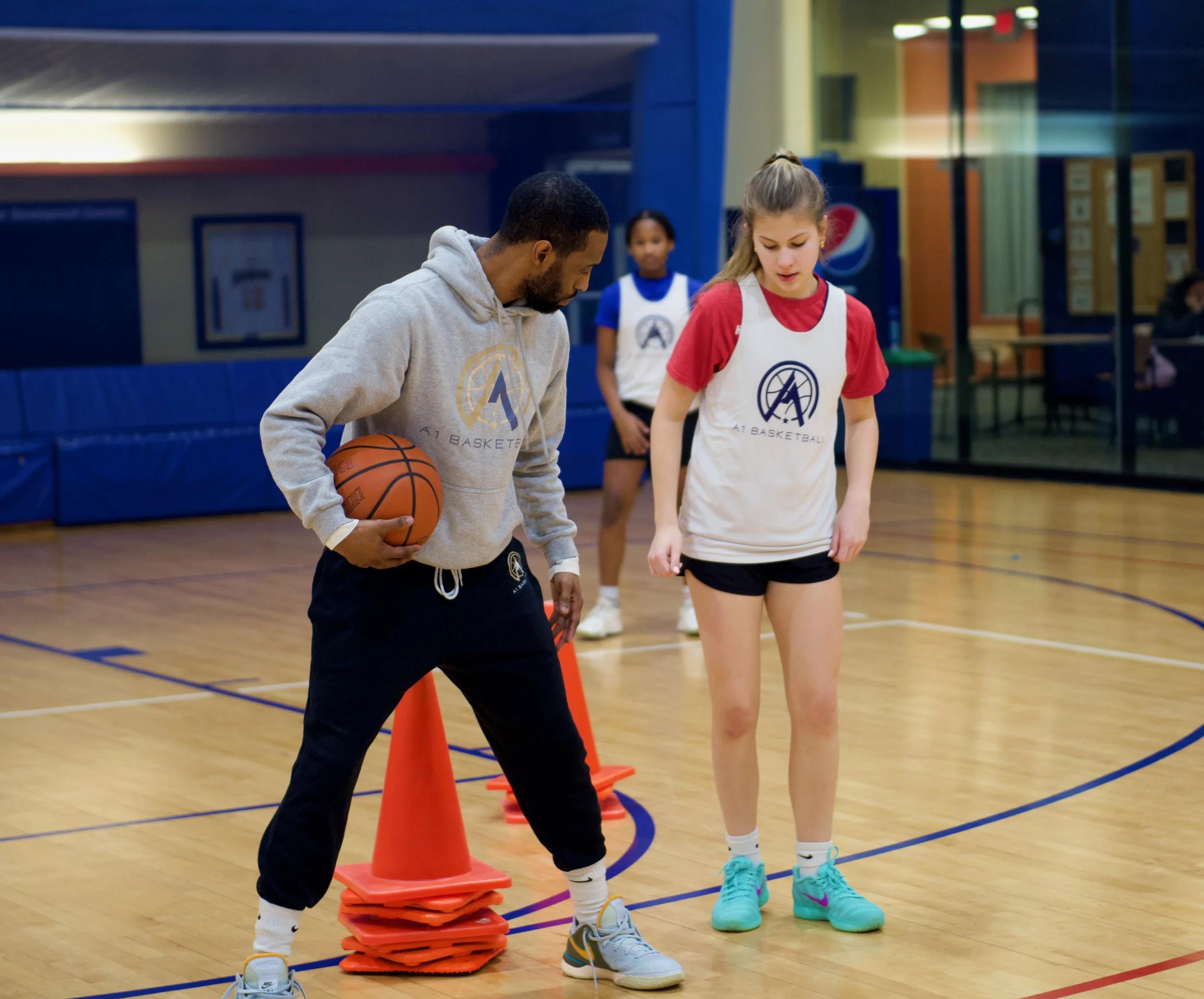

Ultimately, Allen decided to lean into this new path. He took all of the entrepreneurial skills he had learned over the last few years and began applying them to his coaching business, now called A1 Basketball. “I had a business sense from being in the fashion industry. I understood product, and placement, and how to scale and really build things out. I just took that information and put it into the basketball realm.”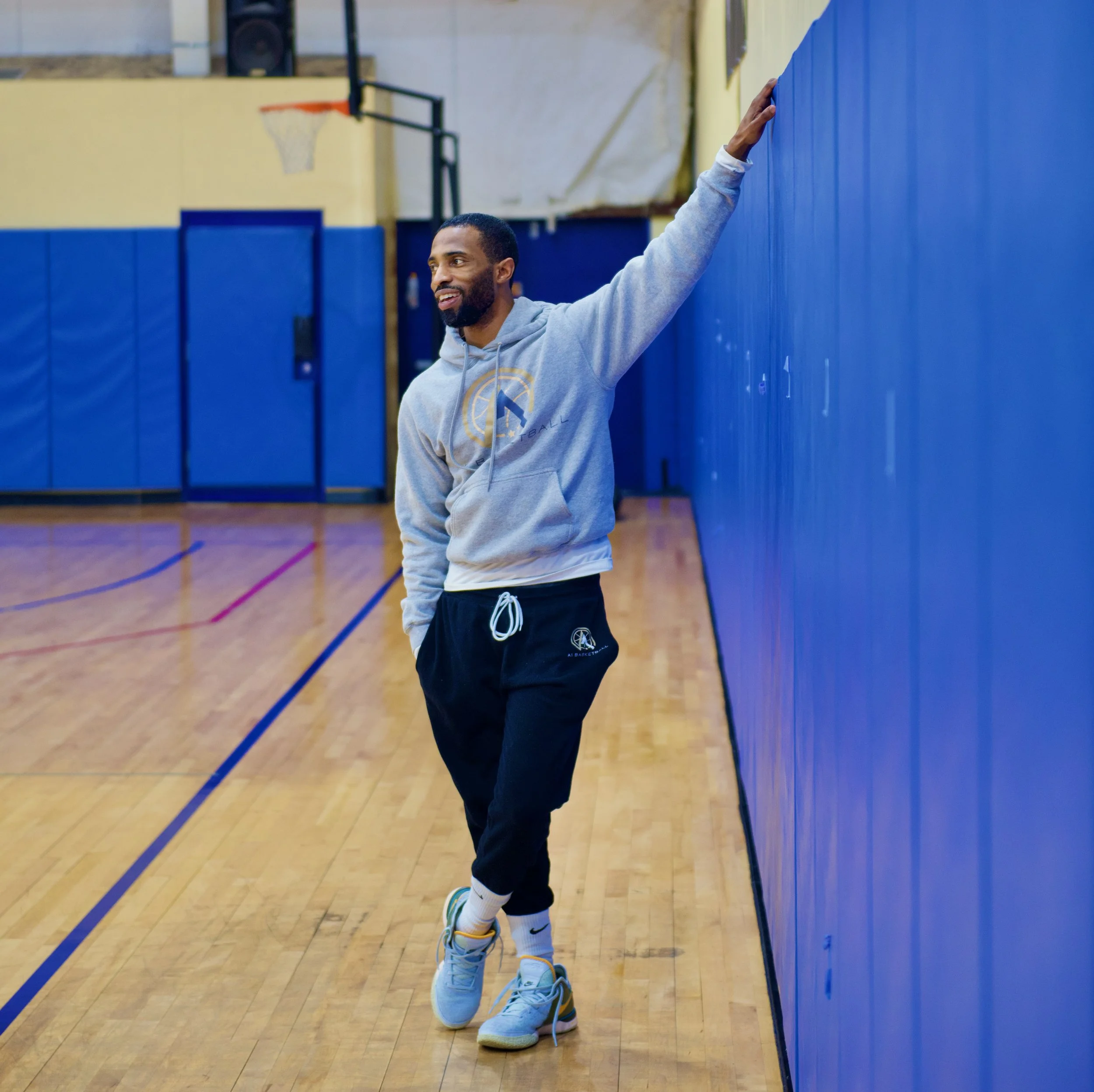
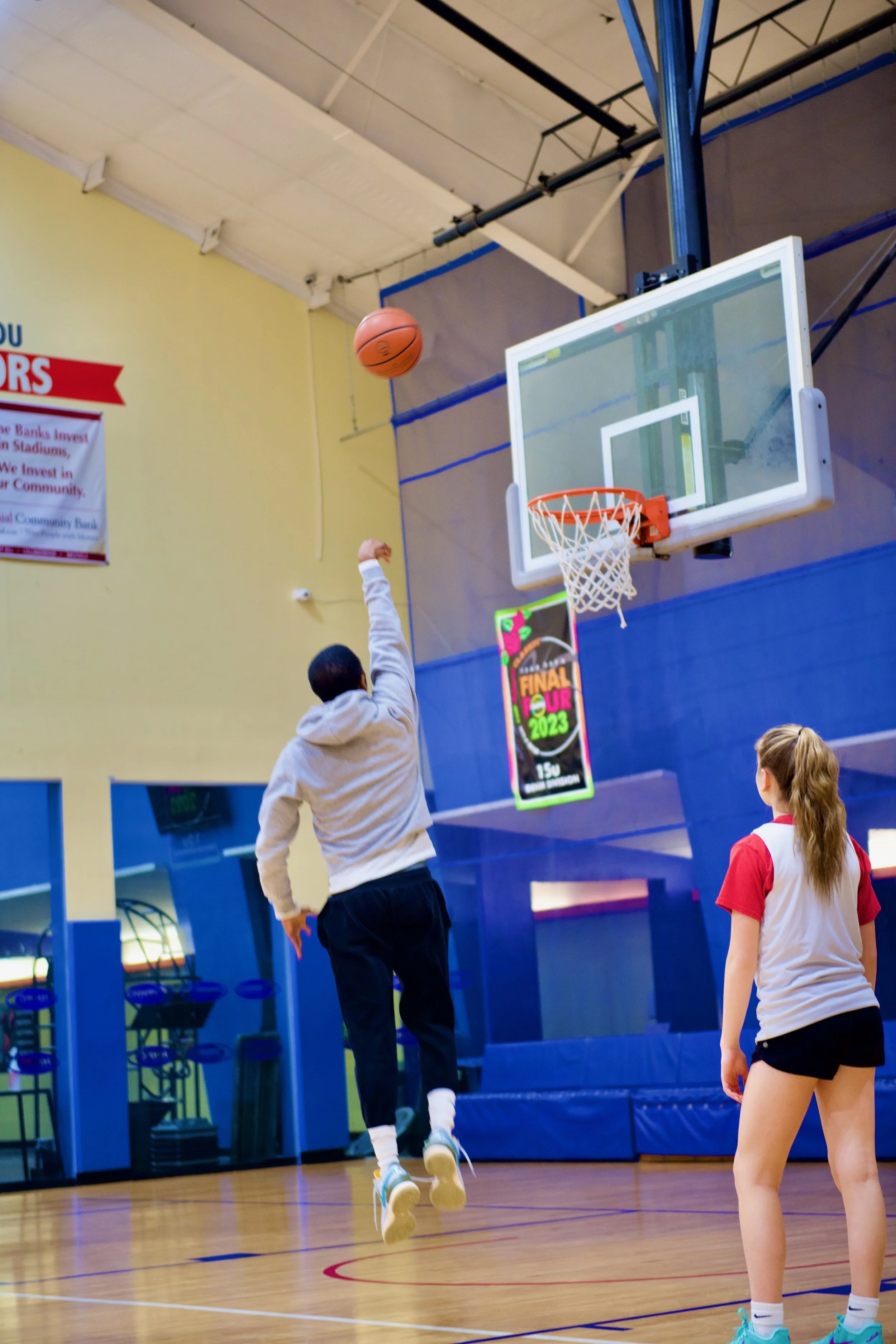
The biggest initial challenge was moving from a park to indoors. “We live in New Jersey where the weather gets cold. I needed rentals for gym space to hold all the kids.” This forced Allen to sharpen his business skills. “I needed to have a business model where I could provide the overhead - the cost of coming indoors. That was the hardest part. I don’t do this to make money, as crazy as that sounds. It’s not about the money. It’s really about the genuine care and love I have in helping families… in helping kids navigate this thing.” Ultimately, he landed at Cherry Hill Health & Racquet Club. In this space, he has been able to serve Central and South Jersey, as well as Philadelphia, Delaware, and the PA suburbs. Occasionally, he has students come in from New York, as well as “fly in from Georgia, California, Florida to come work out with us here for a week or a couple days.”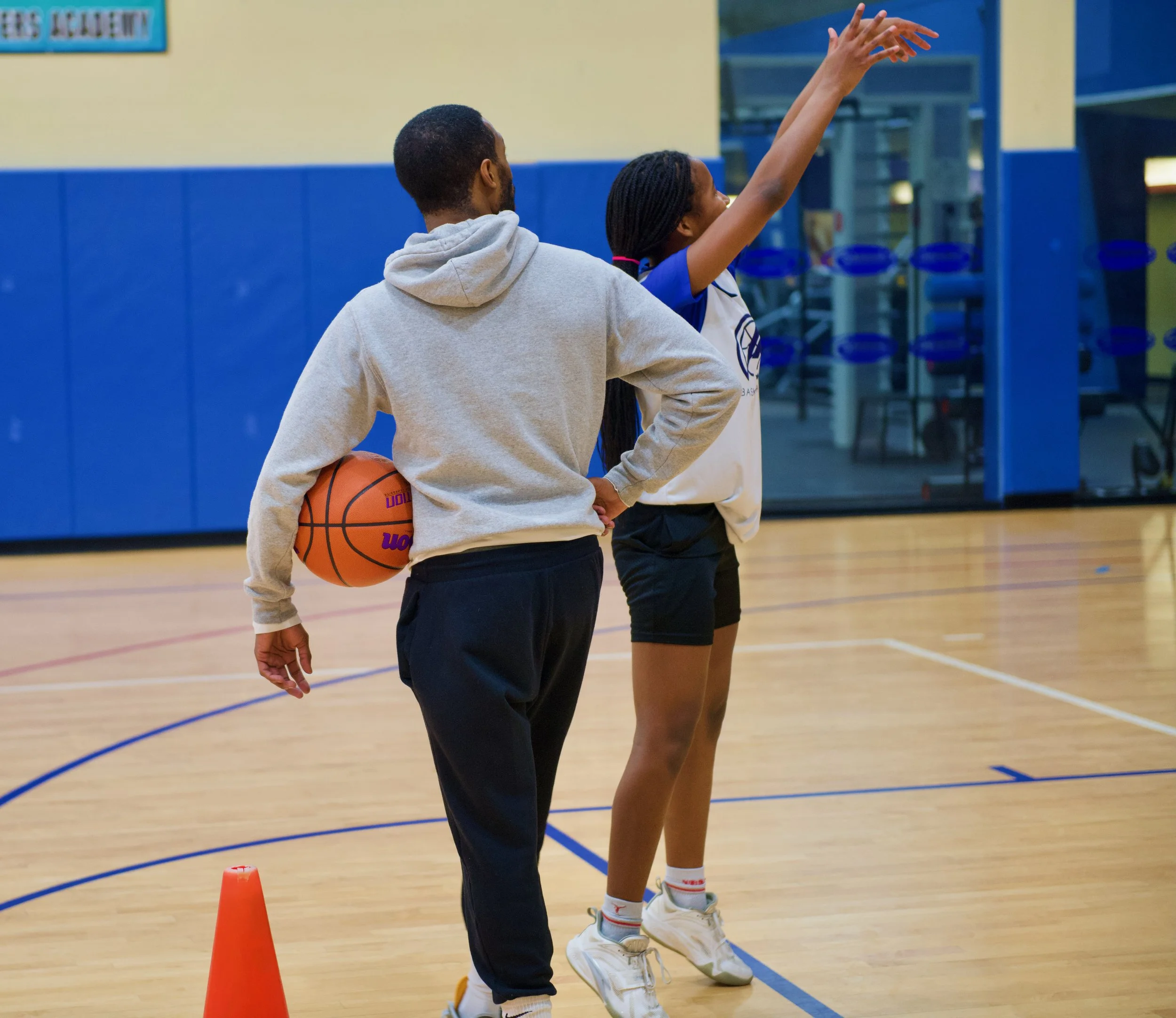
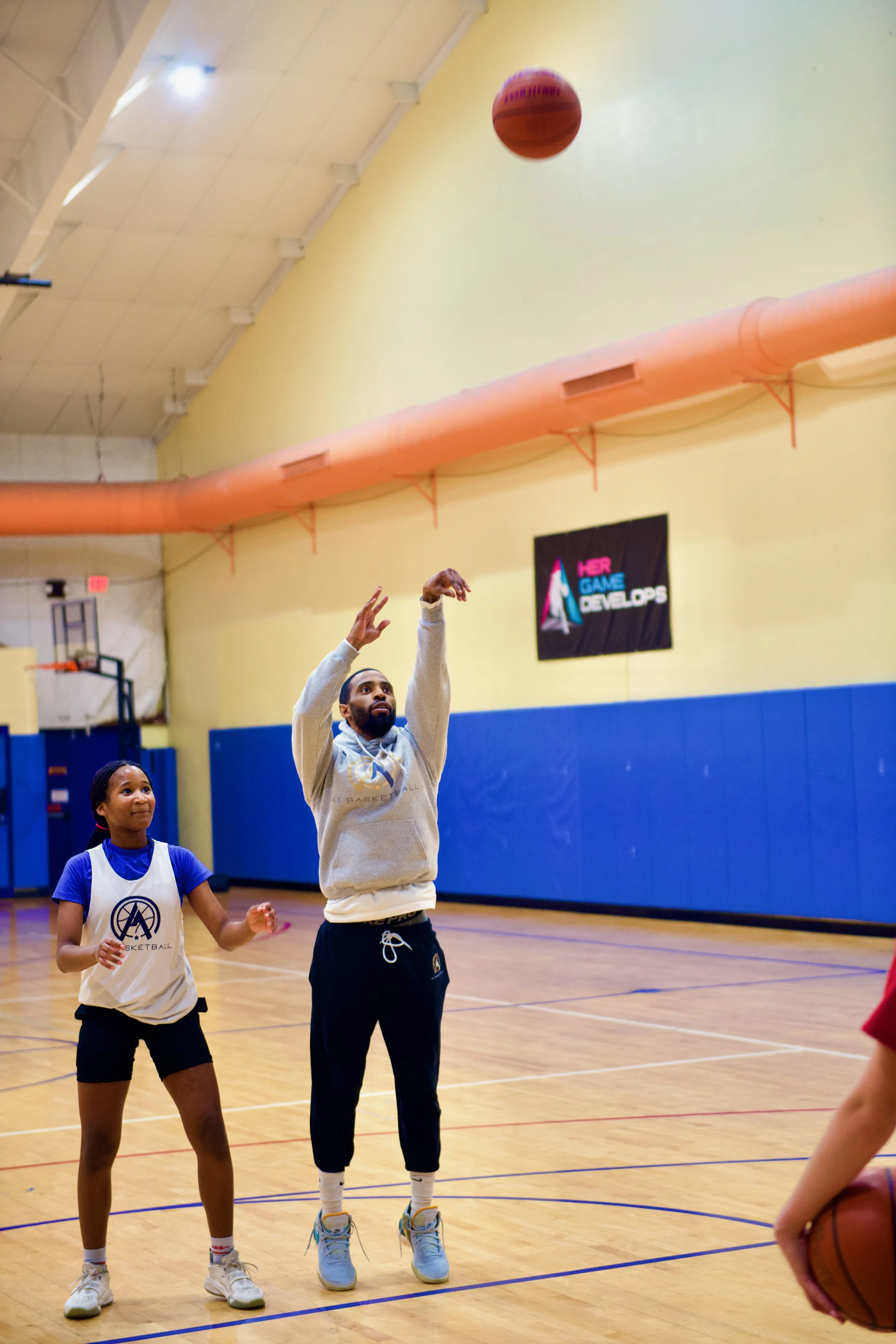
Allen also started hiring additional coaches to assist him. “I have a great team of coaches who are helping me out. I would not be able to do this without the help. I had the vision, yes, the concept, yes, the information on how to get better at basketball, yes, but to actually run everything, I’m so grateful for the help that I receive.” Allen says he is very selective when it comes to the staff he hires; they have to be willing to follow his specific training formula. He wants everyone who comes to A1 to have the same high-quality experience.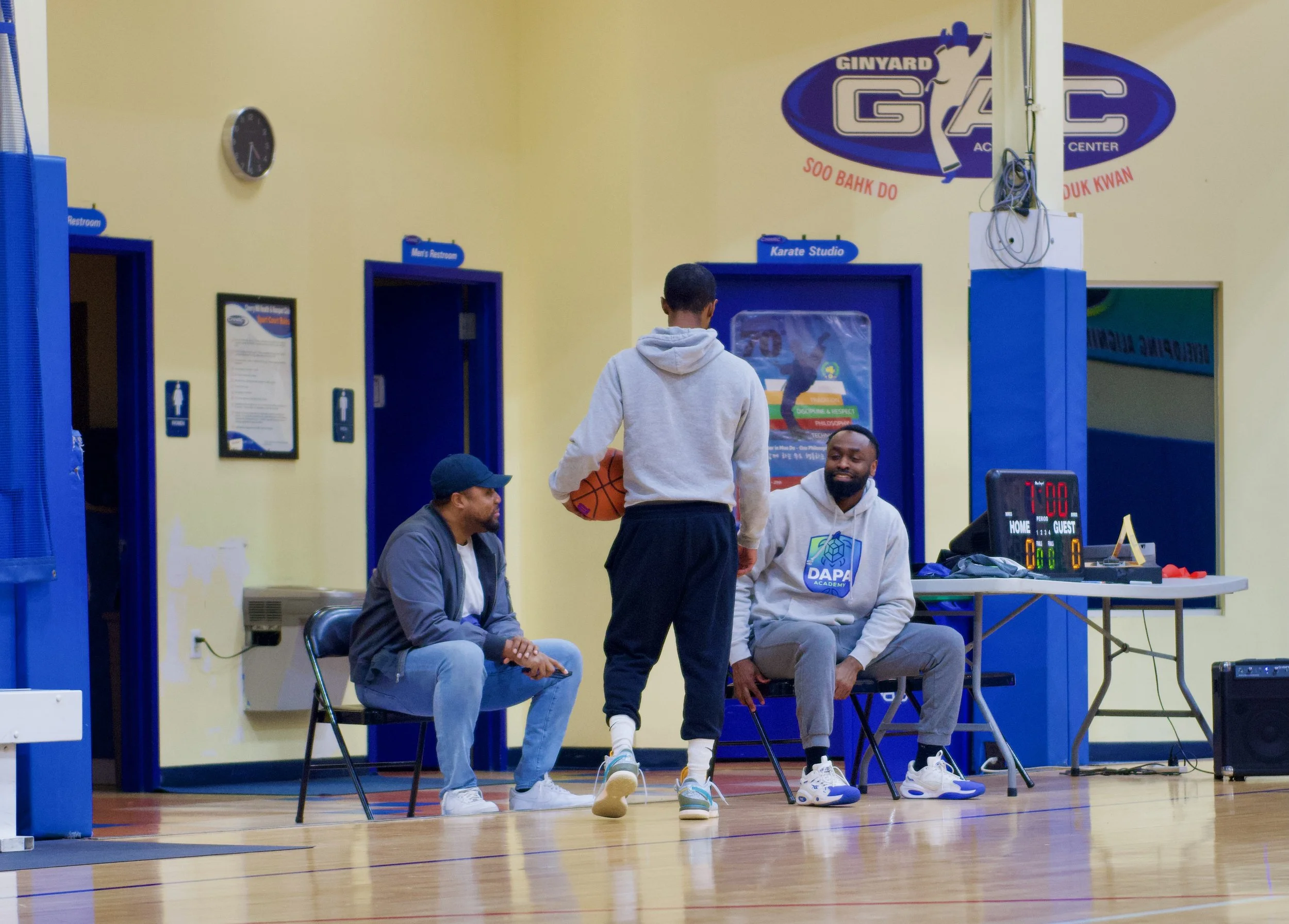
Two of Allen’s fifteen coaches, Stephen Bond and Larry McCain, happened to be present while I was taking photos. Both of their children train at A1 as well. I asked them about their experience working with Allen. “He teaches the fundamentals. A lot of programs don’t have that part, they just let your kid play. But what happens if your kid doesn’t become 6’8”, right? We didn’t have development like this growing up. I hadn’t done 97% of the types of drills that he’s teaching at their age. We just played. So the refinement, the technique… that’s what makes his program stand out.”
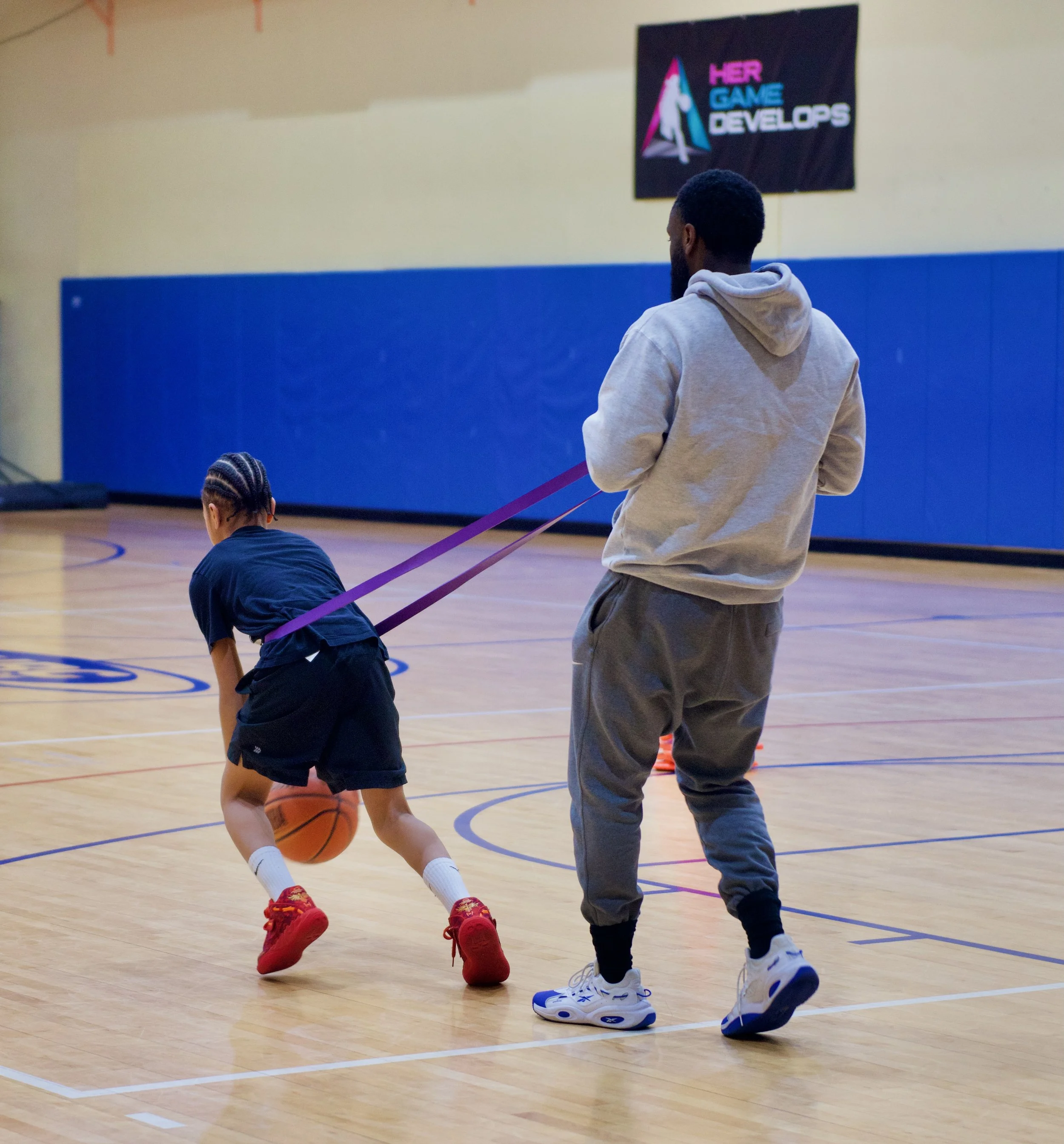
The development they praise is not just referring to their children’s basketball skills. “It’s character development too. The older you get, no one’s just going to hand anything to you, right? If you want a job, you’re going to be interviewed against other people. In here, you see likeminded individuals working towards the same thing as you. You have to keep refining your skills in order to keep up with the competition. Everyone wants to be awarded for participating. Unfortunately, we all participate in this world, but we don’t all get awarded the same things, you know? It prepares you for all of that. If you want something, go get it.”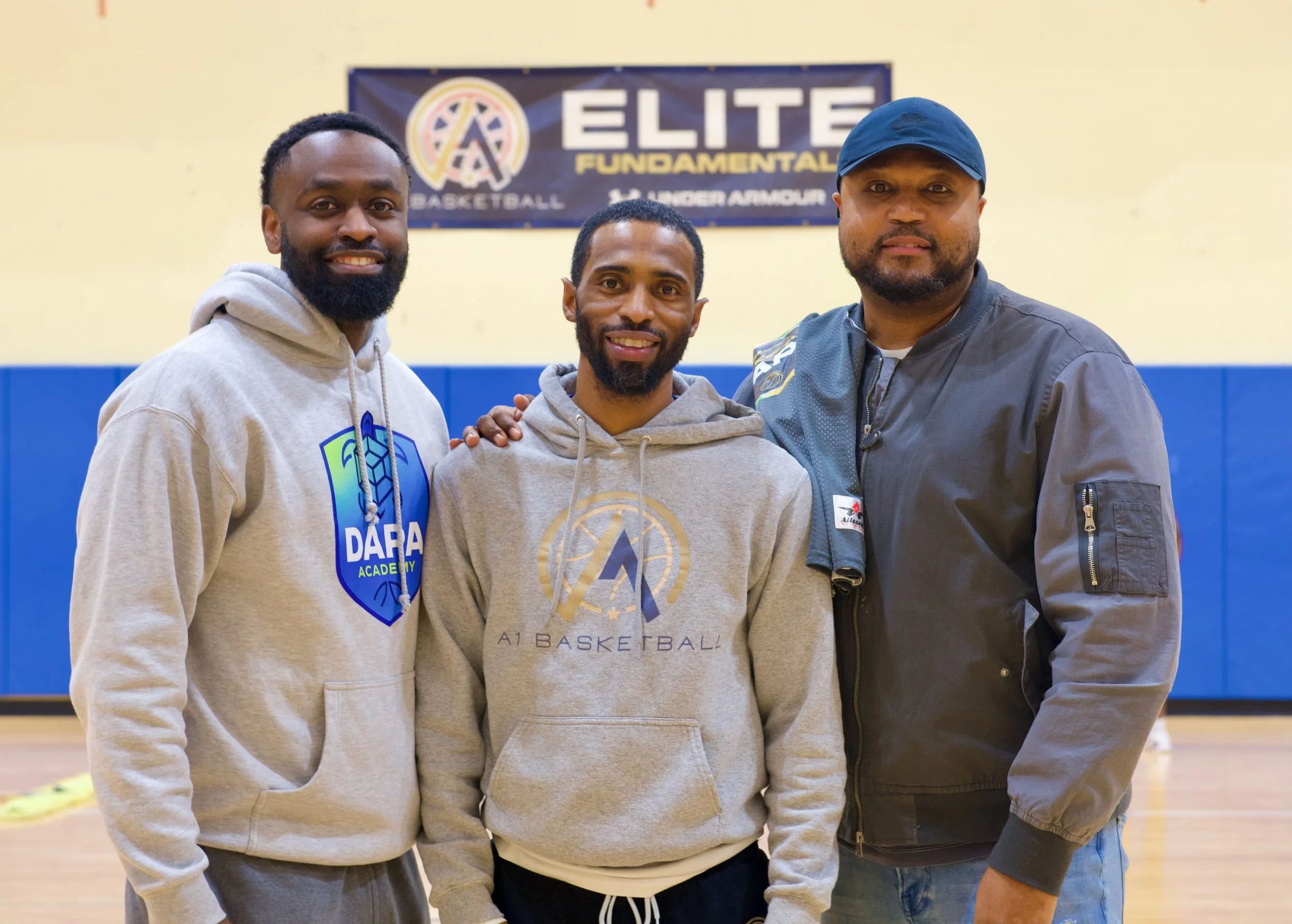
Both Stephen and Larry spend a significant amount of time bringing their kids to train with Allen. “We’re bringing our kids up here every day - hours on top of hours. I work in Newark, I come straight home to bring my daughter here. There’s something to it. And it’s not like our kids are here crying - they want to be here. It’s not like as parents we’re dragging our kids in here. No.”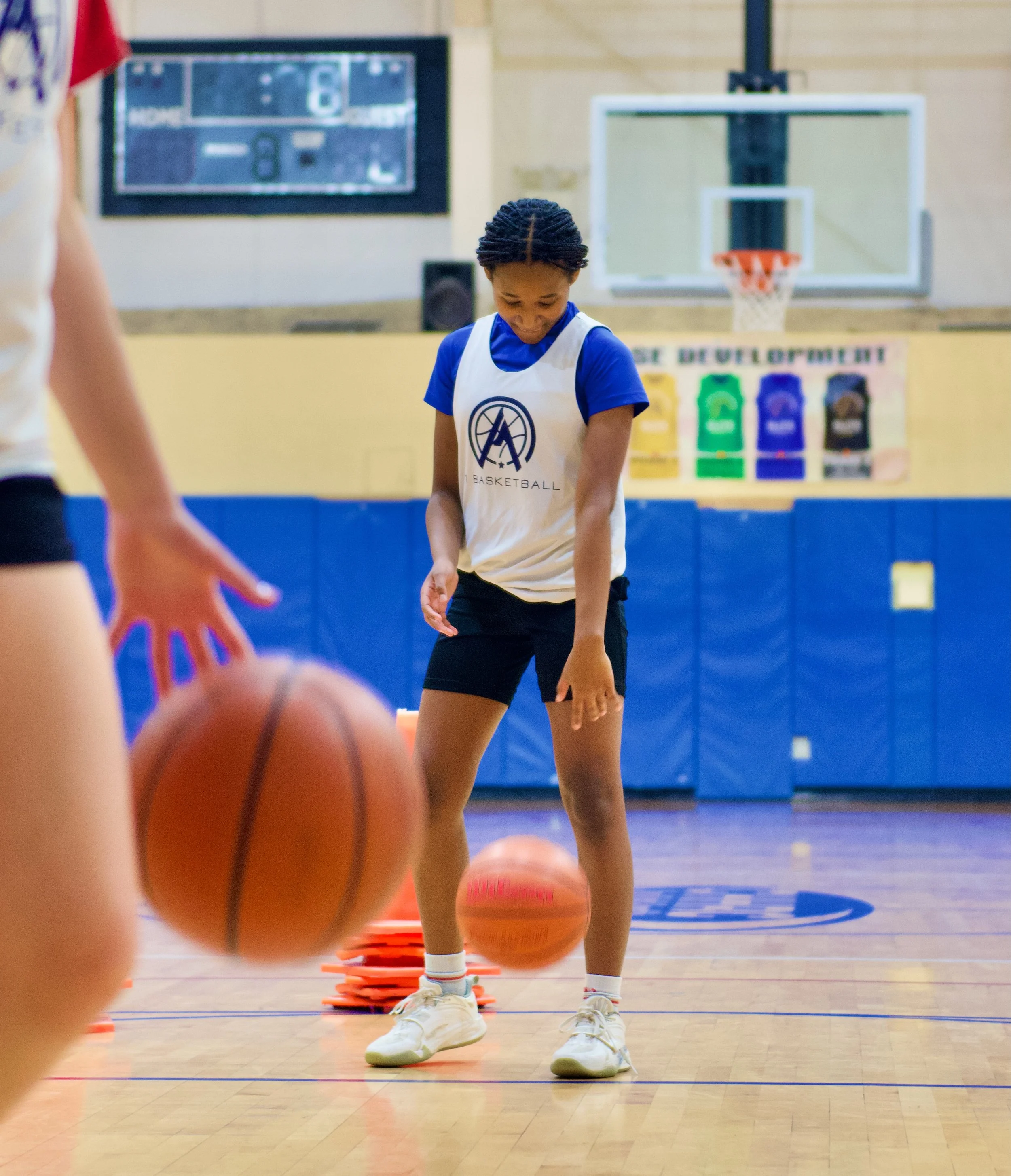
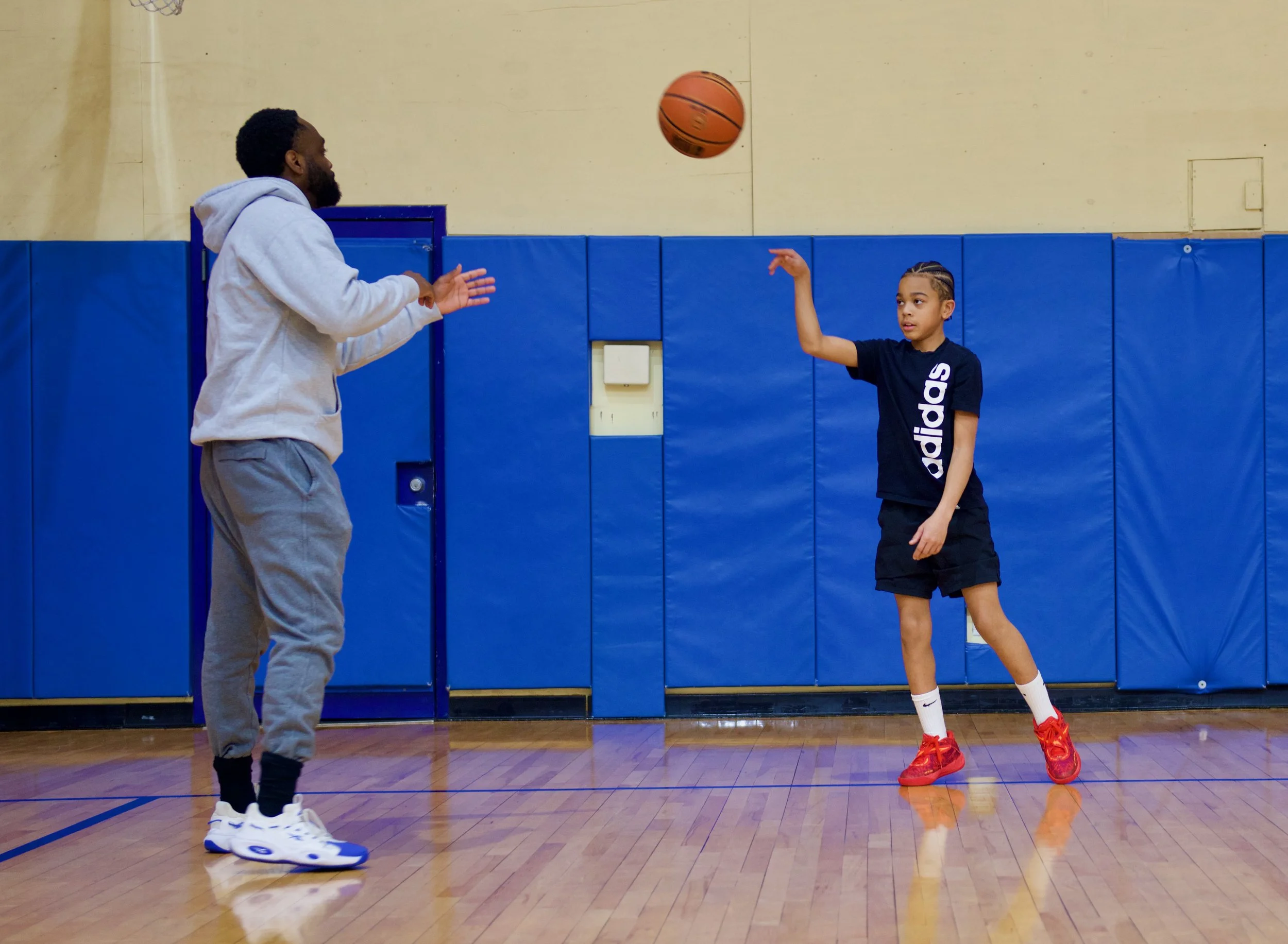
They both are such strong believers in the benefits of Allen’s program that they even just wanted to volunteer their time to help out. “Yes, he’s developing our kids, but it’s a lot more than that. Not only is he developing them, but he’s educating us as well. He was a college coach, so he knows what college is like and what colleges would be good for our kids. He has reach in different networks. There’s so much that comes with what he’s bringing to the table. For that, I’m all in.”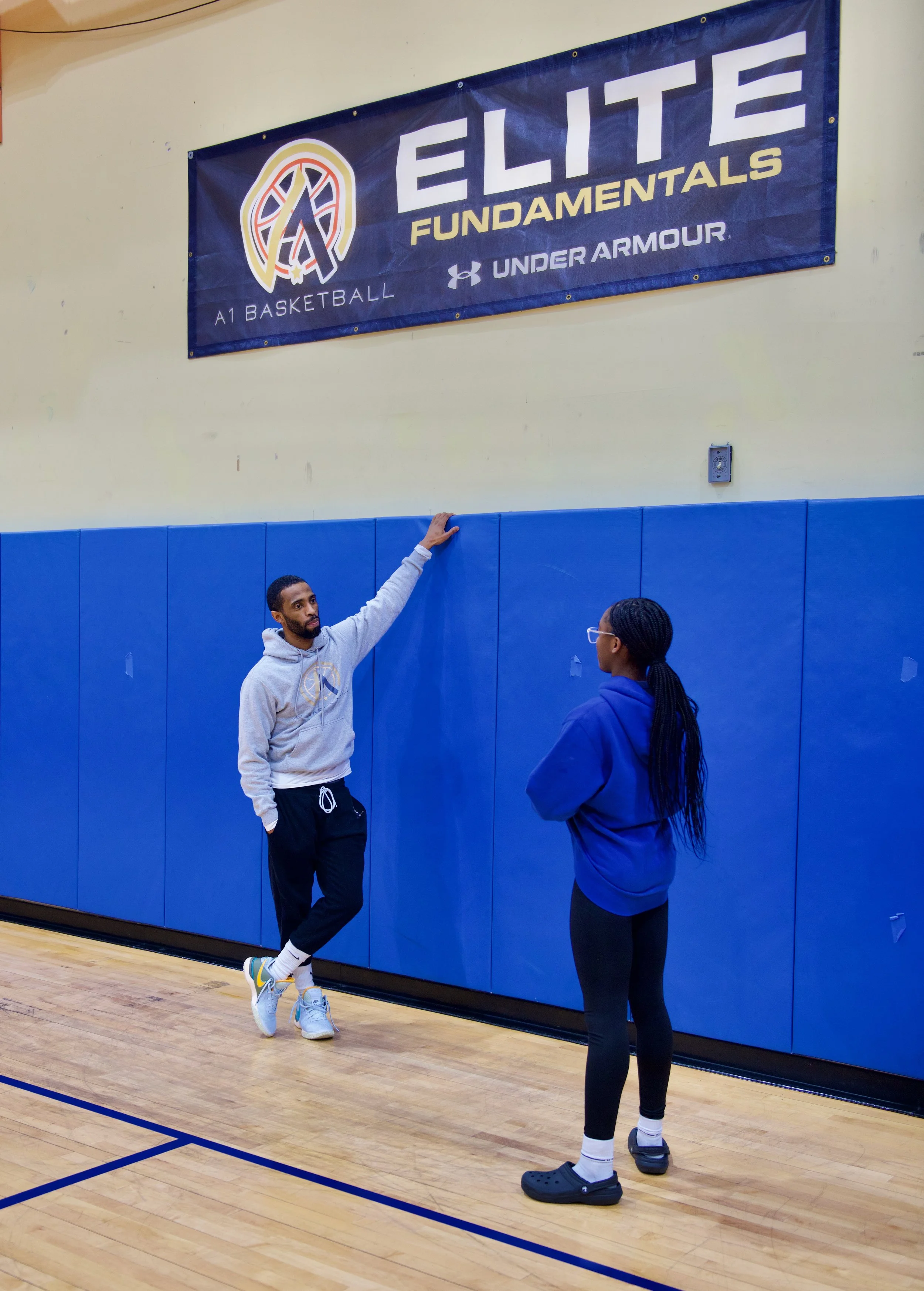
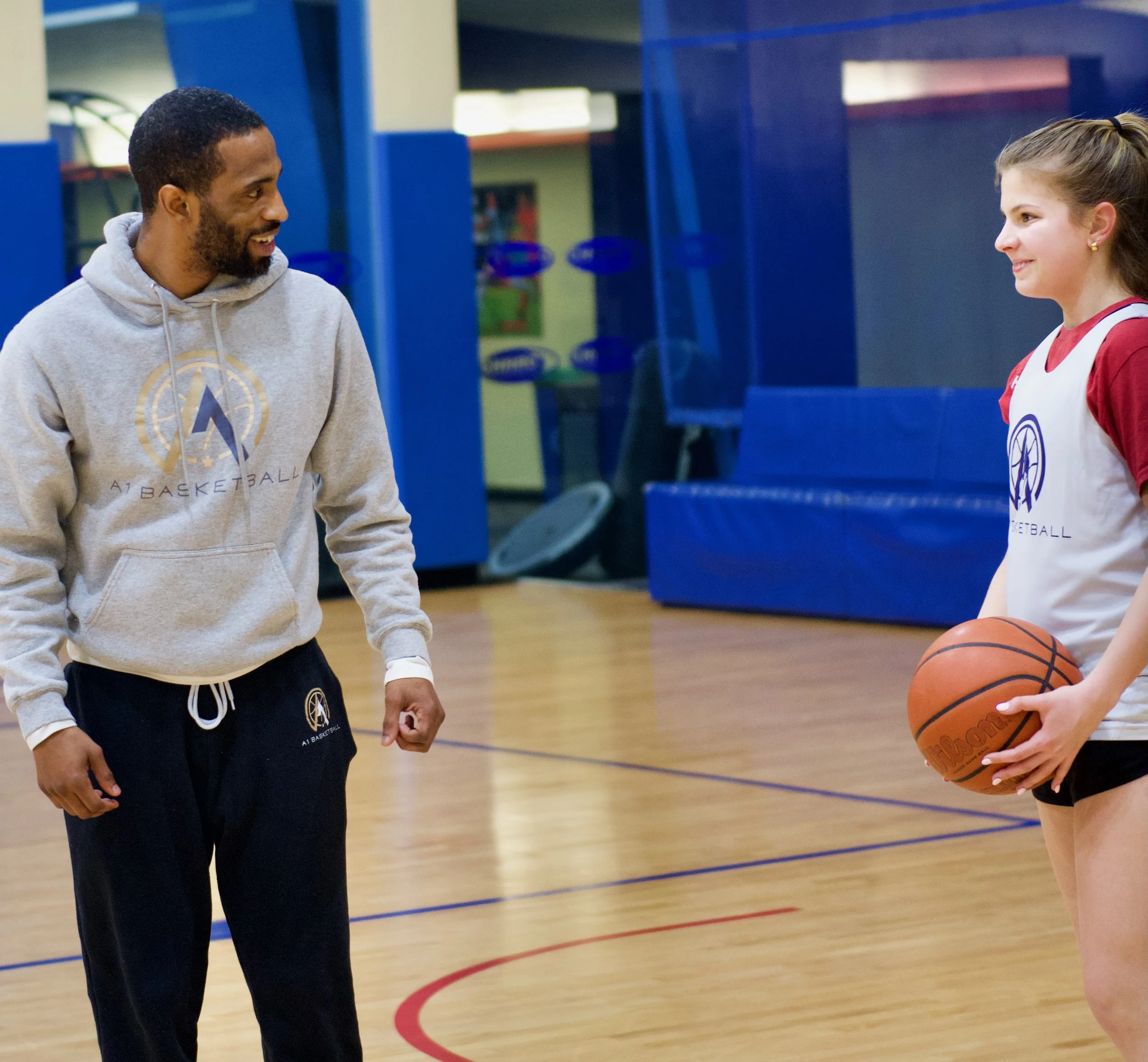
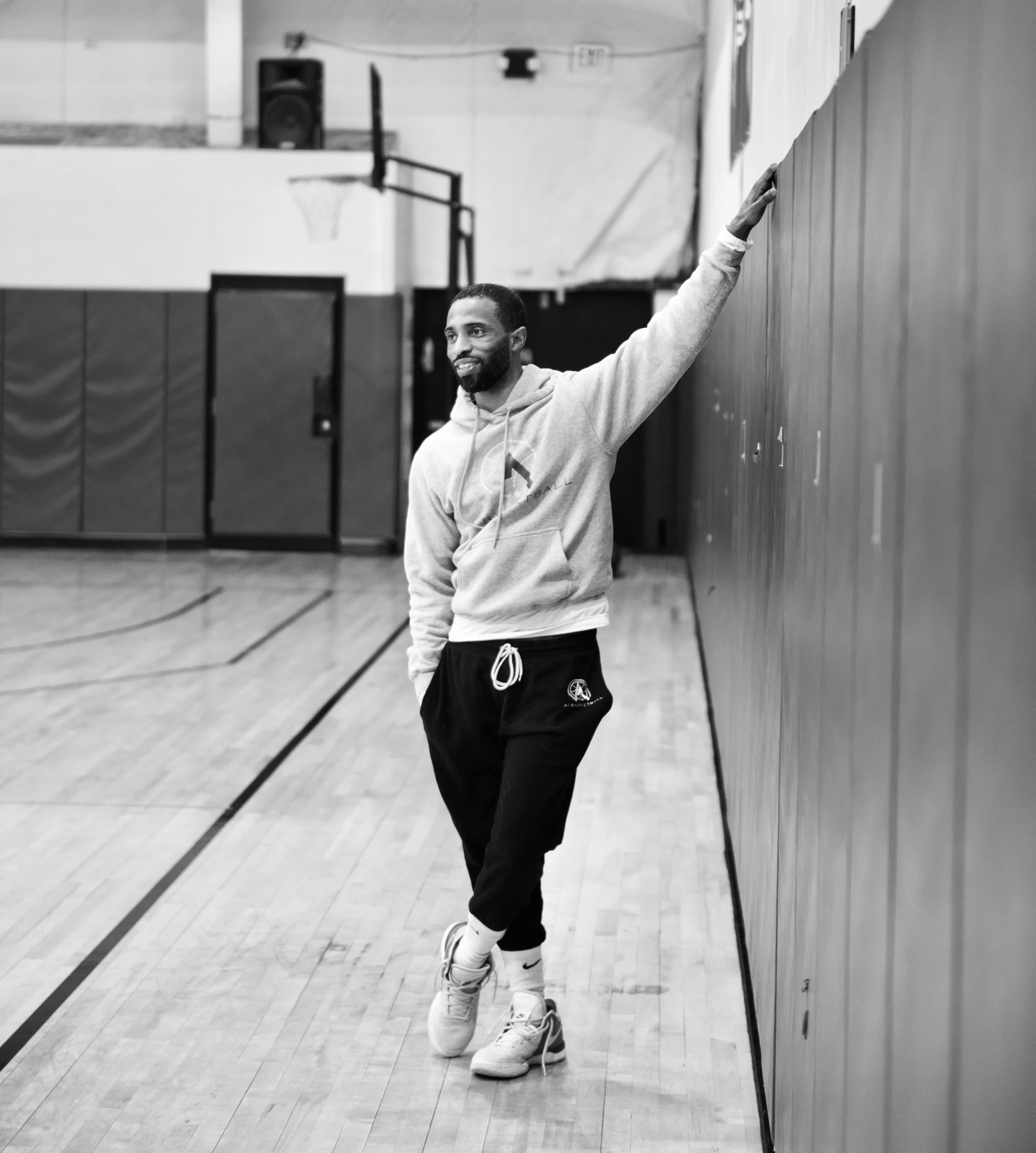

They point out that in today’s fast-paced, instant gratification world, many parents want their kids to become an overnight success in the sports realm. “Everyone wants to put their kid in a microwave to just heat up right away. They want their kid to be the best right away. They see the glitz and the glam, they want the endorsements. But then their kids aren’t being developed the way they should be.” This food analogy works well. “You’ve got to clean your food. Season it. Let it marinate. You know what I mean? You’ve got to let it sit for a little bit. Put it in the oven. Let all the flavor get in there. And then it comes out the way you want it to come out. That’s what is here, I think.”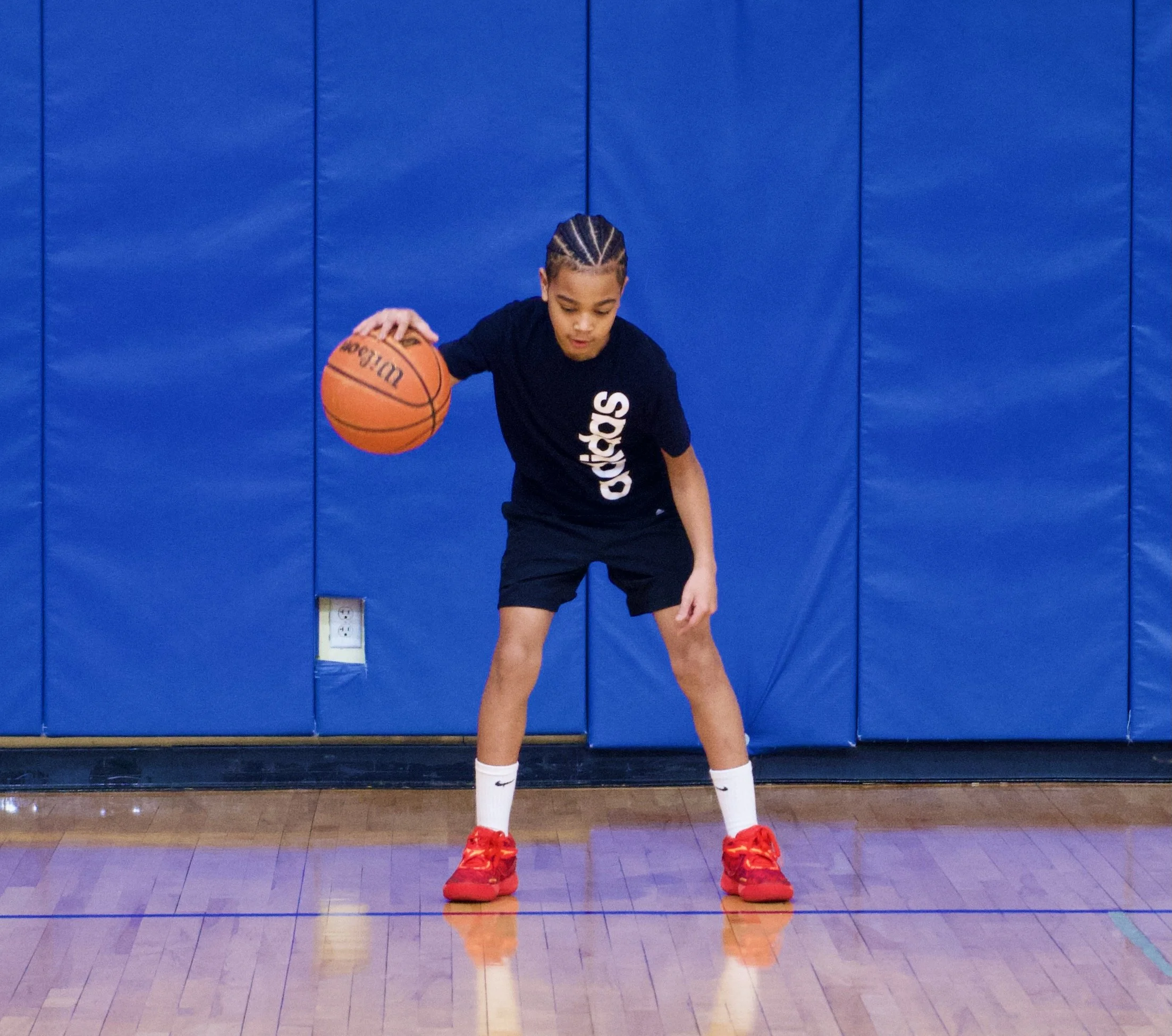
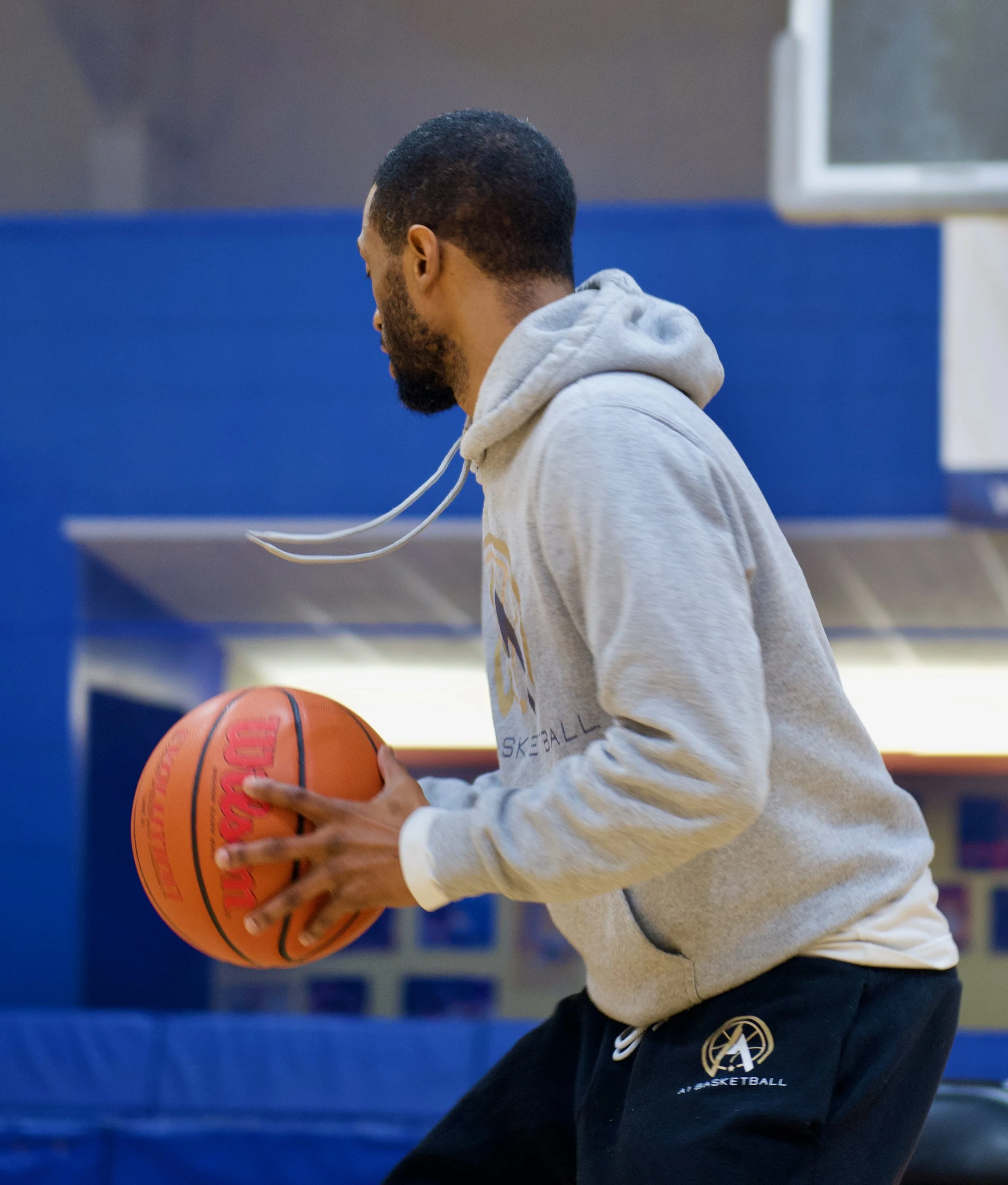

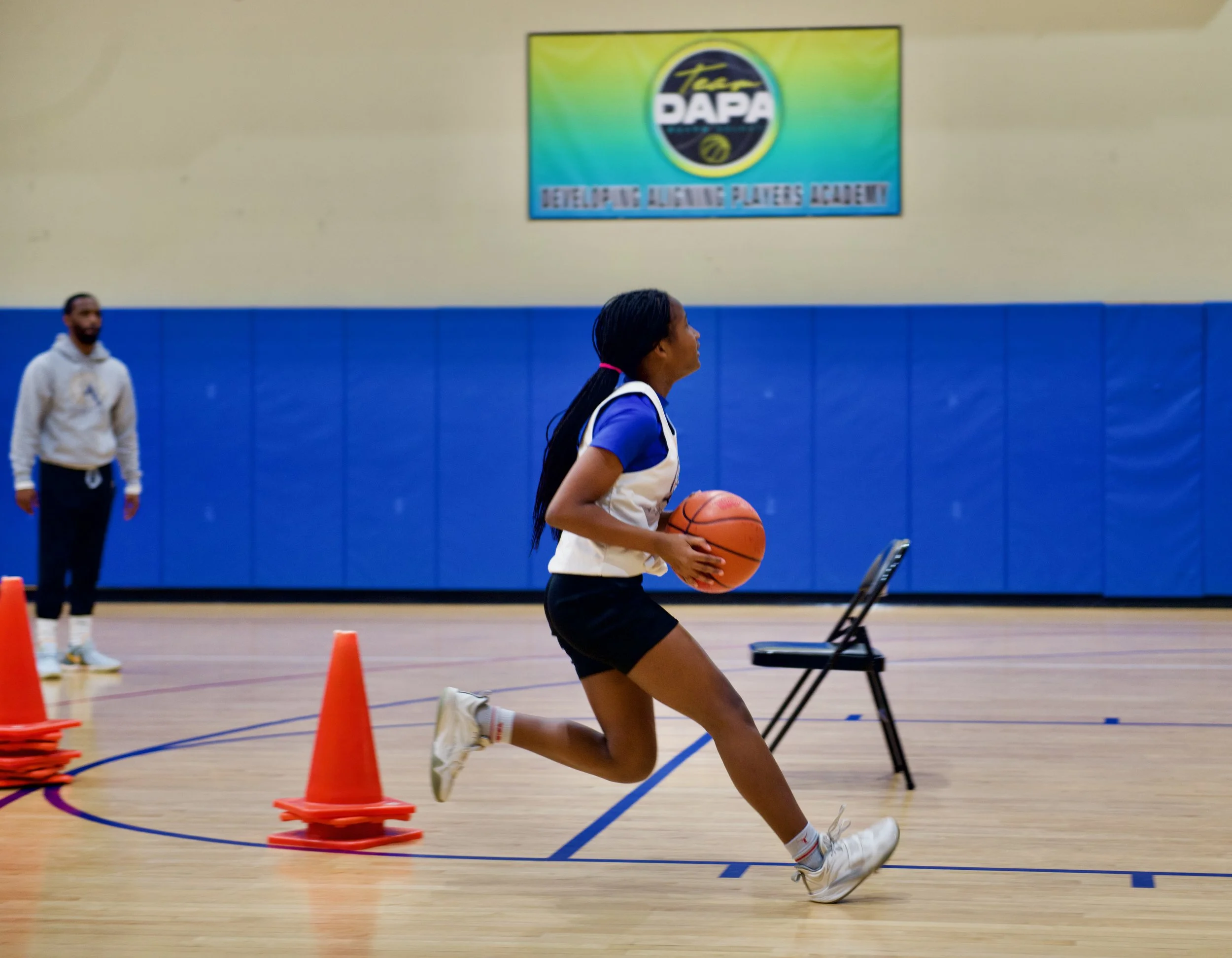
A1 offers a variety of programs. There is high intensive group circuit training “where each circuit is working on a certain skill set or the breakdown of a certain skill set. Then we put it all together towards the end of the 90-minute workout. Our large group training is very popular here; we’ve seen the success of it for years.” There are also 3v3 leagues for young children. “We do a little bit of skill training, a little bit of learning, and then we let them compete. It’s rec - it’s more fun, it’s cute. I love my babies, my 4-6 year olds.” Then there is DAPA Academy, which is specifically for players who are interested in a college track program. “It’s for those who want to play at the collegiate level. It offers a certain level of consistency. You’re able to be in the gym 4-5x, sometimes 7x a week.” They also offer a 10-week summer camp.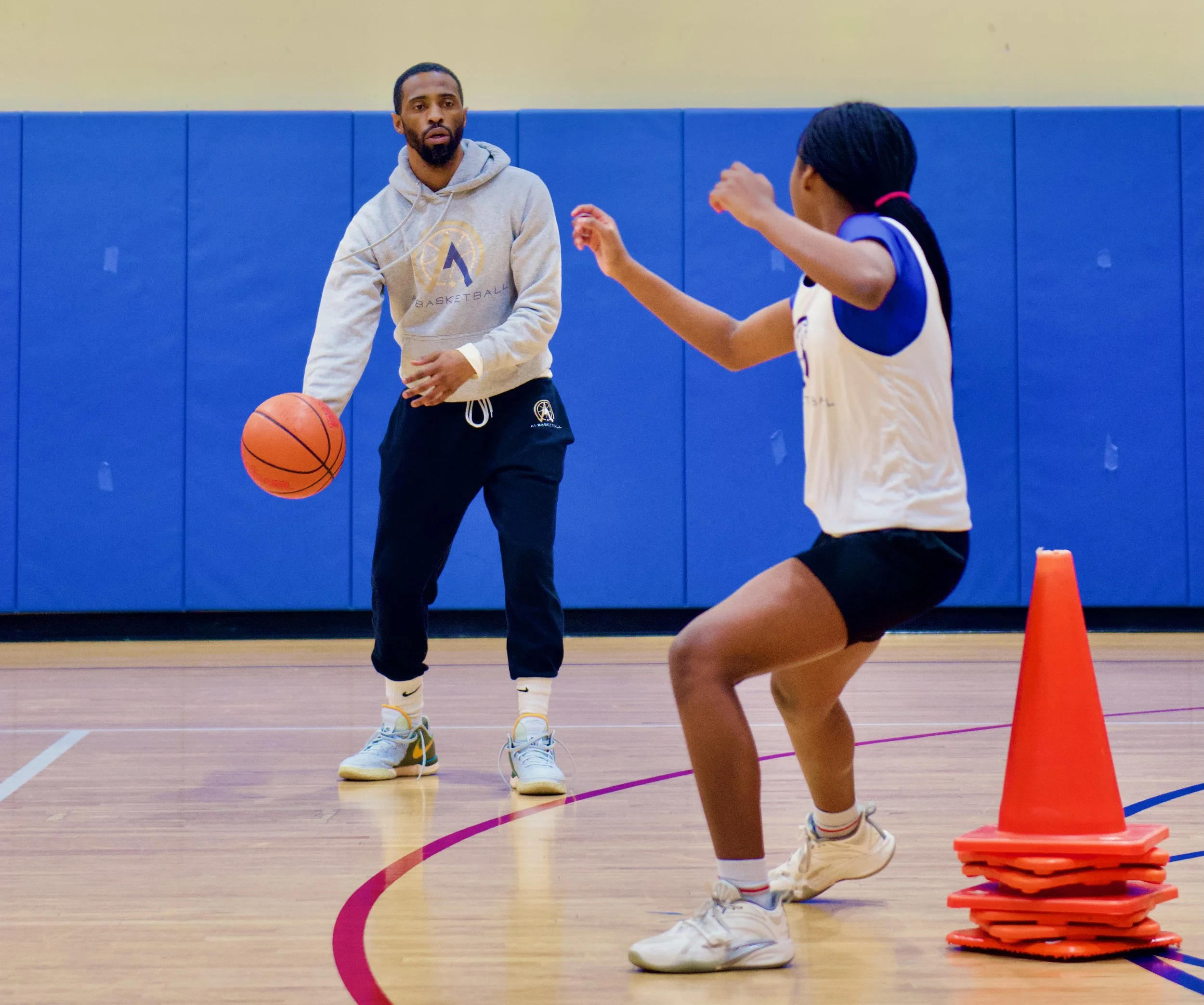
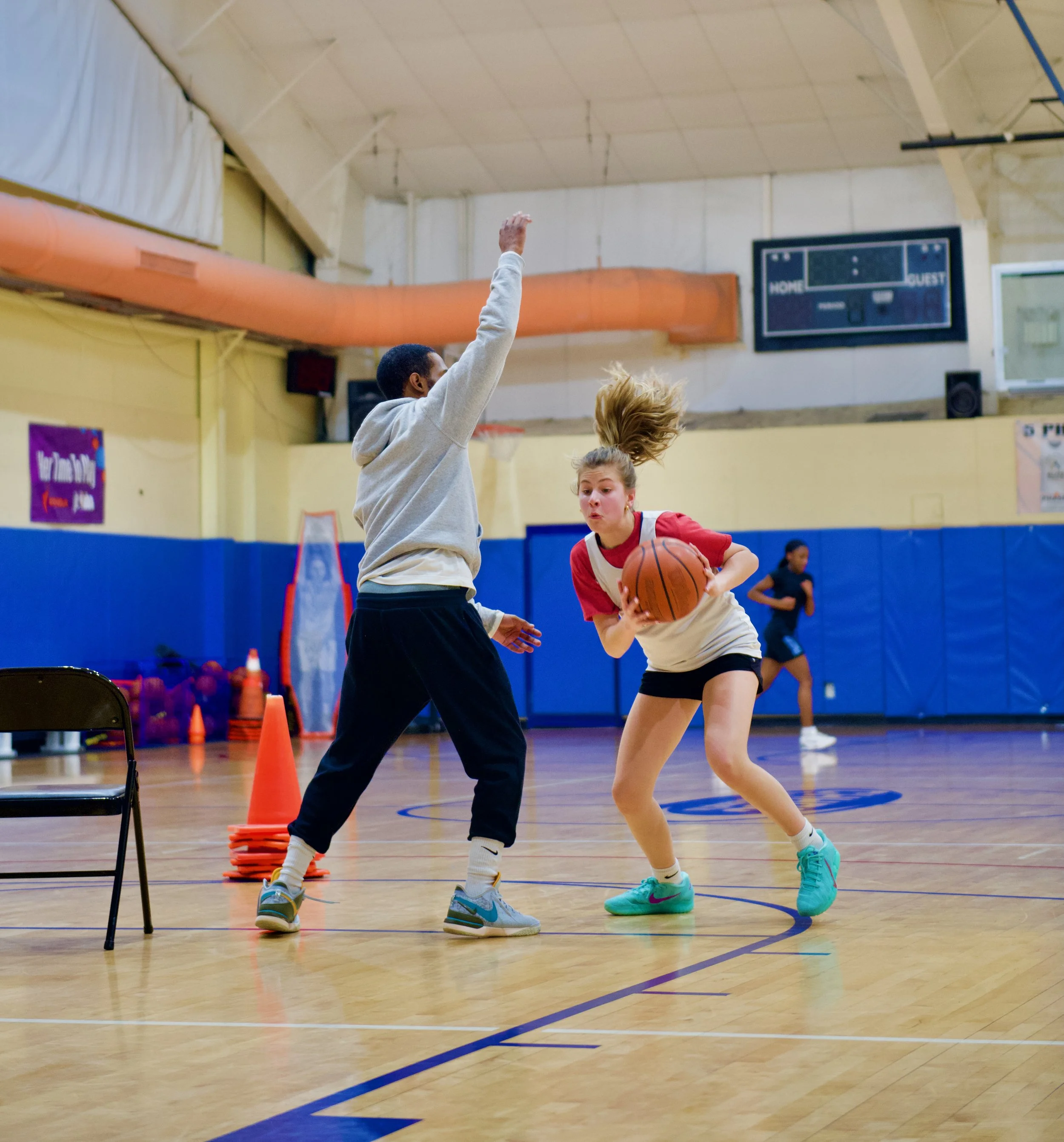
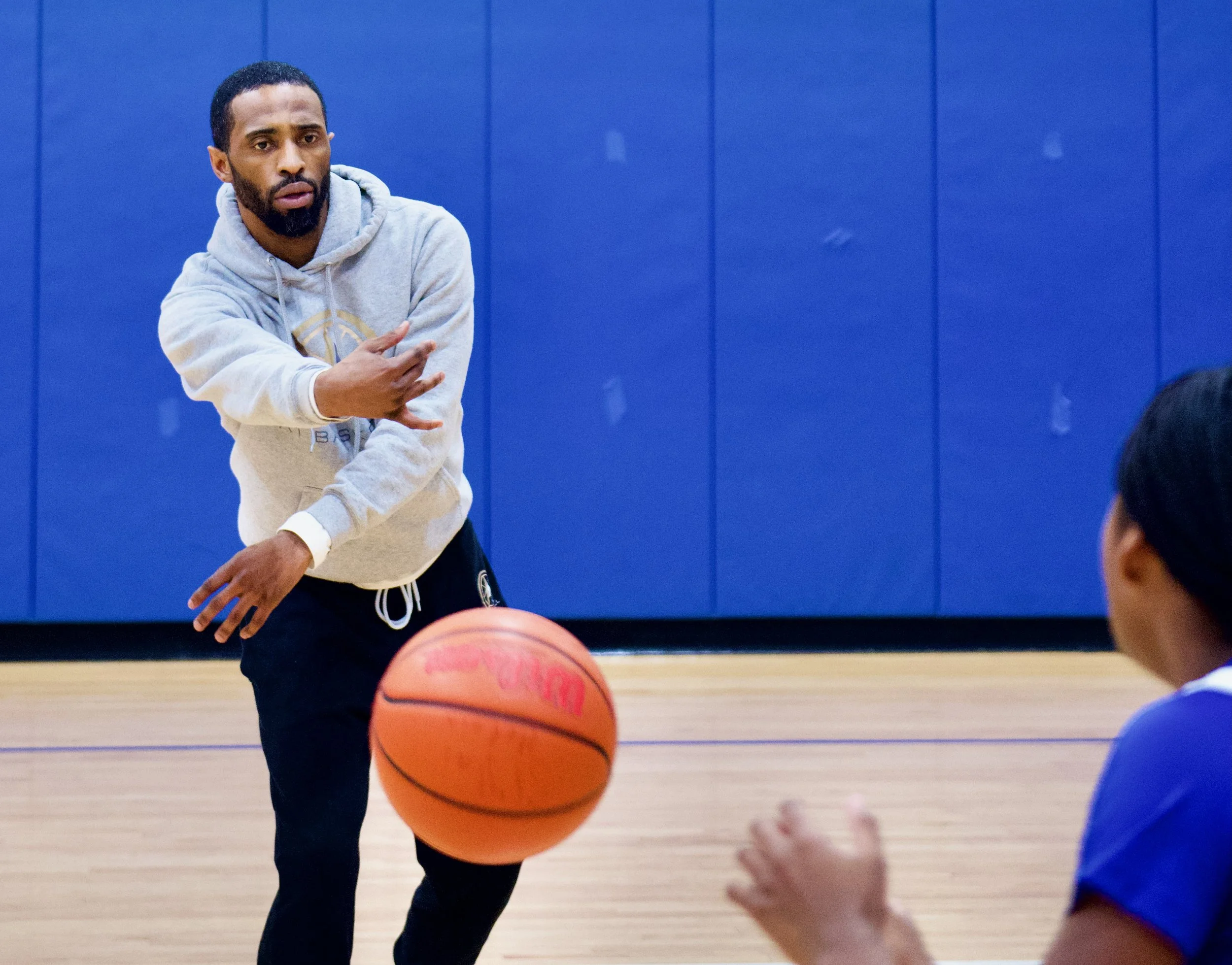
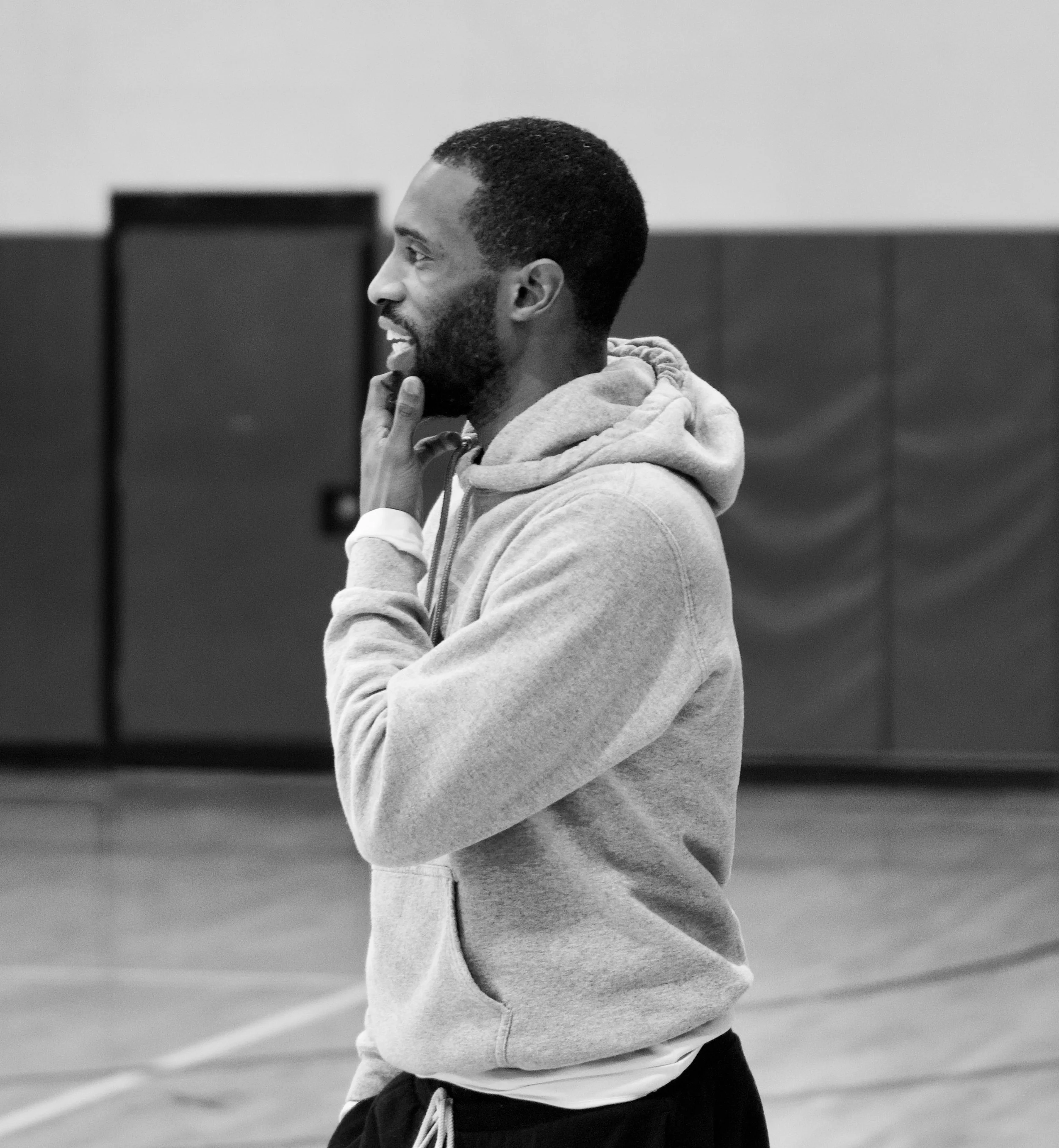
It’s important to Allen to work with the goals of the children he is coaching, rather than the goals of the parents. “I never want to be a person who pushes kids more than they want to be pushed. Too many times parents want it more than the child does. This is a soul journey about what you want to become and how you want to develop as a person. It’s internal; all we can do from the outside is just guide that. I’m very transparent in these tough conversations about where players are.” Once he knows what a child wants to achieve, Allen provides a high level of discipline to help them reach their goals. “I think it’s probably because of my martial arts background. You enter martial arts as a white belt and you work your way to a black belt. It’s about discipline; you don’t jump steps.” He tries to develop that fundamental level of thinking for his students. “I want them to understand work ethic and consistency and habits at an early age. When you teach those principles and skills to kids early, they can go on to be whatever they want to be. So that’s me. Discipline and consistency. I hold that standard.”
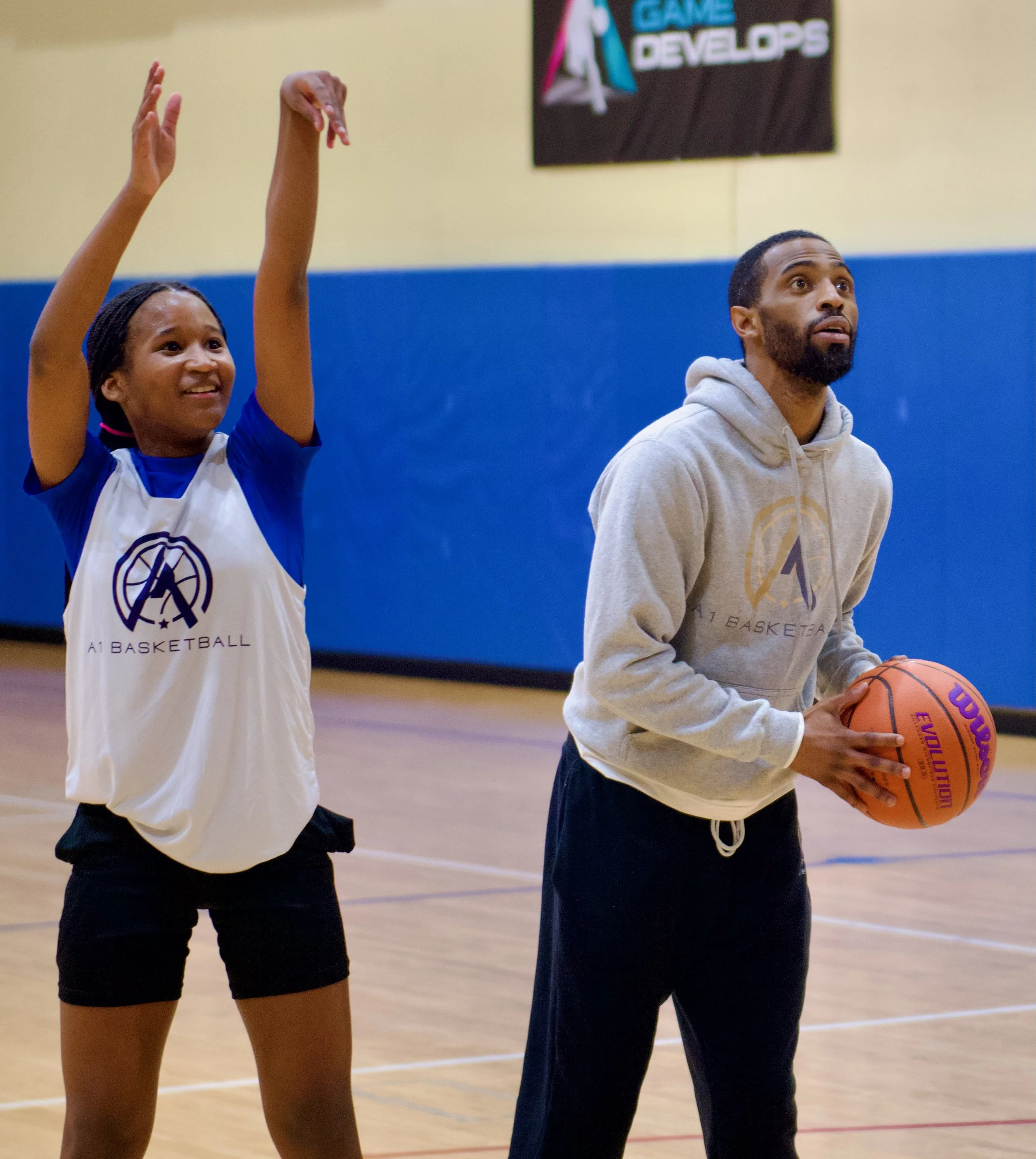
Allen gets the most joy from seeing children who are motivated to put in the hard work. “It’s exciting working with kids who want to achieve something. If I’m ever having a down day but I’m coming to the gym and have a plethora of kids who want to get better, it changes my mood. It changes my mood. It’s exciting to see kids struggle and get frustrated but then figure things out once you’ve talked them through it. That's the challenge of being an athlete. Once you can out compete yourself - your own thoughts, your negative feelings - you can go be as successful as you want.”
I spoke with Edore Pela, one of the members of DAPA Academy, and currently the number one sophomore female point guard in the state of NJ. She spends much of her week practicing with A1, and the experience has impacted her significantly. “DAPA was built to develop us… I didn’t start off on many coaches' radar, but now I have 3 Division 1 offers from being here. It gets you ready for college. Everyone here holds you accountable, so you’re not blindsighted when you go.” Edore says that working through the program allows kids who otherwise may not be seen to be seen. She mentions that one aspect of A1 that she appreciates is that she has never felt afraid to make a mistake. “We are not perfect. We have our moments. You’re held accountable, but you can mess up.”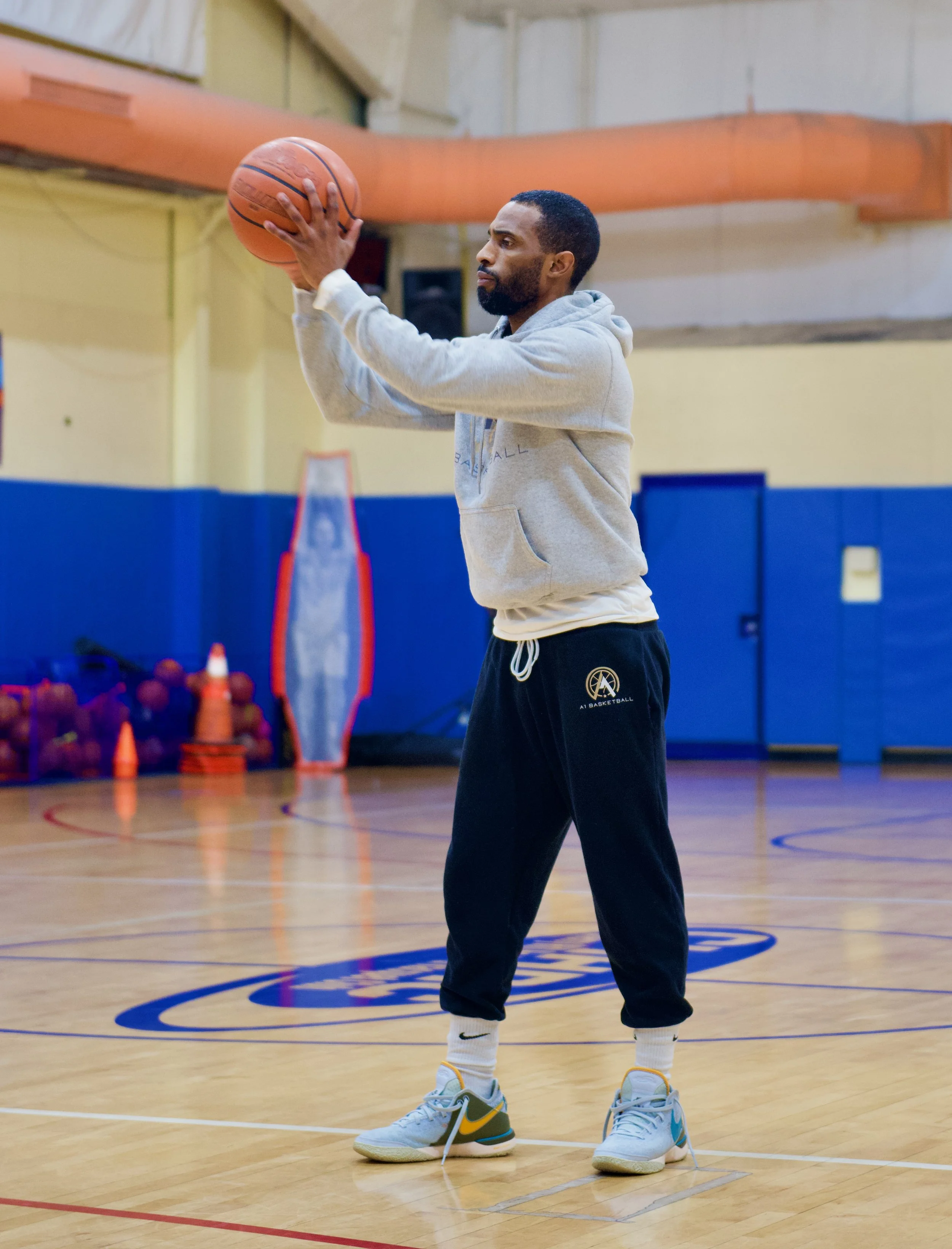

Allen is a firm believer in academic achievement alongside athletic success. He has a room set aside for kids to do their homework, and he is available to help them with their schoolwork when they need it. “When you’re signed up here with DAPA Academy, you can come right after school, eat your snack, and get your homework done. If you need help, I can assist you. The most important thing is that you’re turning your work in. I’m a big advocate of making sure kids are completing their homework.”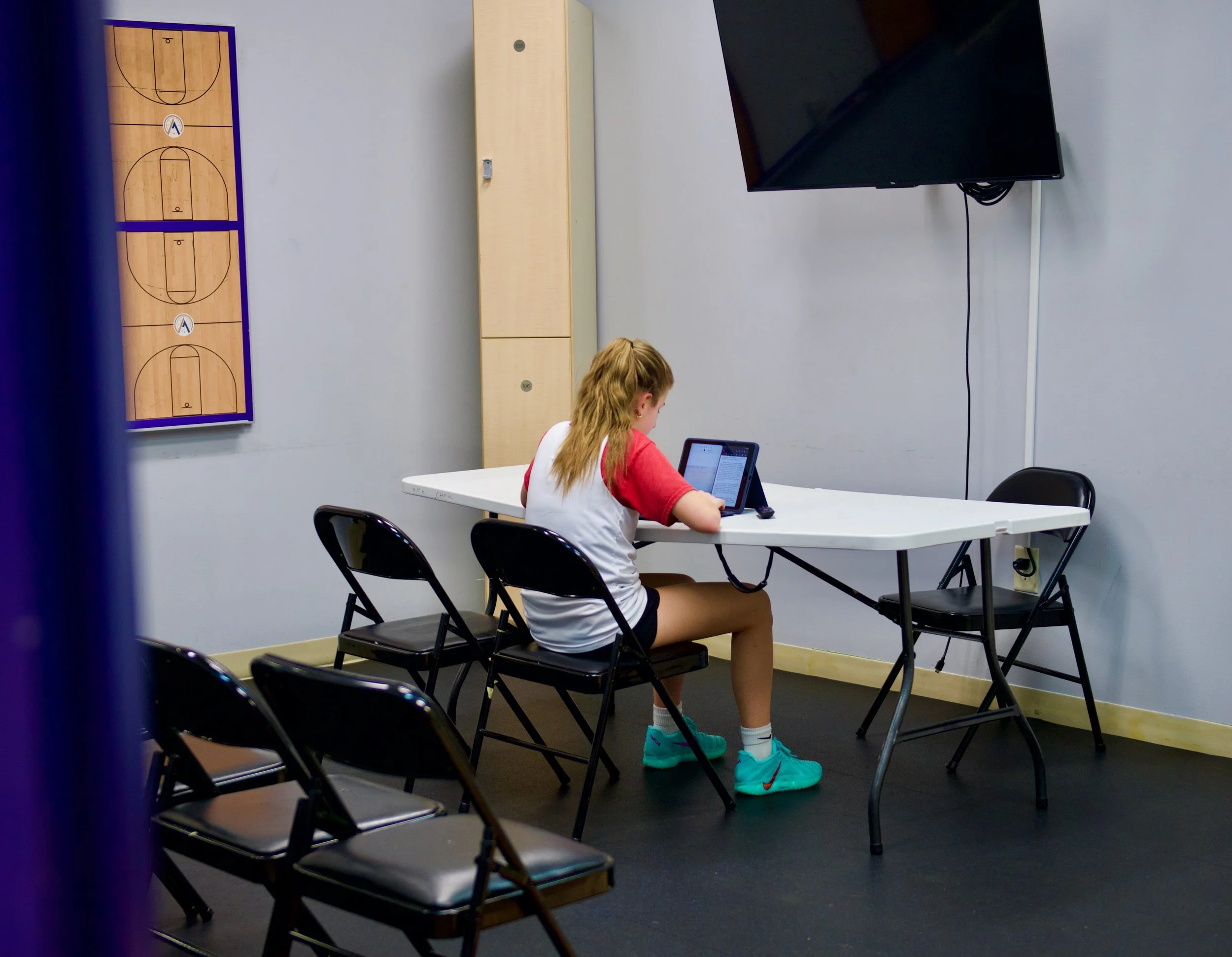

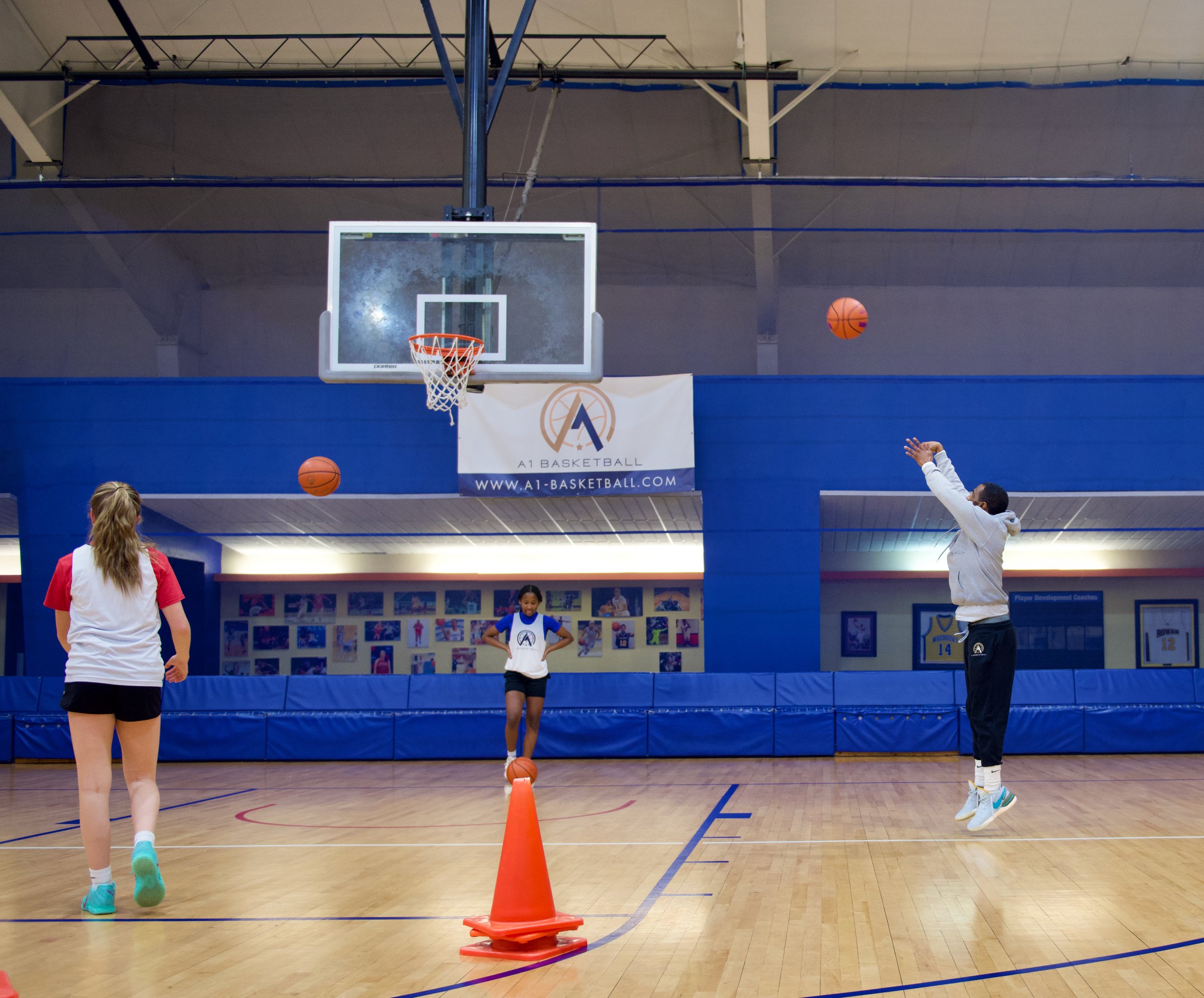
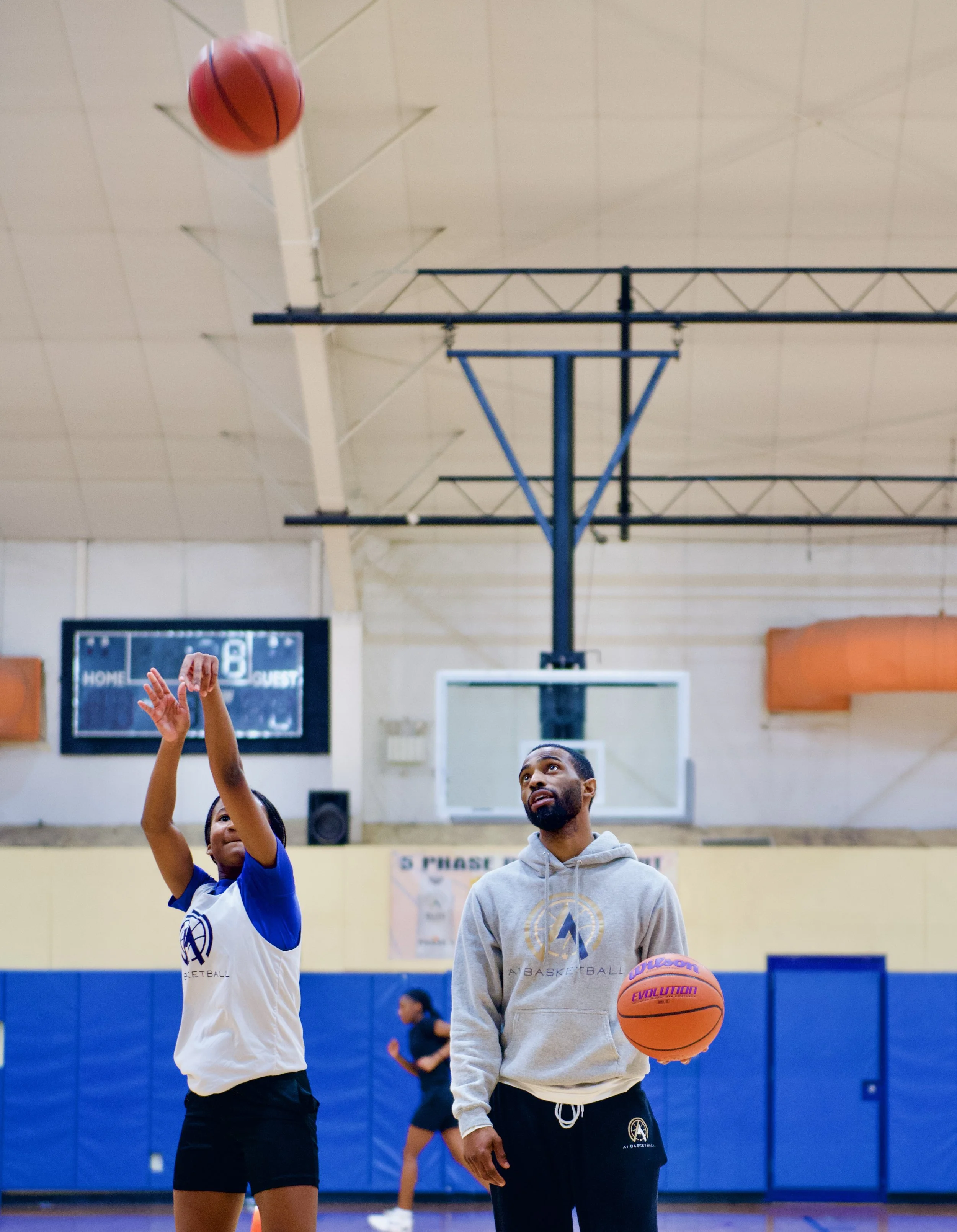
Allen feels proud that he can give back to his community the way that his childhood coaches did. He knows first hand how the right kind of guidance and direction can affect the trajectory of someone’s story. “I was blessed to go to college and be able to do things at different levels, and I know how a little bit of help can get a person so far in life.” I asked him if there were any people in particular who inspired him on this journey. He answered without hesitation. “Kevin Walls, my childhood coach, and Donald Polk. To see what they did for our community of Camden, New Jersey, and to see how many kids they were able to help always led me to want to give back in some way. I’m extremely grateful to those two men. I’ve learned something from every coach I’ve had the opportunity to play for. If you learn something from everywhere you’ve been, there’s a lot of information that you can pour into other people.” Allen is still connected with many of the players he has coached over the years. “They still call me. I still check up on them. Some of them reach out for a reference or some wisdom; my phone line is always open.”

At the end of the day, Allen wants people to know that his work feels like a calling beyond himself. “It feels God-ordained that I’m here doing what I’m doing to help kids. It’s never been about business for me. I didn’t do this to start a business; it just happened. I don’t want to be judged because of the business I created, I would rather be judged on being obedient to what God is asking me to do: to help kids get better at basketball and give them a safe environment to do that. That is what I feel is the magical story here. That’s what I want the world to know. I may have failed in many other areas of my life as a person. But this one thing I know for sure I’m doing 100% right.”